
ps2
Our Five Year Anniversary - Revisiting God of War II
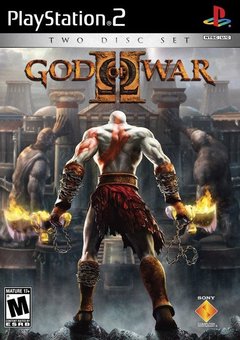 Five years ago I played about sixty minutes of the beginning of God of War II and was impressed by how quickly the action ramps up and how the momentum is carried throughout. Big action set pieces like the Colossus battle and flying on Pegasus made for an extremely memorable first hour, and still one of the best. At that moment I made a decision that I suppose in some ways has changed my life: I reset the PS2, grabbed a pen and notebook, and started playing God of War II over again.
Five years later and a full ten days worth of first hour reviews written by me and a half-dozen other writers, we're back to where it all began. I imagine this is a one-time event, I'm not sure there's really much left to point out in the game's first hour that I didn't the first time, but the timing is fun. I've always measured first hours in how many "days" have passed, with 24 first hour reviews representing a day. Since this is review 240, the end of day ten, I couldn't really pass up the opportunity.
The review format hasn't changed a lot in five years, even then I was keeping track of "minutes to action", but I don't give scores anymore, focusing instead on what really matters: would I keep playing beyond the first hour? Fellow writer Nate has developed his own first hour review format, and from now on I'll be moving more towards that. It's very time consuming to detail every minute of action, and I'm not sure if it's entirely valuable to the reader, so things will be changing for me as a critic, I'm still not entirely sure what it will look like.
But somehow my little review site has survived five years without much trouble, or attention, for that matter. But that's okay with me, soon after I began writing regularly about a subject I actually enjoyed, I realized I loved doing it and the number of readers or amount of money I was making was far less important than the fact that I was putting my thoughts and ideas on paper.
So thank you to all readers, fans, and critics over the last five years. You have turned a curiosity into a hobby into a passion.
Suikoden III
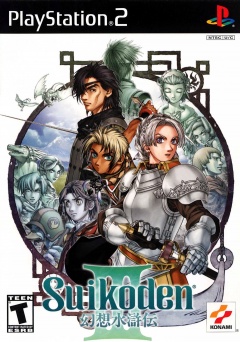 I knew that Greg Noe—the virtuoso behind The First Hour—and I would get along just fine when one of the first comments he left on my gaming blog was this: “Suikoden II... best JRPG ever made.” Yes, I totally agree. Suikoden and Suikoden II make up a pivotal part of my gaming history, and without them, I have to believe I would not be who I am today. They taught me the importance of character and characters, showed me at a young age that politics were always at war, and highlighted the importance of the invention of the elevator. Plus, they were really fun. Collecting 108 Stars of Destiny and watching a castle expand to house all of them is something I wish was in every RPG about building a rebel army these days.
Something happened though. Let's call it college. Four years went by, and I missed out on Suikoden III and Suikoden IV, as well as many other videogames during my time of study and refining and dropping of majors. I didn't come back to the world of videogames until after graduating and getting my first post-college job, picking up Suikoden V at first chance. Alas, by that time, it was hard to find copies of the previous two games, and only got harder with each year that passed.
Flash-forward to 2011, and I was able to find a used copy of Suikoden III recently at my local GameStop. Honestly, I've been a little scared to play it, worried that I've built up too much internal hype over the years, but destiny's calling. It's now or never.
Ghostbusters: The Video Game
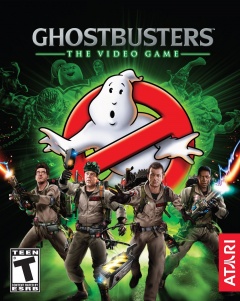 Happy Halloween, everyone! Time for a spooky first hour with Ghostbusters: The Video Game. As the game sequel to one of most popular, family-friendly Halloween movies out there, and as one of my favorite films growing up, I found it my duty to finally play this game I bought during a Steam sale cheap years ago.
Released in mid-2009 on every platform available, Ghostbusters: The Video Game played on early trailer hype and fan nostalgia to sell over a million copies that summer while receiving pretty decent scores. It doesn’t hurt that essentially the entire cast returned for what some call “Ghostbusters 3”, not to mention Harold Ramis and Dan Akroyd worked on the game script.
I’ll be playing Ghostbusters in Windows, a few years ago I gave the Xbox 360 demo a try and wasn’t impressed at all, so I’m curious what my reaction will be on this platform, years later. Well, bustin’ makes me feel good, so let’s get started.
Tales of Legendia
 As you might expect from someone whose primary consoles went from
Genesis to N64 and Gamecube, Japanese RPGs have never been my forte.
Though I've played bits and pieces of many, I'm having a hard time
thinking of a traditional JRPG cast in the menu-driven, Final Fantasy mold that I've
started and finished all by myself. Chrono Trigger may be the only title
that comes to mind.
As you might expect from someone whose primary consoles went from
Genesis to N64 and Gamecube, Japanese RPGs have never been my forte.
Though I've played bits and pieces of many, I'm having a hard time
thinking of a traditional JRPG cast in the menu-driven, Final Fantasy mold that I've
started and finished all by myself. Chrono Trigger may be the only title
that comes to mind.
Many of the RPGs from the land of the rising sun that I've completed are better described as Action RPGs (The World Ends With You, Mario & Luigi series). And if I had to name a favorite, it would probably be Tales of Symphonia. This Gamecube exclusive from Namco quickly enamored me with its excellent mix of real time combat and menu-based management. I don't think I'd ever had so much fun in a JRPG: the exciting dodges, blocks, and combos in brawls on the front lines were perfectly complemented by magic, item, and strategy commands for party members through the pause menu. It's the finest marriage of Action and RPG I've come across.
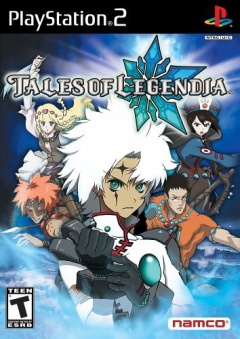
I've only played the two Symphonia-branded titles in the storied Tales series, so I decided it was time to pick up another. I remembered hearing about Tales of Legendia for the PS2 back when it hit shelves for the first time, so I figured I'd pick it up now that I'm in the mood for a fat, juicy adventure. Does it live up to its franchise name, or is this Tale not worth the time?
The Hobbit
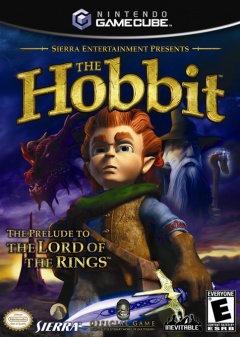 Marrying my wife a few months ago came with a videogamey bonus: a Nintendo Wii. And it wasn’t until several weeks back that I kind of realized that this system can also play GameCube games on it. The Nintendo GameCube is a system I missed out on hard, having only really played two games to my memory: Luigi’s Mansion and Pikmin. GameStops statewide seem to still sell a good selection of GameCube games, and I was able to pick up The Hobbit for less than a cup of coffee and a breakfast sandwich from the local market. As a true J.R.R. Tolkien fanboy, I couldn’t wait to play it. Alas, I had to wait. Long story short, I had to make a return trip to pick up a memory card so I could actually save my progress.
Anyways…The Hobbit. It came out in late 2003, and I’m assuming that its makers were banking on a lot of eager fans awaiting more Lord of the Rings action would be interested in seeing how the journey all started. In fact, blazing bright and gold on the game’s cover is some silly marketing pullquote that says “the prelude to the Lord of the Rings!” Yeah, we know. Hopefully they don’t pull the same silliness with the upcoming theatrical adaptation. The Hobbit, Part 1 of 2: The Prelude to the Lord of the Rings! Bad enough there’s going to be two films.
I’ve played a number of other games based on the Lord of the Rings over the years. Some were decent amounts of fun (The Lord of the Rings: The Two Towers), and others just an unfair mess (The Lord of the Rings: The Third Age). Will The Hobbit soar like the Lord of the Eagles or sink like the One Ring abandoning its former master? Let’s find out with the game’s first sixty minutes.
Devil May Cry 3: Dante's Awakening
 The video game industry isn't as surprising as we'd like to think. Sequels
rule the sales charts, and even new IPs tend to be paint jobs of
proven gameplay schemes. It's easy to point the finger at developers and
publishers, but let's take a look at a few of the bigger gambles that
companies have taken with their properties.
The video game industry isn't as surprising as we'd like to think. Sequels
rule the sales charts, and even new IPs tend to be paint jobs of
proven gameplay schemes. It's easy to point the finger at developers and
publishers, but let's take a look at a few of the bigger gambles that
companies have taken with their properties.
Back in 2001,
the first footage for the next Legend of Zelda caused some serious
uproar when, rather than an updated Ocarina of Time fantasy setting, the
new game went with a wholly cel-shaded, cartoony art style. Many had
been won over by the charming new Link by the game's release, but I
bet that just as many swore off Nintendo for good after this "kiddie"
debacle. Later in 2001, those who had recently purchased Metal
Gear Solid 2 were appalled to find the game had pulled a bait-and-switch,
tossing the series' longtime protagonist Solid Snake aside within the
first hour of the game for a never before seen pretty boy. The ensuing
explosion of discontent was megaton in proportion.
Nintendo and
Konami have had their share of death threats on message boards for these
switcheroos, and now it seems Capcom's neck is on the chopping block.
The long-rumored Devil May Cry 5 was finally made public at TGS 2010 as
"DmC," and fans were shocked to see that it would reboot the series with
a new, barely recognizable, adolescent punk version of cocky anti-hero
protagonist Dante. Further, Capcom itself isn't even spearheading the
development of the title, leaving Heavenly Sword developer Ninja Theory
in charge. The response has been
almost entirely negative.
Amidst all the noise on message
boards and in video comments, I realized I hadn't spent any quality time
with the old Dante myself, despite how much I enjoyed the modern Ninja
Gaiden action games that are often compared to the Devil May Cry series.
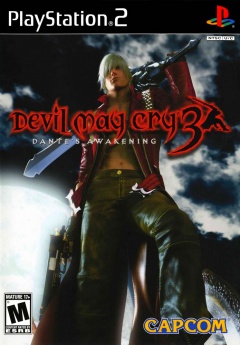
I borrowed a copy of the franchise's most acclaimed game, Devil May Cry
3 (which also happens to be the earliest in the series timeline) to
serve as my official introduction to the outrageous half-demon. It's
hard to empathize with the gamer rage that DMC fans feel at the moment,
but will I change my tune after walking a mile in the old Dante's boots?
Black
 When I think back to the first time I saw Sonic the Hedgehog running on
the Genesis (which I wasn't yet familiar with), I recall marveling at
how much better it looked than the Mario games I had at home. I remember
the time my brother tried to explain Super Mario 64 to me, and how
little I understood what he was saying until I finally witnessed it in
action. When I brought home a Gamecube the morning it launched, I was
impressed with the speed and fluidity of the Death Star trench run that
began Rogue Leader, at least when compared to its predecessor on the
N64. But the first time I saw Call of Duty 2 at Toys R Us on an HDTV
screen, the only thought that ran through my mind was...
When I think back to the first time I saw Sonic the Hedgehog running on
the Genesis (which I wasn't yet familiar with), I recall marveling at
how much better it looked than the Mario games I had at home. I remember
the time my brother tried to explain Super Mario 64 to me, and how
little I understood what he was saying until I finally witnessed it in
action. When I brought home a Gamecube the morning it launched, I was
impressed with the speed and fluidity of the Death Star trench run that
began Rogue Leader, at least when compared to its predecessor on the
N64. But the first time I saw Call of Duty 2 at Toys R Us on an HDTV
screen, the only thought that ran through my mind was...
"Really? This is next-gen?"
Yes, the characters were constructed of more polygons. And the textures were clearer. And of course, the higher resolution made everything easier to see. But I just couldn't help but feel a little disappointed, seeing that the the game, and others in the 360 launch library, just didn't seem to bring any worthwhile improvements to the table. In fact, it wasn't until the first time I saw Lost Planet's smoking RPG trails, gorgeous boss monsters, and swarms of flying enemies that the feeling of a new generation really sank in.
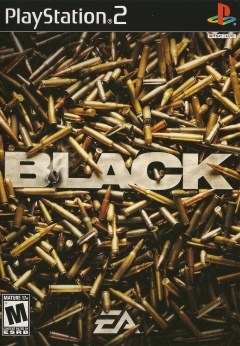
On the other hand, many quality games are released at the end of a console's life cycle, once developers have a firmer grasp on the intricacies of the hardware. It is unfortunate that they're often overlooked for the next console's rushed launch titles, but that's reality. EA's Criterion studio, creators of the high-octane Burnout series, attempted to buck that trend with Black, a first-person shooter for the PS2 and Xbox that was marketed as a next-gen shooter for current-gen platforms.
The game certainly looked impressive the first time I saw a friend playing it, some five years ago. Does it still pack a punch, or will Black forever be lost between generations?
Castlevania: Lament of Innocence
 I'd never really paid much attention to the Castlevania series until Dawn of Sorrow was featured during the early days of the Nintendo DS. I was a bit hesitant to purchase the game, writing off the series' gothic style as that of a poor horror game. But in late 2005, I ventured into Castlevania for the first time and found its undead denizens too charming to slay just once. I've returned to see Lord Dracula and his wacky friends eight times since then, and enjoyed every visit.
Having played every modern "Metroidvania" since then (besides the recently-released Harmony of Despair, focused on online multiplayer), I realized I hadn't yet spent any time in a polygonal version of Drac's realm. The impending release of franchise reboot Lords of Shadow encouraged me to stop by the local game store and check the ten-and-under bin for anything Castlevania. The various entries on the Nintendo 64 and PlayStation 2 systems have received mixed reviews, but I'm willing to take a chance on a bargain title in one of my favorite franchises.
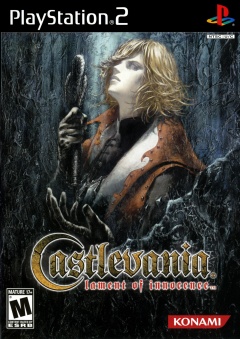
My excursion to GameStop ended with my wallet ten dollars lighter and a copy of Castlevania: Lament of Innocence added to my collection. I've spent sixty minutes in the demon castle. How did this latest visit fare?
Mega Man X8
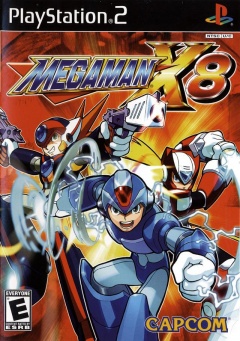 The second video game I ever played was Mega Man 2. Since then, I've
finished twenty-eight games with "Mega Man" in the title, most of them
multiple times. I was the sixth person in the United States to submit a
game completion time to the leaderboards in Mega Man 9, the afternoon it
was released. I was fifth in Mega Man 10. I beat Mega Man 9 without
taking any damage, earning the "Mr. Perfect" in-game challenge title.
I'd even go so far as to say Mega Man 9 was my favorite release in
2008, a year packed with great titles that don't look like they were made twenty years ago and forgotten in a time capsule somewhere.
The second video game I ever played was Mega Man 2. Since then, I've
finished twenty-eight games with "Mega Man" in the title, most of them
multiple times. I was the sixth person in the United States to submit a
game completion time to the leaderboards in Mega Man 9, the afternoon it
was released. I was fifth in Mega Man 10. I beat Mega Man 9 without
taking any damage, earning the "Mr. Perfect" in-game challenge title.
I'd even go so far as to say Mega Man 9 was my favorite release in
2008, a year packed with great titles that don't look like they were made twenty years ago and forgotten in a time capsule somewhere.
I enjoy Mega Man, you guys. Like, kind of a lot.
Because
I didn't have a PlayStation 2 until a few months ago, I missed out on
two titles released exclusively on that system, Mega Man X7 and Mega Man
X8. I recently came across the latter in the bargain bin of a local
game shop, so I figured I'd give it a shot. The Mega Man X series had
started to lose its way by the sixth game (my least favorite game in the
series, oh no!) but I had heard good things about X8.
I was understandably excited to start a relatively new Mega Man game for the first time. So how did the first hour go?
The QTE cure: Singin' in the Heavy Rain
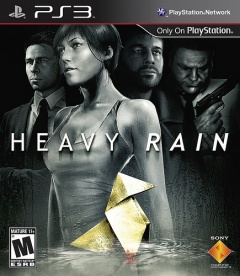 Quick Time Events. Ever since God of War and Resident Evil 4 exploded
onto the scene with button-prompt sequences of gore and horror, the
industry has shown its sheep-like nature and incorporated these Gotcha!
moments into games without thinking about how they make an
interactive experience better. Many gamers have adjusted to the fact
that every cutscene now has an awful series of play buttons throughout, but I
personally would like to cram all the QTEs in the world into a space
shuttle full of cobras and launch them directly into the sun if it meant
I'd never have to see another one again.
Quick Time Events. Ever since God of War and Resident Evil 4 exploded
onto the scene with button-prompt sequences of gore and horror, the
industry has shown its sheep-like nature and incorporated these Gotcha!
moments into games without thinking about how they make an
interactive experience better. Many gamers have adjusted to the fact
that every cutscene now has an awful series of play buttons throughout, but I
personally would like to cram all the QTEs in the world into a space
shuttle full of cobras and launch them directly into the sun if it meant
I'd never have to see another one again.
That said, it's not impossible to come across decent use of QTEs.
Indeed, before Resident Evil 4 set the standard at the advent of 2005,
the mechanic was most prominently-used by the Dreamcast's crown jewel,
Shenmue. In fact, it was Yu Suzuki, that game's director, who coined the
term "Quick Time Event." Suzuki put the gimmick to good use throughout
Shenmue, allowing protagonist Ryo Hazuki to do everything from tossing
drunkards around in bar brawls to saving little girls from incoming
soccer balls. One of the reasons the game is so beloved today is that it
allowed the player to engage in such a wide variety of scenarios, many
of which were supported with smartly-designed QTEs.
Good QTEs didn't end with Shenmue, however, even though sometimes it seems that's the case. Like God of War, other Playstation heavyweights have managed to use QTEs to enhance a game experience. I think it's only fair that we look at a few of those, as well as some alternatives to these timed button-prompts for cinematic flair in games.
