
gamecube
F-Zero GX
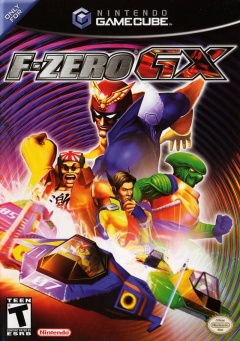 The original Super Smash Bros. was a crash course on the Nintendo properties that I ignored in the early nineties. I learned that the orange robot from Metroid was actually a woman in a suit. I learned that the green elf guy wasn’t actually named Zelda.
I also discovered that Nintendo made a futuristic racing game called F-Zero. Although the Falcon Punch was the coolest thing in the world, I still couldn’t be persuaded to try out an F-Zero game. Cruis’n USA and Wipeout convinced me that racing games weren’t my thing.
Racers still aren’t my game of choice, but a bargain bin find has led me to give the F-Zero series the old college try. It’s been almost ten years since the earth-shattering Nintendo/Sega tagteam effort gave birth to GX, and though Nintendo has buried the underperforming series beneath Wii-branded successes, a small but passionate fanbase still thrives. Is an hour with the game enough to place me in their ranks?
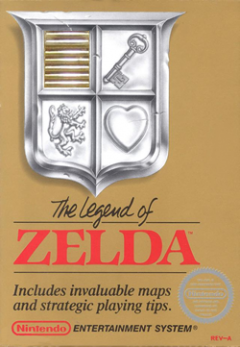
The Legend of Zelda
 Achievement Unlocked: Review a game older than you.
Zelda may be the most beloved video game franchise, but I've never counted myself among series super-fans. Since cutting my teeth on the series with Ocarina of Time, I've merely enjoyed all but a handful of games in the series. Don't get me wrong, they're all great, but I wouldn't put any in my top ten.
That said, I like checking out each title and comparing it with the rest of its ilk. Other than the experimental black sheep Zelda II: Adventure of Link, the first Legend of Zelda may be the series' most divisive game. Fans can't seem to agree whether the game's old school difficulty and unguided progression make it dated or just different. Lacking an in-game overworld map and never funneling players away from difficult areas, the NES original certainly requires more of its players than any Zelda since.
Nintendo recently launched its 3DS Ambassador program, giving the system's early adopters ten free NES games. I had been meaning to check out several of the ambassador titles, but none more so than The Legend of Zelda. Fifteen hours and a princess rescue later, I'm ready to weigh in on the Dated vs. Different debate.
The Hobbit
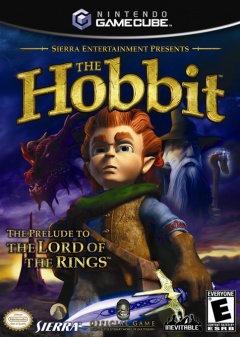 Marrying my wife a few months ago came with a videogamey bonus: a Nintendo Wii. And it wasn’t until several weeks back that I kind of realized that this system can also play GameCube games on it. The Nintendo GameCube is a system I missed out on hard, having only really played two games to my memory: Luigi’s Mansion and Pikmin. GameStops statewide seem to still sell a good selection of GameCube games, and I was able to pick up The Hobbit for less than a cup of coffee and a breakfast sandwich from the local market. As a true J.R.R. Tolkien fanboy, I couldn’t wait to play it. Alas, I had to wait. Long story short, I had to make a return trip to pick up a memory card so I could actually save my progress.
Anyways…The Hobbit. It came out in late 2003, and I’m assuming that its makers were banking on a lot of eager fans awaiting more Lord of the Rings action would be interested in seeing how the journey all started. In fact, blazing bright and gold on the game’s cover is some silly marketing pullquote that says “the prelude to the Lord of the Rings!” Yeah, we know. Hopefully they don’t pull the same silliness with the upcoming theatrical adaptation. The Hobbit, Part 1 of 2: The Prelude to the Lord of the Rings! Bad enough there’s going to be two films.
I’ve played a number of other games based on the Lord of the Rings over the years. Some were decent amounts of fun (The Lord of the Rings: The Two Towers), and others just an unfair mess (The Lord of the Rings: The Third Age). Will The Hobbit soar like the Lord of the Eagles or sink like the One Ring abandoning its former master? Let’s find out with the game’s first sixty minutes.
Harvest Moon: Magical Melody
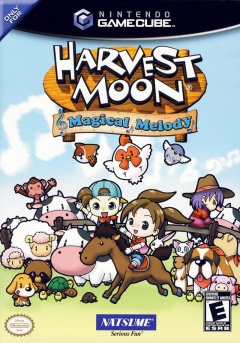 Harvest Moon has been one of my favorite video games series, but with
as many Harvest Moon titles that have been released, there are bound to
be a few that just don't click with me. This has been happening more
often than I would like of late with my favorite farming simulator, and I
blame that on essentially the two different series Harvest Moon has
become. Ignoring all the spinoffs such as Rune Factory, Frantic Farming,
and Innocent Life, the series essentially split at the Back To
Nature/Friends of Mineral Town point about ten years ago.
Harvest Moon has been one of my favorite video games series, but with
as many Harvest Moon titles that have been released, there are bound to
be a few that just don't click with me. This has been happening more
often than I would like of late with my favorite farming simulator, and I
blame that on essentially the two different series Harvest Moon has
become. Ignoring all the spinoffs such as Rune Factory, Frantic Farming,
and Innocent Life, the series essentially split at the Back To
Nature/Friends of Mineral Town point about ten years ago.
Back to Nature for the PS1 was the first non-Nintendo Harvest Moon game and expanded on the previous console release, Harvest Moon 64. An enhanced remake/port was released for the GBA titled Friends of Mineral Town which I consider to be the quintessential Harvest Moon title. But at this point, the PS2 and GameCube were out, and the developers started going down the road of fancier 3D graphics on the conoles while basically every portable iteration has been based on the Friends of Mineral Town structure.
So what I call the portable Harvest Moon series is built on a very solid set of gameplay elements: farming, foraging, mining, and relationships. All aspects of the game are well-tuned and are balanced decently. On the consoles, it's a completely different story: we get a mish-mash of unbalanced, poorly tuned gameplay elements planted in a boring looking 3D world. The console "series" has suffered like this since Save the Homeland on the PS2, but I mostly blame A Wonderful Life, the first Harvest Moon game I ever played that I really, truly hated.
Magical Melody, of course, falls into the console series. Released on the GameCube in 2006 and then re-released on the Wii in 2008, Magical Melody continues the sorry Harvest Moon console tradition of not being very much fun. Whoops, did I spoil the first hour for you?
I've actually been sitting on this first hour review for an entire year, I had it completely written except for this introduction. I'm not really sure what I was waiting for; I think through a combination of Magical Melody being an older, quite unexciting game combined with the fact that it's a sorry game from one of my favorite series made me hold off. But I really need to get it off my to-do list, so here you go, the first hour of Harvest Moon: Magical Melody for the GameCube.
The Legend of Zelda: Twilight Princess
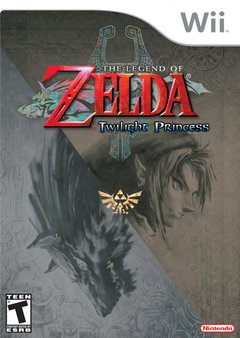 It's hard for me to go an entire year without playing some Legend of Zelda game, heck, just the first half of this year included Spirit Tracks and The Minish Cap, so why not feature the first hour of another? The Legend of Zelda: Twilight Princess was released in 2006 on the Nintendo Wii and GameCube. It was originally going to be for just the GameCube, but Nintendo thought it would make for a great launch title on the Wii (which it did, got me to buy the system), so then the GameCube release was delayed a month to let sales of the Wii version have free reign.
Twilight Princess went on to win game of the year awards and was generally praised around the industry for its gameplay and presentation. For the sake of full disclosure, I beat Twilight Princess within a few weeks of its release on the Wii and have mixed feelings about the game. It's been almost four years though since I've played it so here is its second chance with me in the form of the first hour review of The Legend of Zelda: Twilight Princess for the Wii.
The QTE plague: What hath God of War wrought?
 Quick Time Events. So many games have used them to some extent in the
last five years that just about every gamer has an opinion on them.
Mine is that they are the worst gameplay gimmick to take the industry by
storm in a long time, and I wouldn't mind seeing them all packed into a
burlap sack filled with leeches and thrown into the depths of a
volcano. They're tacky, they're unintuitive, and their attempts to
engage players in cinematic animations backfire and break the sense of
immersion one has with a game. And unfortunately for me, they're just
about everywhere these days.
Quick Time Events. So many games have used them to some extent in the
last five years that just about every gamer has an opinion on them.
Mine is that they are the worst gameplay gimmick to take the industry by
storm in a long time, and I wouldn't mind seeing them all packed into a
burlap sack filled with leeches and thrown into the depths of a
volcano. They're tacky, they're unintuitive, and their attempts to
engage players in cinematic animations backfire and break the sense of
immersion one has with a game. And unfortunately for me, they're just
about everywhere these days.
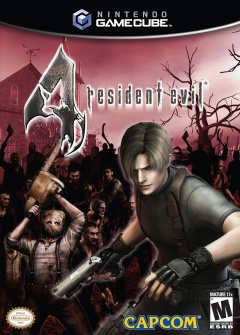
Two behemoths let loose in early 2005 can be thanked -- or blamed -- for the salvo of games that have featured QTEs in the last five years. The first, with a January 11 release date, was Resident Evil 4. The game was extremely well-received: it won many Game of the Year awards, offered a fresh take on the aging Resident Evil formula, and gave Gamecube owners a third-party exclusive worth bragging about. The other member of the gruesome twosome that brought us into the era of QTEs is known as God of War. Released just two months after Resident Evil 4, the game received just as many accolades and turned heads back to the PS2 as quickly as they'd been lost to the Gamecube's horror hit. Is it any wonder that the industry went in the direction it did when two such monumental successes as these both prominently featured a relatively unused gameplay gimmick?
Today we'll take a look at how the smart use of QTEs helped put these two games on the map, and watch a few examples of QTEs gone wrong. And trust me, there was a huge pool of resources for the latter.
Resident Evil
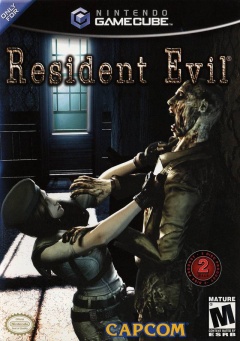 Resident Evil is the original survival horror game. It didn't invent horror, but it definitely laid some groundwork as far as the genre went in video games. It was originally released in 1996 for the Sony PlayStation. In 2002, it was released as a remake for the GameCube in a surprising deal that had the series on Nintendo's system and eventually led to the stellar Resident Evil 4. It is the GameCube REmake (get it, RE stands for Resident Evil? Ah, nevermind) that I will be playing.
So what I want to know is this: Is this game good, and is this game scary? I've played Resident Evil 4, and had a few good jumps, but overall it was just a moody action game (arguably becoming the basis of the modern third-person shooter). The original (and remake) had a lot more focus on puzzle solving and exploring, and less on fighting.
I'm going all out with this one. I'm playing at night, while everyone else is sleeping, with the lights off. Let's see if we can get a good scare out of this.
Memorable Ideas from Forgettable Games - The Checklist Grid
 Some games are unforgettable. After forking over our birthday money at K-Mart, we bounce all the way home in the backseat of the station wagon, wrestle the plastic wrap away from the box, gingerly place the game in the system, and steady our feverishly shaking hands with an anaconda grip on the controller. We don't let go for hours. And when the credits roll, we tear up a little, knowing we'll always cherish that first time through.
And then there are games that are largely forgotten weeks after release. Niche appeal, scathing reviews, or even just lack of hype can doom a game to obscurity and the Target bargain bin. But even these games deserve a second look...sometimes. Every once in a while, a kernel of brilliance can be found within these steaming piles of mediocrity. The purpose of this feature is to sift out some of these conceptual gems and put them under the microscope.
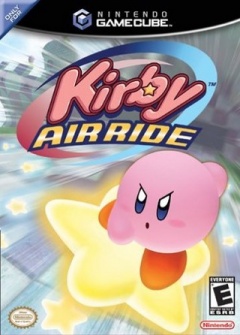
Today we'll take a look at how the Checklist Grids in last generation's Kirby Air Ride add a special something to one of the current generation's biggest innovations: the Achievement.
XIII
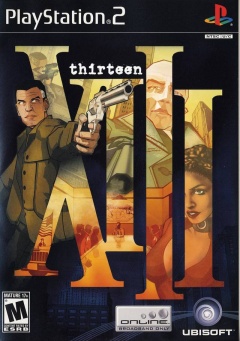 Bargain bins. Sometimes they hold
treasures, other times just stuff better left at the bottom where no
one can see. Still, I'm poor and always hoping for the best so I
can't help but look around. Surprisingly, I found XIII in one of
these dumpster dive sessions, and for $1.99 at that. All I really
knew of the game was that it was cel-shaded, likened constantly to an
action-fused comic book, and a FPS.
Bargain bins. Sometimes they hold
treasures, other times just stuff better left at the bottom where no
one can see. Still, I'm poor and always hoping for the best so I
can't help but look around. Surprisingly, I found XIII in one of
these dumpster dive sessions, and for $1.99 at that. All I really
knew of the game was that it was cel-shaded, likened constantly to an
action-fused comic book, and a FPS.
A few weeks ago, Games for Lunch's Kyle Orland reviewed XIII's first hour. He died numerous times and was ultimately frustrated with the game's gameplay. Hopefully I'll have a better sixty minutes.
The Incredible Hulk: Ultimate Destruction
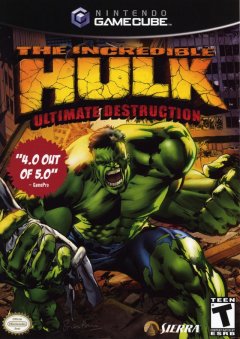 "Comic book video game." Maybe not the most successful four-word combination in the history of the world. But you can't blame them for trying, right? What could be cooler than playing as your favorite super-hero? The premise of Ultimate Destruction is that you play as the Hulk, and the Hulk smashes things. And although there's more to the game than that, smashing things is the basis of the gameplay, and guess what. It's fun.
This game was developed by Radical Entertainment and released in August 2005 for XBox, PS2, and GameCube.
Ultimate Destruction is an open-world game. Basically, there are three areas. Two of the areas are huge, the third is a hub that is much smaller. In each area, you can go wherever you want and do whatever you want. And by that I mean smash whatever you want. The main progression of the game involves buying new moves for hulk to smash things. In order to unlock new moves, you play through story missions. The story missions are normal comic book video game fare, and they mostly boil down to smashing things, getting from point A to point B while smashing things, or smashing things while trying to keep something from being smashed.
