
simulation
Skyward Collapse

What does it mean to be a god if no one will listen to you? Arcen Games looks at this with a bit of humor in their latest release, Skyward Collapse. Here, we play an omniscient, omnipresent celestial being, tasked with cultivating and manipulating two factions that would like nothing more than to see the other eradicated. That's an interesting scenario on its own, but we are further entangled by a godly need for entertainment (conflict) and plagued by natural "woes." To further jumble our troubles, rogue elements including deities and mythological creatures try to spoil our day. In this turn based strategy/god sim, we inherit the intriguing situation of lacking direct control yet commanding plenty of manipulation.
Dungeon Village
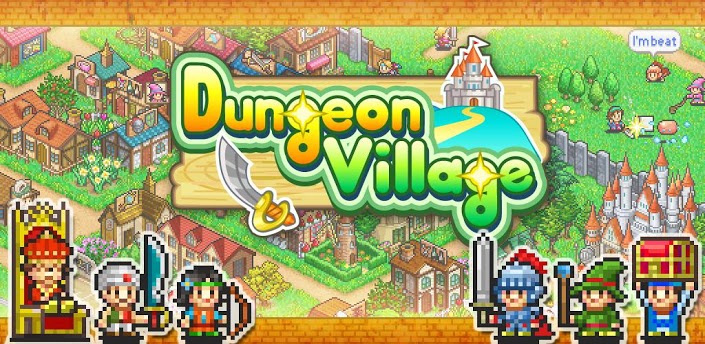 It’s been a while since I played a Kairosoft game, not since May with the extremely lackluster Epic Astro Story. It’s easy to say it’s that game that put me off for another six months, but the Kairosoft formula as a whole can really drag on a gamer after a half dozen games.
But Dungeon Village was on super sale at the Google Play store, and it seems like it should be right up my alley: build up a Japanese RPG village which will house an inn full of heroes. Some of my earliest gaming experiences were with Dragon Warrior and Final Fantasy 1, the nostalgia of my youth was calling me to a game I could play on my phone in the bathroom.
Dungeon Village was released in March for Android and iOS, this review is for the Android version.
Fate of the World
 If you were born in the 1980s, you may have grown up like us playing The Oregon Trail, Number Munchers, and Where in the World is Carmen Sandiego? in school. Educational games disguised as entertainment were probably some of the most effective forms of lazy teaching. Personally, The Oregon Trail and Carmen Sandiego improved my geography knowledge and sparked an interest in history, and Number Munchers obviously helped my mathematical skills. Whether I wanted to or not, I was still learning, even in the computer lab.
But I have no idea what kids do or play now in computer labs. Probably check their Facebook or Twitter, maybe play some flash games, but I doubt most of it has an ounce of educational value. But maybe a game like Fate of the World has found its way into some programs, I know for a fact that Positech Games has landed deals with some institutions to deliver their Democracy series to students, so it's not unlikely a climate change/general-bad-things-are-happening-everywhere simulator could be being played in high schools right now.
It's been a while since our last Indie Impression, but it's a column I'd really like to continue. Independently developed games are becoming more and more important with every year, Steam update, and console release. Highlighting one or two a month shouldn't be difficult, and I believe important to the industry. Let's take a look at Fate of the World, today.
Epic Astro Story
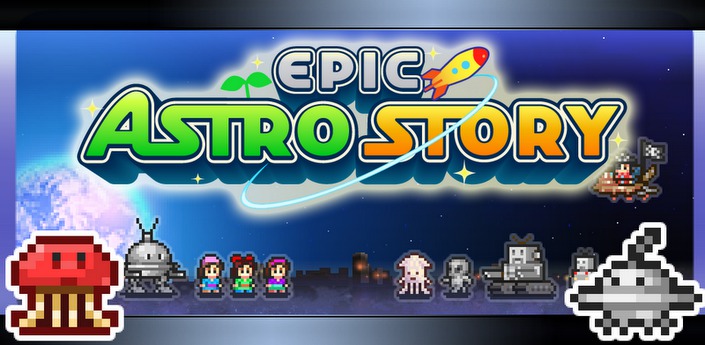 All good things must come to an end: I just finished the first Kairosoft game I would call bad. I’ve played a few Kairosoft sims that were unbalanced or boring, but never both. Epic Astro Story is the official low bar among a great series of games that range from training a soccer team to running a game design studio.
Epic Astro Story is a space colony sim where you build up an industrial/tourism complex on an empty planet while sending out away-parties to explore the darkness around you. While traveling through caves, mountains, and deserts, your team will fight against local bad guys for the right to the land.
I’ve had great success with Kairosoft games so far, most of them have clicked really well with me and my tastes, but from the start I had issues with Epic Astro Story. Here’s my review.
Mega Mall Story
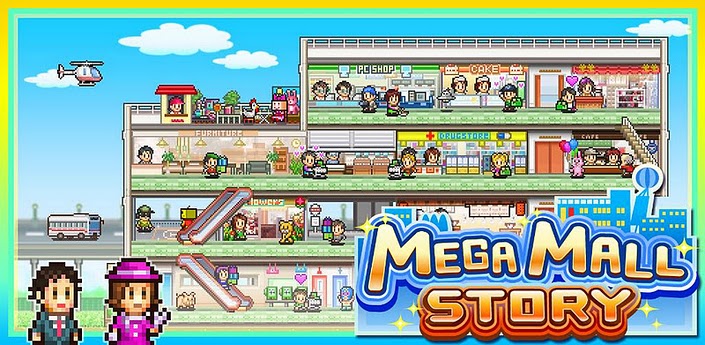 As I reflect on Mass Effect 3 before I attempt to write its full review, I’ve been catching up on games in mobile land. Angry Birds Space and Cut the Rope: Experiments were just released, but I’ve sort of grown into a Kairosoft fanboy over the last few years so they beckon even stronger. Mega Mall Story is my latest go at their games after Pocket League Story, and it brings some new ideas to the “Story” series and merges some of their existing ones, as well.
In Mega Mall Story you run, well, a mall. In lots of ways it feels like SimTower, the Maxis published simulation where building up was just as important as fattening your wallet. But it also feels like a traditional Kairosoft title, with all the charm and number crunching seen in some of their more sportier titles, plus the layout challenge founded in Hot Springs Story.
Mega Mall Story is available for both Android and iOS for a few bucks, I played it on my HTC EVO 4G phone.
Crusader Kings II
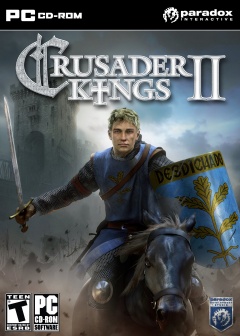 Today I learned that some video game genres are simply not for me. Well, I've known that for some time, I can't stand realistic racing games at all, but now I can add the so-called "real-time grand strategy" genre to that list. This is basically a fancy way of saying "real-time Civilization... grandified." The Wikipedia article reads like an economics-during-war piece with phrases like "horizontal integration", "consolidated roving army", and "pursue ultimate hegemony". Hey guys, I graduated from college six years ago.
Crusader Kings II was recently released by Paradox Interactive, a Swedish developer that specializes in the grand strategy genre. You may recognize their previous titles such as Europa Universalis or Hearts of Iron, but if you're like me, have never had the opportunity to play them. Crusader Kings II is set in medieval Europe at the turn of the last millenium. The game is decidedly for history buffs and fans of the time period.
I can't really decide if what you're about to read represents everything this site stands for, or if it reveals a total failure of the first hour review system. I'm kind of wavering between the two options, but I'll let you decide for yourself. Welcome to the age of history.
Pocket League Story
 I find soccer boring. It has its exciting moments, but those usually happen when I’m getting a snack. On the other hand, I’ve thoroughly enjoyed lots of soccer video games over the years, starting with Nintendo World Cup for the NES and peaking with the insane Sega Soccer Slam on the GameCube. There’s just something so simplistic and fun about kicking a ball into a goal, especially when that ball is on fire.
So truthfully, I like arcade soccer, the kind of stuff displayed in the movie Shaolin Soccer. But when I discovered I was four games behind on Kairosoft’s Android releases, I decided to start with the soccer simulator: Pocket League Story.
In the same vein as Game Dev Story and Grand Prix Story, Pocket League Story has you guiding a soccer team from the dirt pile in your backyard to the top of the world. There are lots of numbers and tons of crunching, but most refreshing, every soccer game plays out in front of your eyes. If you thought watching your cars race in Grand Prix Story got me excited, well, you should have seen me when my first 11 versus 11 match played out. Here’s my review of Pocket League Story.
MotoHeroz [Video]
 Although it's common to see a physics engine mentioned in the opening
credits of current generation titles, games that are driven by
calculated friction, momentum, and the like are still so rare. Trials HD
is one of the few I've experienced that uses complex physics as a
gameplay core, rather than merely governing how crates jump and limp
bodies flail after an explosion. Tellingly, Trials HD is also among the
generation's most unique games, a blend of platformer, simulation, and
racer that make it impossible to define with current genre labels and
difficult for new players to grasp.
Although it's common to see a physics engine mentioned in the opening
credits of current generation titles, games that are driven by
calculated friction, momentum, and the like are still so rare. Trials HD
is one of the few I've experienced that uses complex physics as a
gameplay core, rather than merely governing how crates jump and limp
bodies flail after an explosion. Tellingly, Trials HD is also among the
generation's most unique games, a blend of platformer, simulation, and
racer that make it impossible to define with current genre labels and
difficult for new players to grasp.
Developer RedLynx appears to preserve that essence and curtail the frustration in MotoHeroz, a WiiWare title that replaces Trials HD's injury-prone dirtbike rider with durable, tumbling buggies. Trials's garage skatepark courses are also traded for platformer-adventure mainstays like forests, snowfields, and deserts. Strip away the Wii-appropriate aesthetics, however, and the game seems to be a kinder Trials romp, very much the approachable but deep physics showcase of its Xbox 360 and PC cousins.
I spent an hour bounding through the Story Adventure and climbing the leaderboards in some daily online challenges. Check out some of the footage pulled from that sixty minutes.
Grand Prix Story
 Kairosoft has quickly become my favorite developer on mobile platforms. With the English release of Game Dev Story last year, Kairosoft has placed themselves as the premier simulation creator on iOS and Android. Game Dev Story was followed up by the SimCity-esque Hot Springs Story, and then Android received the exclusive Grand Prix Story a few months back (Pocket Academy, a high school simulation was released exclusively for iPhone and iPad).
Kairosoft has been a very active developer the last few years in Japan, with over 20 releases, including already released sequels to some of their English titles. Their lineup of games ranges from the ordinary to bizarre to simply inspired, with Game Dev Story serving as a catalyst for new markets.
I reviewed Hot Springs Story a few weeks ago, and quite enjoyed both the similarities and differences it had to Game Dev Story. From the games released outside of Japan, there appears to be two types of gameplay: the straight up numbers game like Game Dev Story, and the Hot Springs style layout designer/builder. Grand Prix Story falls under the former, Pocket Academy under the latter. Here's my review of Grand Prix Story for Android, played on an EVO 4G. I hope to have a Pocket Academy review soon.
Hot Springs Story
 Game Dev Story was kind of a perfect storm video game for me. It combined my love for deep simulations with game development and threw in some lovely pixel art to top it all off. Hot Springs Story is Game Dev’s successor, and while I have been in hot springs in Japan, I had little interest in managing one. But since this is Kairosoft and knowing how much I enjoyed developing games within a game, I had to jump at it.
While I originally played Game Dev Story on an iPod Touch, I played Hot Springs Story on an Android EVO 4G. It has a much larger and better looking screen, which is great because Hot Springs Story does a much grander job taking advantage of all the screen real estate available.
Let’s get into my review of Hot Springs Story, developed by Kairosoft for Android and iOS.
