
9
Valkyria Chronicles

I’ve had my PlayStation 3 over a year now, and during that time I’ve enjoyed Heavy Rain, Infamous, and Uncharted, but the game that I’ve had the best time with is Valkyria Chronicles. I hadn’t even heard of the game until a friend shoved it in my hands, and it ended up being my First Hour of the Year and now my favorite game on the platform.
Valkyria Chronicles is nearly a perfect execution of all aspects of a video game. The gameplay is a fun and addicting mix of strategy and action, the graphics have a lovely anime-style to them, the presentation is flawless, the story is an interesting riff on World War I, the voice acting is actually great most of the time, and the soundtrack has a grand bluster to it that makes everything else better. And to top it all off, Valkyria Chronicles was developed by Sega. Sega!
I will admit, the game took me quite a long time to beat, over six months with about 40 hours of actual gaming (I’ve put more time than that into Xenoblade Chronicles in the last month). It wasn’t because I didn’t enjoy the game, but because Valkyria Chronicles seemed to require a certain amount of minimum playtime to really get into it. Even one hour free didn’t feel like enough for one sitting. Weird how that is for some types of games.
New Super Mario Bros. Wii
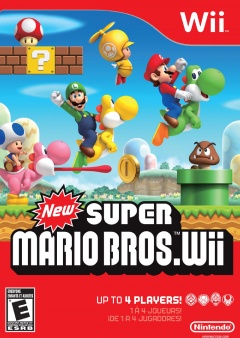 My oldest son is four years old now, I’ve been playing games with him since he was one. In some ways, gaming is a lot more accessible now: Wii Fit, touch gaming, and even the Kinect allow little kids and casual gamers to ease into things like never before. But on the other hand, give a toddler an Xbox 360 controllers with its nine buttons, two triggers, two thumbsticks, and a D-pad, and they’re more likely to send Batman sailing to an icy death.
So that’s how my Wii has been resurrected. Having collected dust for years, its wide array of kid friendly but adult awesome games is a godsend. We recently played through Donkey Kong Country Returns, and have now finished New Super Mario Bros. Wii. This is a newbie attractive game that features an especially excellent and forgiving cooperative mode. We can both play at the same time, and the punishment for death is rather limited.
But that’s not to say New Super Mario Bros. Wii isn’t challenging, and it certainly doesn’t lack in content or even replayability. Let’s take a deeper look at NSMBW, played completely through in cooperative mode with a four year old.
The Walking Dead: No Time Left
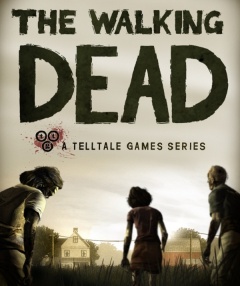 The finale to the first episodic season of The Walking Dead has arrived, and after the shocking conclusion to the fourth episode, it was apparent just how No Time Left would end. Of course, getting there is never straightforward in The Walking Dead universe.
This final review will be rather spoilerific after the cut, so there’s your first warning. It would be massively difficult to talk about the season as a whole without talking about the characters and their relationships, the real core to The Walking Dead. It’s funny: comparing it to my earlier episodic gaming experience, Tales of Monkey Island, and while I’m going to end up awarding them identical scores, it’s for completely different reasons and I feel totally different about each experience. My thoughts are also a lot more complicated when it comes to The Walking Dead.
So with that, let’s talk Lee, Clementine, and the end of the world.
The Walking Dead: Around Every Corner
The penultimate episode of the first season of The Walking Dead brings our group of survivors to the edge with seemingly no hope for a happy ending. While I’ve certainly enjoyed the previous three episodes quite a bit, I feel like everything has finally clicked for me in Around Every Corner. There’s a great sense of dread, urgency, and horror as you progress, and it successfully caps off the previous three hours with a heart-stopping finale.
Telltale Games wouldn’t have been my first choice for a Walking Dead game, as a popular graphic novel and the most successful show on cable television, the intellectual property owners should have had their pick of the litter when shopping their game. Could Call of Duty: Black Ops II have sold even more with a fully licensed Walking Dead zombie mode? Should the Dead Island developers been tapped? Capcom for their Dead Rising experience? Valve with Left 4 Dead? EA for their gobs of money?
But Telltale’s interactive drama experiment has been a huge success, at least critically. There are bound to be more Walking Dead games in the future, but this will certainly set the bar high. Here’s my review of episode four: Around Every Corner.
Borderlands 2
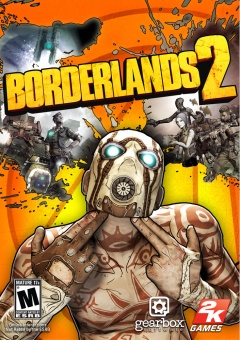 As the release date for Borderlands 2 grew closer, I was surprised at how excited I was for the game. I loved the first Borderlands, its challenge, skill progression, and charm had obviously stuck with me, so the sequel was an obvious buy. But I decided to push purchasing it to the first major Steam sale, that couldn’t be too far off, right? Well, thanks to 2K Games coming through and sending me a review copy, I was back in Pandora much sooner than I thought.
Borderlands 2 was released last month on Windows, Xbox 360, and PlayStation 3. I played the original Borderlands on my Xbox 360, but since then I’ve built a gaming computer and my Xbox Live has expired, it was an easy decision to switch over to the PC. I’ve honestly enjoyed the experience even more on my PC, essentially no loading times certainly help, and the superior graphics don’t hurt either.
I wish I could have gotten this review done sooner, but I just finished the game for the first time and Steam reports I played for 50 hours! I completed every side quest I could find and helped a friend level up a few times, but this is a big game that is worth exploring. 50 hours of one game in a month though for me is pretty crazy. Here’s my review of Borderlands 2.
Tales of Monkey Island: Lair of the Leviathan
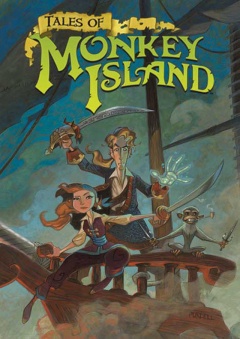 Finally, a hilarious, superbly written, well-rounded entry into Tales of Monkey Island. The first two episodes felt like Monkey Island on the surface, but were lacking in key areas. Lair of the Leviathan may well be the smallest scoped chapter so far, but is highly focused and downright entertaining from beginning to end.
Lair of the Leviathan is the middle child of the series, and TellTale Games could have certainly phoned the it in; most gamers playing this far are probably in it for the long haul, and with an explosive ending in mind, we would have forgotten the stuff in between point A and point B. But writer Sean Vanaman brought the goods and we got a memorable treat.
As I write this, The Walking Dead series from TellTale Games is receiving rave reviews for its own third episode, and while part of me wishes I was keeping up with that series instead of diving into Tales of Monkey Island, I’m very happy to finally be playing the three year old game in one of my favorite series of all time. Better late than never.
Trine 2
 Growing up, playing a game cooperatively usually meant sitting down
with a friend in front of my NES playing Contra, Teenage Mutant Ninja
Turtles, or Chip 'n Dale Rescue Rangers. The game was either made easier
with a second player (twice as many bullets!), or twice as hard (fellow
chipmunks can be used as weapons!). But as games have evolved from the
living room to the internet, cooperative play has changed too.
Growing up, playing a game cooperatively usually meant sitting down
with a friend in front of my NES playing Contra, Teenage Mutant Ninja
Turtles, or Chip 'n Dale Rescue Rangers. The game was either made easier
with a second player (twice as many bullets!), or twice as hard (fellow
chipmunks can be used as weapons!). But as games have evolved from the
living room to the internet, cooperative play has changed too.
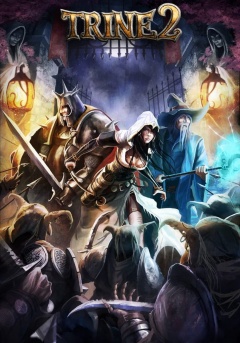
Portal 2 was designed with two campaigns in mind, one for the single player and the other for multiplayer, specifically a cooperative experience with no traditional way to communicate available. Both sets of levels were brilliant in their own right, and excelled in creating a unique undertaking. On the other hand, the original Trine was made for local gaming only. Friends gathered in front of the TV or monitor and lead the trio of heroes on their adventure.
Trine 2 introduces online co-op for up to three gamers, fixes many complaints from the first game, and features some of the most gorgeous graphics I've ever seen in a video game. I finally got to tax my video card. Steve and I played through the entire game together online without voice communication, here are our thoughts.
Resonance
 I’ve been spoiled this year having just been introduced to the Blackwell series and publisher Wadjet Eye Games. Before Resonance, I bought four Blackwell games, Gemini Rue, and The Shivah. Point and click adventure gaming was one of my earliest gaming passions, but I ended up almost completely ignoring the genre for the last 12 years. Now it’s a passion again, and all courtesy of one publisher.
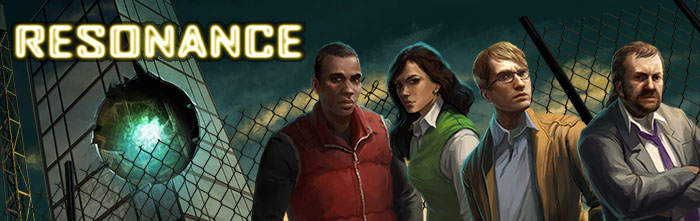
Developed by Vince Twelve and published by Wadjet Eye Games, Resonance is a multi-character point and click adventure game featuring an engrossing story, unique interface, and thankfully, basically free of all the crappy genre trappings that pushed me away from games like this. It was one of the few games I allowed myself to hype up a bit this year, and the developers delivered.
If Resonance looks interesting to you, definitely check it out, it’s only $10 on Steam. Then play all the Blackwell games which can be grabbed in a four pack for $20. Not a bad deal at all. The best part about these games is that they were made in the free to use Adventure Games Studio, I’m scared to think about all the other awesome games out there that were made with this tool that I’m missing.
Here’s my spoiler free review of Resonance.
Rayman Origins
 I never quite bought into the whole Achievements deal this generation. It's nice to have a (rather arbitrary) tally of "gamerness" on record, and I do like to occasionally check my friends' progress. But the achievements themselves tend to make a goal out of lengthy tedium, a checklist asking the player to kill X enemies using Y weapon, in a way that mimics the worst parts of grind-dependent MMOs. It's far from the creative metagame that I'd hoped would evolve through the generation.
As a result, my PSN trophy list accounted for 65 games long but lacked a platinum trophy. I had ambitions to 100% my very first PS3 game, Uncharted 2, until I saw that the majority of the trophies were based on finding "treasures" in the game, essentially an overgrown pixel hunt. I don't regret giving up that chase shortly after it began, and it kind of soured me on trophies in general. Still, there has always been this nagging feeling that, having played so many PS3 games, I should get one platinum trophy before the next generation arrives. Some people aspire to run one marathon in their lives. I figured I should have one pointless digital knickknack.
Now I have one. It's a bit underwhelming, actually. Maybe that's because it only took about fifteen hours of game time to achieve. Or maybe it's because Rayman Origins is fun enough that, even if the game lacked trophies, I would have finished all the requirements anyway.
Xenoblade Chronicles
 Nearly two years after its initial Japanese release, and eight months after finding its way to Europe and Australia, Nintendo of America finally saw fit to grace North American Wiis with the critically acclaimed Xenoblade Chronicles (though not without a lot of pestering it would seem). Debuting at E3 2009 under the title Monado: Beginning of the World, Monolith Soft's latest immediately captured the attention of RPG-starved Wii owners with its large, open environments, colourful atmosphere, and intriguing storyline.
Probably most intriguing, however, was the gameplay. Xenoblade—its title a tribute to Monolith's flagship franchise, Xenosaga—deviates considerably from traditional JRPGs, doing away with random encounters and turn-based combat. Instead, players do battle on the very map they explore, without a transition to a battle screen, and with the ability to see enemies long in advance, as many are simply animals going about their business in the game world. Battles themselves are much more tactical, seeing players manoeuvring about the battlefield for ideal position and using abilities at advantageous times.
Never mind that I'd been craving some decent RPG action for a while, I definitely wanted to see what Xenoblade had to offer, and was more than a little disappointed when it first looked as if I wouldn't get the chance. Better late than never, I guess. At least my Wii has something to do now besides collecting dust.
