
wii
Rune Factory: Tides of Destiny

It’s been a few... months since the last first hour review, but that’s okay, I’m happy with everything else I’ve been doing with my extra time, and you’re probably happy because you’re reading this and not the comment section of my Persona 3: FES review.
So while I have your attention, let’s talk quickly about Rune Factory: Tides of Destiny. Rune Factory is a shoot-off series of Harvest Moon, and I’ve talked about both sets of games quite a bit here. I’ve never really enjoyed console Harvest Moon games since the Nintendo 64, and never played the previous console Rune Factory game, so I decided to take a chance and try out Tides of Destiny for the PlayStation 3 (also available on the Wii). Honestly, part of me just wanted a game I could play in front of the kids since Uncharted 2 and Metal Gear Solid 4 don’t go over very well.
This will be an incredibly informal first hour, as I didn’t even bother to take notes, but I suppose if you’re looking for a formal first hour review you would have gone somewhere else a long time ago.
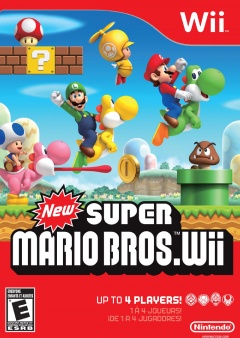
New Super Mario Bros. Wii
 My oldest son is four years old now, I’ve been playing games with him since he was one. In some ways, gaming is a lot more accessible now: Wii Fit, touch gaming, and even the Kinect allow little kids and casual gamers to ease into things like never before. But on the other hand, give a toddler an Xbox 360 controllers with its nine buttons, two triggers, two thumbsticks, and a D-pad, and they’re more likely to send Batman sailing to an icy death.
So that’s how my Wii has been resurrected. Having collected dust for years, its wide array of kid friendly but adult awesome games is a godsend. We recently played through Donkey Kong Country Returns, and have now finished New Super Mario Bros. Wii. This is a newbie attractive game that features an especially excellent and forgiving cooperative mode. We can both play at the same time, and the punishment for death is rather limited.
But that’s not to say New Super Mario Bros. Wii isn’t challenging, and it certainly doesn’t lack in content or even replayability. Let’s take a deeper look at NSMBW, played completely through in cooperative mode with a four year old.
Wii Truths Day 5: Game Spotlights
 The
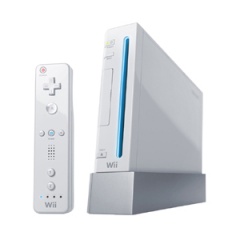
Wii was a special console for me. Its lifespan coincided with a leisure
sweetspot in my own life that afforded intoxicating levels of videogame
opportunity. I played a lot of Wii games and tracked all the Wii
developments, be they exciting or mundane, major or minor, captivating
or frustrating. I found plenty of fun on my PS3, and I suffered the
exclusivity of many X360 hits, but I don’t regret spending the majority
of my gaming prime with Nintendo’s bold experiment.
The
Wii was a special console for me. Its lifespan coincided with a leisure
sweetspot in my own life that afforded intoxicating levels of videogame
opportunity. I played a lot of Wii games and tracked all the Wii
developments, be they exciting or mundane, major or minor, captivating
or frustrating. I found plenty of fun on my PS3, and I suffered the
exclusivity of many X360 hits, but I don’t regret spending the majority
of my gaming prime with Nintendo’s bold experiment.
Although many will say the Wii died long before 2012 (and not
without merit), the system’s successor is a week away from taking the
baton, signaling the official end of Wii’s journey. With that in mind, I
thought it would be appropriate to take a week and remember just what
Nintendo’s “Revolution” was all about. Each day this week, we’ll take a
closer look at one aspect of the Wii’s legacy, framed by a number of Wii
Truths that have dawned on me as I look back on the generation.
Wii Truths Week ends today, with the spotlight hovering over a handful of specific games that I found notable for some reason or another. Some of the games getting the spotlight are personal favorites, but this definitely isn’t a top ten list. After all, sometimes the most remarkable games are the failures that serve as cautionary examples.
And the truth is...
Wii Truths Day 4: Digital Distribution
The
Wii was a special console for me. Its lifespan coincided with a leisure
sweetspot in my own life that afforded intoxicating levels of videogame
opportunity. I played a lot of Wii games and tracked all the Wii
developments, be they exciting or mundane, major or minor, captivating
or frustrating. I found plenty of fun on my PS3, and I suffered the
exclusivity of many X360 hits, but I don’t regret spending the majority
of my gaming prime with Nintendo’s bold experiment.
Although many will say the Wii died long before 2012 (and not
without merit), the system’s successor is a week away from taking the
baton, signaling the official end of Wii’s journey. With that in mind, I
thought it would be appropriate to take a week and remember just what
Nintendo’s “Revolution” was all about. Each day this week, we’ll take a
closer look at one aspect of the Wii’s legacy, framed by a number of Wii
Truths that have dawned on me as I look back on the generation.
Day four continues our software examination, now with a focus on Nintendo’s first major foray into digital distribution. Nintendo never mass-advertised Wii's online capabilities: neither the Virtual Console library of classic games nor WiiWare’s original software lineup received much attention. The marketing message was motion and Mario; lots of Wii owners still have no idea that their system can pluck videogames right from the ether.
But the truth is...
Wii Truths Day 3: Software Trends
The
Wii was a special console for me. Its lifespan coincided with a leisure
sweetspot in my own life that afforded intoxicating levels of videogame
opportunity. I played a lot of Wii games and tracked all the Wii
developments, be they exciting or mundane, major or minor, captivating
or frustrating. I found plenty of fun on my PS3, and I suffered the
exclusivity of many X360 hits, but I don’t regret spending the majority
of my gaming prime with Nintendo’s bold experiment.
Although many will say the Wii died long before 2012 (and not
without merit), the system’s successor is a week away from taking the
baton, signaling the official end of Wii’s journey. With that in mind, I
thought it would be appropriate to take a week and remember just what
Nintendo’s “Revolution” was all about. Each day this week, we’ll take a
closer look at one aspect of the Wii’s legacy, framed by a number of Wii
Truths that have dawned on me as I look back on the generation.
The first two days of Wii Truths Week focused on the hardware; from now on, it’s all about the software. Day three begins that trend with a broad look at the Wii’s library, examining how Wii’s unique market position influenced the software that developers made for it. Following Wii Sports’ example, a lot of developers decided that Wii was best suited for collections of short, simple experiences. The plethora of minigame compilations became the butt of jokes shared among the core gaming crowd.
But the truth is...
Wii Truths Day 2: System Features
The
Wii was a special console for me. Its lifespan coincided with a leisure
sweetspot in my own life that afforded intoxicating levels of videogame
opportunity. I played a lot of Wii games and tracked all the Wii
developments, be they exciting or mundane, major or minor, captivating
or frustrating. I found plenty of fun on my PS3, and I suffered the
exclusivity of many X360 hits, but I don’t regret spending the majority
of my gaming prime with Nintendo’s bold experiment.
Although many will say the Wii died long before 2012 (and not
without merit), the system’s successor is a week away from taking the
baton, signaling the official end of Wii’s journey. With that in mind, I
thought it would be appropriate to take a week and remember just what
Nintendo’s “Revolution” was all about. Each day this week, we’ll take a
closer look at one aspect of the Wii’s legacy, framed by a number of Wii
Truths that have dawned on me as I look back on the generation.
Yesterday we checked the facts of the little white wonder’s disruptive controller; we take a look at the rest of the system’s features on day two. Wii was no stranger to big ideas, despite its modest guts. And it always dared to take on new challenges, seeming to find gold mine after gold mine with Wii Sports, Mario Kart Wii, Wii Fit, and more.
But the truth is...
Wii Truths Day 1: Motion Controls
 The Wii was a special console for me. Its lifespan coincided with a leisure sweetspot in my own life that afforded intoxicating levels of videogame opportunity. I played a lot of Wii games and tracked all the Wii developments, be they exciting or mundane, major or minor, captivating or frustrating. I found plenty of fun on my PS3, and I suffered the exclusivity of many X360 hits, but I don’t regret spending the majority of my gaming prime with Nintendo’s bold experiment.
Although many will say the Wii died long before 2012 (and not without merit), the system’s successor is a week away from taking the baton, signaling the official end of Wii’s journey. With that in mind, I thought it would be appropriate to take a week and remember just what Nintendo’s “Revolution” was all about. Each day this week, we’ll take a closer look at one aspect of the Wii’s legacy, framed by a number of Wii Truths that have dawned on me as I look back on the generation.
First up, the Wii’s major selling point: its motion controls. The entire Wii marketing blitz revolved around the system’s intuitive, kinetic play style. Thanks to Nintendo’s expanded market view, which even made Wii a hit in retirement communities, the system flew off shelves faster than it could be stocked for the first year of its life. It was all thanks to an inviting white remote that effortlessly transformed into a tennis racquet, a bowling ball, and a golf club.
But the truth is...
Retro City Rampage
 When I rented the Harvey Birdman: Attorney at Law
video game a few years ago, I learned that some comedy has a minimum
speed limit. I loved the rapid surrealist gags in the Adult Swim
cartoon, but fifteen minutes was all I could take of the same humor
decelerated to account for player input. What worked at twenty jokes per
minute just didn’t translate to a relaxed visual novel speed.
When I rented the Harvey Birdman: Attorney at Law
video game a few years ago, I learned that some comedy has a minimum
speed limit. I loved the rapid surrealist gags in the Adult Swim
cartoon, but fifteen minutes was all I could take of the same humor
decelerated to account for player input. What worked at twenty jokes per
minute just didn’t translate to a relaxed visual novel speed.
Retro City Rampage has taught me that the funny/fast correlation works both ways. What was shaping up to be a parade of lazy puns and toothless parodies is acceptable entertainment when marched at a sprinter’s pace. It’s all in the delivery.
And Rampage delivers ‘80s nostalgia in spades. From head to toe, the game is decked out in pop culture knockoffs. You’ll accept missions from Principal Belding, find Game Genie codes, and change your appearance in a Michael Jackson facelift shop...with slight alterations that abide by intellectual property laws, of course.
NBA 2K13
 Visual Concepts’ NBA 2K series has been a heavy hitter in the basketball simulator game since the Dreamcast days, and in 2010 when Visual Concepts and 2K Sports became the first to grab the rights to feature Michael Jordan himself in their games, the 2K brand soon became the must-have in basketball sims. NBA 2K11 featured the ability gamers had only dreamt of, to soar and jump-shot like Jordan. As if sales weren’t evidence enough to display the 2K series’ dominance in the field, competitor EA soon sealed the 2K series’ role as the one to beat when they canceled their own NBA Live and NBA Elite. NBA 2K12 would soon be released, featuring even more NBA Legends and a new mode. Yet again, one year later NBA 2K13 is released with even more features, and completely Jay-Z-efied. Here is my review of NBA 2K13.
NBA 2K13 was released earlier this month and the Xbox 360 version provided to us by 2K Sports for review.
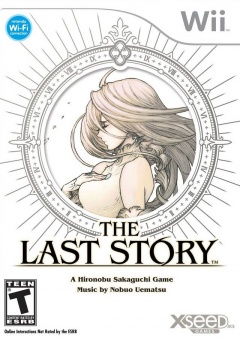
The Last Story
 There’s a narrow alley tucked into a corner of the industrial castle
town, hidden behind the bustling Arena Square. Armorsmiths and
swordcrafts crowd the path, talking shop and hawking wares to passersby
in a gaunt corridor of tiny workrooms. In the alley’s only empty corner,
a lean brute presses an elderly shopkeep against the grimy concrete and
slyly demands a cut of profit.
There’s a narrow alley tucked into a corner of the industrial castle
town, hidden behind the bustling Arena Square. Armorsmiths and
swordcrafts crowd the path, talking shop and hawking wares to passersby
in a gaunt corridor of tiny workrooms. In the alley’s only empty corner,
a lean brute presses an elderly shopkeep against the grimy concrete and
slyly demands a cut of profit.
It’s a place foul with sweat and industry. It swelters with forge and struggle. A stroll from end to end offers a glimpse of the desperation that is life for these lower class tradesman. They fight for survival, crammed into a corner of the last thriving city on the last prospering island in a rotting world.
The locals call this slum strip Artisan’s Way. It has an effortless narrative density that's so refreshing to see in a JRPG. The Last Story could have been about this place. It’s not. The Last Story is about a vampiric meteor that shoots giant lasers.
