
rpg
Ni no Kuni: Wrath of the White Witch
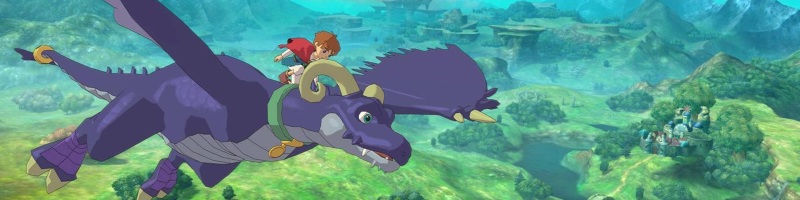
When I first heard that Level-5 and Studio Ghibli were teaming up to make a JRPG in all sense of the acronym, I thought the following: wow, so awesome, but never gonna reach the States. But here I am, covering the first hour of Ni no Kuni: Wrath of the White Witch. Call me surprised, call me ecstatic.
To start, I am a huge fan of what both companies produce, ever since seeing Studio Ghibli’s Kiki’s Delivery Service, Howl’s Moving Castle, and Spirited Away (still haven’t seen Ponyo or Arrietty yet, wah) and losing myself in the wonder that is Miyazaki’s limitless imagination. On the flipside, Level-5 has been in my life for many years now, giving me fantastic timesinks like Dark Cloud 2, Dragon Quest VIII, Rogue Galaxy (yes, I enjoyed Rogue Galaxy, so back off), and more recently the Professor Layton puzzle games. Level-5 is great at stuffing games with things to do, and Studio Ghibli’s strength is in telling a story where rules do not apply, and together it seems like they could create something powerfully wonderful. Maybe even take over the world. I love what these companies do so much that I purposely went out and bought a PlayStation 3 to play Ni no Kuni.
With that heavy bias out of the way now, let’s see what I think of their joint concoction.
Borderlands 2 - Mike's Rebuttal
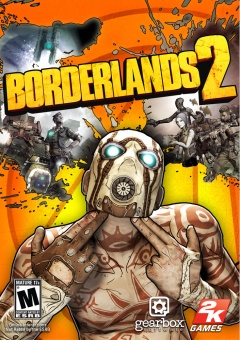 What began as a simple reply to my original Borderlands 2 review grew into a full on rebuttal almost as long as the original piece! We wouldn't normally rewrap comments into their own review, but since Mike in Omaha is our resident Borderlands expert and I was eagerly looking forward to his own thoughts on the game, I asked for permission to make a little copy and paste magic behind the scenes. What you see is his original comment to my review with some bonus formatting to highlight his specific points.
Before I hand it off to Mike, I'd like to thank him for transforming my original Borderlands 1 experience from a fun solo experience into an absolute blast of cooperative fun. He gave me guns, helped me fight the final boss together multiple times, and exponentially broadened my knowledge of the game. He's an expert on Borderlands, its biggest fan, and as you'll see below, its biggest critic. He awarded Borderlands 1 a 10/10 and provided first hour reviews for both games.
Here's Mike in Omaha on Borderlands 2 and specifically my review of the game from Monday. Original comment from October 10, 2012 at 2:07 PM.
Borderlands 2
As the release date for Borderlands 2 grew closer, I was surprised at how excited I was for the game. I loved the first Borderlands, its challenge, skill progression, and charm had obviously stuck with me, so the sequel was an obvious buy. But I decided to push purchasing it to the first major Steam sale, that couldn’t be too far off, right? Well, thanks to 2K Games coming through and sending me a review copy, I was back in Pandora much sooner than I thought.
Borderlands 2 was released last month on Windows, Xbox 360, and PlayStation 3. I played the original Borderlands on my Xbox 360, but since then I’ve built a gaming computer and my Xbox Live has expired, it was an easy decision to switch over to the PC. I’ve honestly enjoyed the experience even more on my PC, essentially no loading times certainly help, and the superior graphics don’t hurt either.
I wish I could have gotten this review done sooner, but I just finished the game for the first time and Steam reports I played for 50 hours! I completed every side quest I could find and helped a friend level up a few times, but this is a big game that is worth exploring. 50 hours of one game in a month though for me is pretty crazy. Here’s my review of Borderlands 2.
The Last Story
 There’s a narrow alley tucked into a corner of the industrial castle
town, hidden behind the bustling Arena Square. Armorsmiths and
swordcrafts crowd the path, talking shop and hawking wares to passersby
in a gaunt corridor of tiny workrooms. In the alley’s only empty corner,
a lean brute presses an elderly shopkeep against the grimy concrete and
slyly demands a cut of profit.
There’s a narrow alley tucked into a corner of the industrial castle
town, hidden behind the bustling Arena Square. Armorsmiths and
swordcrafts crowd the path, talking shop and hawking wares to passersby
in a gaunt corridor of tiny workrooms. In the alley’s only empty corner,
a lean brute presses an elderly shopkeep against the grimy concrete and
slyly demands a cut of profit.
It’s a place foul with sweat and industry. It swelters with forge and struggle. A stroll from end to end offers a glimpse of the desperation that is life for these lower class tradesman. They fight for survival, crammed into a corner of the last thriving city on the last prospering island in a rotting world.
The locals call this slum strip Artisan’s Way. It has an effortless narrative density that's so refreshing to see in a JRPG. The Last Story could have been about this place. It’s not. The Last Story is about a vampiric meteor that shoots giant lasers.
The Last Story
Operation Rainfall strikes again.
The fan campaign that convinced Nintendo of America to actually publish a hardcore Wii game this year can now celebrate its second victory. Another high profile Wii game found its way to the USA last month, though leery NOA decided to pass the risk of publishing to Xseed Games this time around.
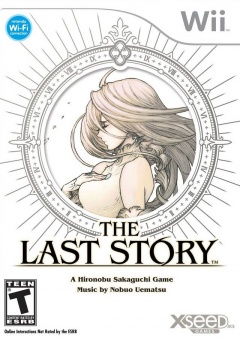
The Last Story is the latest game from director Hironobu Sakaguchi and composer Nobuo Uematsu, the duo that made Final Fantasy an institution (and vice versa). It’s hard to believe a publisher would refuse to localize a game with those two names attached, but Nintendo’s no stranger to unbelievable decisions.
I'd been waiting for this game to hit the USA for over two years. Then I had to wait even longer when my copy was put on backorder for a month after it finally launched. Here’s hoping it was worthwhile.
Penny Arcade's On The Rain-Slick Precipice of Darkness 3
 A few weeks ago, I acquired Breath of Death VII: The Beginning, Cthulhu Saves the World, and all three episodes of Penny Arcade Adventures
for eight bucks on Steam. It seemed like a steal at the time: five
brief RPG comedies for less than I spend on my daily commute.
A few weeks ago, I acquired Breath of Death VII: The Beginning, Cthulhu Saves the World, and all three episodes of Penny Arcade Adventures
for eight bucks on Steam. It seemed like a steal at the time: five
brief RPG comedies for less than I spend on my daily commute.
I dropped Breath and Cthulhu after a few hours. Zeboyd’s nutty tributes to ‘80s JRPGs had their moments, but not enough to excuse dull battles, random encounters, and big empty dungeons.
The first two Penny Arcade games weren’t much better. My disgust for their fetch quest campaign structure smothered my fondness for the Mario RPG-style battles.
So when I saw that Penny Arcade’s Whatever 3 was the result of a Zeboyd/Penny Arcade team-up, I braced myself for some whole new amalgam of repulsive game elements. It turned out to be a roundly enjoyable seven-hour adventure, one that almost excuses the twelve hours I slogged through the other four games in the bundle. Almost.
Valkyria Chronicles
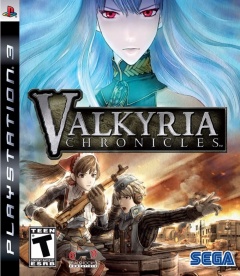 We’re celebrating our five year anniversary tomorrow with something special, but before that happens, we need to play one more first hour, and that game is Valkyria Chronicles for the PlayStation 3. Released around the world in 2008, Valkyria bridges Japanese anime graphics with an early 20th century European setting, a pairing that seems so wrong, but may actually turn out alright.
Developed and published by Sega, Valkyria Chronicles is a tactical strategy game with third-person shooter elements, also not a pairing seen often in gaming. But with in-house influences from Skies of Arcadia, Shinobi, and the Sakura Wars series, Valkyria Chronicles was never going to be a normal type of game.
This 239th first hour review was actually meant to be God of War III, but wouldn’t you know it, half an hour in I realized that Nate already covered it two years ago. One of the disadvantages of having so much content, I suppose. He was doing a better job on it anyway. So as fate would have it, here is the first hour of Valkyria Chronicles.
Mass Effect 3 - Extended Cut
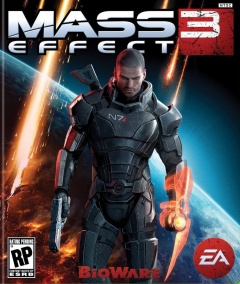 I didn't mind the original Mass Effect 3 ending that much, but others did, hated it even. But even I can admit there were some reasonable arguments against the game's last few minutes, and maybe BioWare did too, because here we are with the Mass Effect 3 Extended Cut available to download.
This introduction will be spoiler free, but after that, I'm not going to hold anything back. Nonetheless, the endings are now availabe on Youtube, but I still woke up at 4 AM this morning to download the update and replay the last few hours of the game. The developers recommend that you begin your Extended Cut journey before you enter Cronos Station, which is Mass Effect 3's point of no return. I'm not sure if it's totally necessary to start that far back (took me five hours to beat the game from this point my first time through, and over three hours my second time), but I wasn't going to take any chances the first time.
Before I go on, I believe the Extended Cut is a decent addition to Mass Effect 3, it does clear many things up, but I'm sure some will still be disappointed.
Final Fantasy XIII
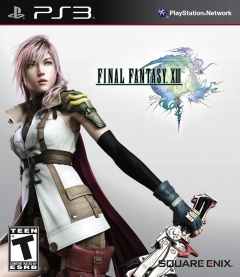 I’ve played every single numbered Final Fantasy game up through XII, so playing the thirteenth entry was inevitable. But from the guy who bought Final Fantasy VIII, IX, XI, and XII on release days, finally getting around to XIII two years after release is a bit odd. But from a combination of some bad press and plenty of other games to play, I didn’t mind.
But here we are with the first hour of Final Fantasy XIII. I’ve also reviewed VII and VIII’s first hour previously, and had mixed success, though I can solidly point to the opening of Final Fantasy VII’s to be one of the highlights in the JRPG genre. Whether we can agree or not on the rest of game is irrelevant, but it sure does kick off with a bang.
And as you’ll see, Final Fantasy XIII also kicks off with a bang, but can it keep that momentum? Or is there something deeper required for a successful first hour? We’re about to find out.
Xenoblade Chronicles
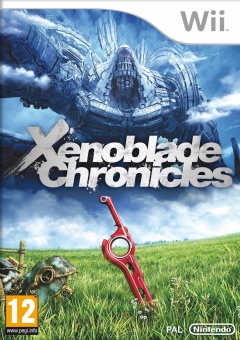 Nearly two years after its initial Japanese release, and eight months after finding its way to Europe and Australia, Nintendo of America finally saw fit to grace North American Wiis with the critically acclaimed Xenoblade Chronicles (though not without a lot of pestering it would seem). Debuting at E3 2009 under the title Monado: Beginning of the World, Monolith Soft's latest immediately captured the attention of RPG-starved Wii owners with its large, open environments, colourful atmosphere, and intriguing storyline.
Probably most intriguing, however, was the gameplay. Xenoblade—its title a tribute to Monolith's flagship franchise, Xenosaga—deviates considerably from traditional JRPGs, doing away with random encounters and turn-based combat. Instead, players do battle on the very map they explore, without a transition to a battle screen, and with the ability to see enemies long in advance, as many are simply animals going about their business in the game world. Battles themselves are much more tactical, seeing players manoeuvring about the battlefield for ideal position and using abilities at advantageous times.
Never mind that I'd been craving some decent RPG action for a while, I definitely wanted to see what Xenoblade had to offer, and was more than a little disappointed when it first looked as if I wouldn't get the chance. Better late than never, I guess. At least my Wii has something to do now besides collecting dust.
