
Mike in Omaha's reviews and writings
Borderlands 2 - Mike's Rebuttal
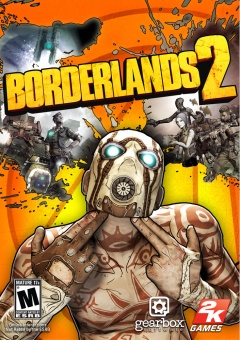 What began as a simple reply to my original Borderlands 2 review grew into a full on rebuttal almost as long as the original piece! We wouldn't normally rewrap comments into their own review, but since Mike in Omaha is our resident Borderlands expert and I was eagerly looking forward to his own thoughts on the game, I asked for permission to make a little copy and paste magic behind the scenes. What you see is his original comment to my review with some bonus formatting to highlight his specific points.
Before I hand it off to Mike, I'd like to thank him for transforming my original Borderlands 1 experience from a fun solo experience into an absolute blast of cooperative fun. He gave me guns, helped me fight the final boss together multiple times, and exponentially broadened my knowledge of the game. He's an expert on Borderlands, its biggest fan, and as you'll see below, its biggest critic. He awarded Borderlands 1 a 10/10 and provided first hour reviews for both games.
Here's Mike in Omaha on Borderlands 2 and specifically my review of the game from Monday. Original comment from October 10, 2012 at 2:07 PM.
Borderlands 2
The original Borderlands was a breakout hit for Gearbox Software in 2009. The cel-shaded mission-driven FPS-meets-Diablo-style super-hyphenated lootfest was a quirky and endearing departure from more serious franchises like Halo, Call of Duty, and Medal of Honor. Instead of pushing the same "OMG 40 modes of multiplayer!" angle that had gotten so popular, it chose to design around the concept of 4 player co-op gameplay. And it did so with relish.With the success of Borderlands, Gearbox was able to move beyond porting other studios games and their now languishing Brothers in Arms property. Instead of working on others titles, they had a verifiable sales behemoth of their own making. But with great power comes great responsibility. Games like Borderlands often struggle because harried gamers don't give them a chance. In a retail sea awash with sequels and spinoffs, new IPs often struggle to gain traction. Because of this, those gamers who do latch onto a new piece of software, often feel entitled. Afterall, they took a chance on an unknown, thus contributing to its success. These types of fans are a double edged sword. They are often some of the most vocal in supporting a game and getting the word out. But they are also frequently among the hardest to please with sequels, as the developers try to thread the needle of offering new and interesting content, while staying true to the experience of earlier games.
This is the environment that Gearbox developed Borderlands in. How does one replicate the success of a game whose popularity was so driven by its quirky uniqueness? In other words, how does one make a game that is the same, but still unique? If I had the answer... if anyone had the answer, they would most likely be very rich. It's a moving target. The question is whether Gearbox is as accurate at hitting that target as some of the guns they designed for the game. And if they are, can they relay that fact to a gamer in the first 60 minutes? Let's take a look at Borderlands 2 and find out.
Knights Contract
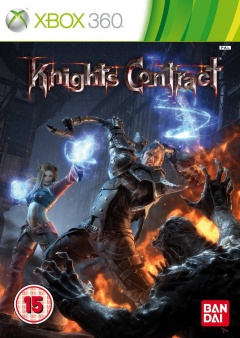 So, it's been a long time since I wrote about video games. I very much miss it. Not just the playing of video games, which has also been very sparse lately as my wife and I are preparing to welcome baby #3 into the world, but actually writing, even just contemplating gaming, video games and the industry. With run-on sentences like that last one, you can really tell it's been a while.
Well, I had the opportunity to pick up a new game yesterday and even the chance to pop it into my incredibly dusty Xbox 360. The poor thing groaned to life as I realized that it was even louder than I remember. After a litany of updates and dashboard wizardry (the new dashboard is still growing on me), I was able to get my game loaded up and running. It felt good to dim the lights and nestle into my sectional for a gaming session.
Unfortunately, I didn't intend to actually play for a full hour and didn't think I'd care enough about this game to log it. Plus, since game time has been pretty sparse lately, I wanted to play uninterrupted and just enjoy it. For that reason, this first hour will be a little bit vague with regard to the minutes, since I'm writing it from memory, rather than from notes or my usual voice recordings.
So, without further to do, lets take a look at Knights Contract, a button mashing hack-n-slash developed by Game Republic, published by Namco-Bandai and released on February 22 for Xbox 360 and PS3.
Borderlands
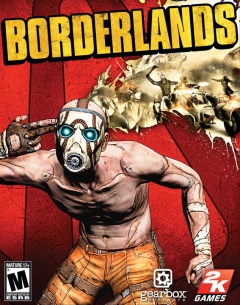 So it's been a while since I've written about games. It's actually been a while since I've played more than a few minutes of one. A crazy summer of children in the hospital, surgery, putting our dog to sleep after a nasty month-long illness, and planning a family reunion has meant that gaming has taken a back seat to lots of other things the last few months. My wife and I have made a name for the summer of 2010. It is, “The Summer of Suck”.
So that explains where I've been. But what is the reason I'm back? Well, to write a Beyond the First Hour review of course! But what game could be significant enough to get me out of my pitiful stupor of gamelessness? That game would be a little FPS that takes place on a planet called Pandora. That game would be Borderlands.
If you've been around The First Hour long enough, odds are good you've seen me comment on Borderlands, either from my First Hour review of the game, or via the comments section where we've discussed it several times. If you haven't, let me get you up to speed; I really enjoyed it. Ok, sure, that's a bit of a spoiler of the review you're about to read, but at this point in my life, I'm willing to do that. The reason is because the fourth and final DLC installment was just released on Sept. 28th.
I've been waiting for this ever since I finished the 3rd DLC back in March. So enough about me, let's get to the review.
Iron Man 2
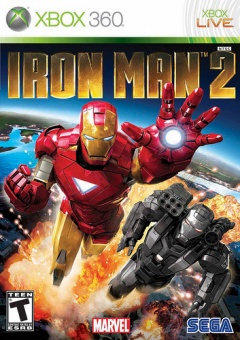 Sequels. Comic franchises converted to video games. Movie tie-ins.
Studios closing their doors. Needless to say, there are a lot of
barriers that can narrow the odds of producing a high quality title. It
would seem that Iron Man 2 was forced to hurdle all of them. As I
mentioned in my recent First Hour review of Iron Man 2, its predecessor
was critically panned. But did it deserve it? Or did it fall prey to
the echo chamber of hate that often befalls licensed products and spin
offs? The truth is, Iron Man had it’s problems. From unwieldy controls
to frame rate issues, it seemed like it stumbled each time it would
just get up to speed. But it had moments of fun, high intensity super
hero action that carried one through to each subsequent mission. Going
into a sequel, one assumes that Sega Studios San Francisco, the
developer behind both titles would make an effort to improve the
failings of the original while trying to maintain those things they got
right the first time. The question is, did they pull it off?
Sequels. Comic franchises converted to video games. Movie tie-ins.
Studios closing their doors. Needless to say, there are a lot of
barriers that can narrow the odds of producing a high quality title. It
would seem that Iron Man 2 was forced to hurdle all of them. As I
mentioned in my recent First Hour review of Iron Man 2, its predecessor
was critically panned. But did it deserve it? Or did it fall prey to
the echo chamber of hate that often befalls licensed products and spin
offs? The truth is, Iron Man had it’s problems. From unwieldy controls
to frame rate issues, it seemed like it stumbled each time it would
just get up to speed. But it had moments of fun, high intensity super
hero action that carried one through to each subsequent mission. Going
into a sequel, one assumes that Sega Studios San Francisco, the
developer behind both titles would make an effort to improve the
failings of the original while trying to maintain those things they got
right the first time. The question is, did they pull it off?After sitting in on the developer conference call for Iron Man 2, I was hopeful that things were looking good. They talked about a dedication to listening to fans, and to implementing those lessons they learned from user feedback on the first game. They talked about simplified controls, vast levels, destructible environments and deep customization. They touted a boss that is “bigger than any boss in any game ever”. And War Machine. War Machine sounded like a perfect addition to the Iron Man gaming universe. Yes, it sounded like it had really come together. And so I eagerly anticipated my review copy, thinking back to the flawed but fun experience I had with the first game.
Iron Man 2
You may have seen our recent
article covering a conference call presented by Iron Man 2 developer:
Sega San Francisco. The First Hour was invited to take part in
a small pre-release Q&A with two of the people involved with the
production of the game. I sat in on the call and submitted a few
questions. It was a good conversation and lots of aspects of the game
were touched on, so if you’d like some more insight into what went
into making this game what it is, please check it out here. Ok, now that that’s out of the way, I recently sat down with a copy of Iron Man 2. To state the obvious, Iron Man 2 is the sequel to Iron Man. Both games were released to coincide with the movies of the same name. As most people know, releasing a game on a movies timeline can be... problematic. It often leads to rushed development schedules and lots of cut corners in the final product. Despite this situation, the first game was commercially successful. However, it struggled to win over most critics. With an aggregate score of 45 on Metacritic, that’s probably an understatement. However, I was one of the people who enjoyed the first game (while recognizing it’s many flaws), which is why I was chosen/volunteered to review the sequel.
Much like Greg’s recent review of Saboteur, this game is the final release of a studio before it gets shut down. Sega San Fancisco, formerly Secret Level Games will close shortly after the release of Iron Man 2. This does not bode well for the 3 other gamers besides me crossing their fingers for a Golden Axe: Beast Rider sequel.
I went into this first hour with an open mind and reasonable expectations. Having enjoyed the first game, more of the same with increased graphical performance, control tweaks and mission diversity would be a good start. Let’s see if they were able to squeeze any of that into the first 60 minutes of Iron Man 2.
Iron Man 2 Conference Q&A
We recently had the pleasure of attending a conference call with the producer and director of the new video game, Iron Man 2. With the film set to release on May 7th and the game on May 4th, Tony Stark is ready to take on the world again. Iron Man 2 will be available for the Xbox 360, PlayStation 3, Wii, DS, and PSP. It will be Sega San Francisco's final release (formerly Secret Level) as Sega is closing up shop. Secret Level previously developed Golden Axe: Beast Rider and the first Iron Man game.Mike is a veteran of both Golden Axe and Iron Man titles so he was the perfect fit to submit questions for the conference and he will be handling the eventual first hour and full reviews of Iron Man 2. Look for those in mid May.
Borderlands
When I first heard about Borderlands,
I somehow just knew it was going to be a game that I would like.
I don’t know how I knew, I just knew. It reminds me of the days
when I was 12 years old and shopped for video games by looking at the
pictures on the back of the game box in the toy store so long ago.
I don’t know how it worked, but I could look at those 2 or 3 screenshots
and read that lonely paragraph and know with certainty if I would like
the game or not. Just like shopping in the toy store years ago,
I actually knew very little about the details of Borderlands.
I knew it was an FPS, and I had heard it had RPG elements. I had read
a story on Kotaku that discussed a drastic shift from “realistic”
graphics to a more “cartoony” cell shaded design. There was
little else I could tell you about the game. But somehow, I wanted
it. So, I added it to my mental list of games to play without too much thought. I wasn’t in a big hurry, simply because I’m generally pretty patient about getting games. This allows me to scoop up great deals from the Target clearance game shelf. As Greg, purveyor of First Hour, noted in a recent conversation on LIVE, I’m a person who often likes games that other people don’t. Well, I’m also a person who loves to get a bargain and both traits suit me well for the clearance shelf. If I wait that first month to buy a game and it’s a critical and commercial failure, there’s a good chance it will see 50% off on the Target clearance shelf. It wasn’t long before I realized that Borderlands would not be one of those games. Apparently, people were liking it. Good for the developers and bad for my wallet. This only fueled my desire to play the game sooner rather than later. I finally found a Sunday ad with the game on sale for $39.99 and decided it was fate. You’re about to read the first hour of what fate decided was a game I must play.
L!ght Deluxe
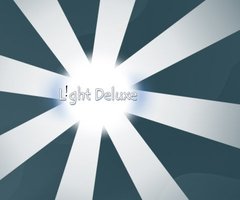
Simple yet complex? Possibly. Simply complex? Not quite right. I know it’s here somewhere and I think you get the point. L!ght Deluxe is a delightfully simple puzzle game from a new-to-me Indie Developer: Nemo Games. Looking at their website, it would appear that L!ght Deluxe is their first, or perhaps their only game. While the game definitely feels like an early effort, it shows promise and offers some interesting aspects to its gameplay.
L!ght deluxe is built on a basic concept that allows degrees of complexity to be added as you advance through the "levels". At its elemental level, you are trying to connect a line, uninterrupted, from its origin to its ultimate destination. Each puzzle takes place on a large grid, much like a Chess board. Early levels are smaller, perhaps grids that are 6 x 6 squares in size. However, as levels increase in complexity and difficulty, they get larger.
The line you are tasked with completing represents light and behaves as one would expect a beam of light (or laser to add a bit of intensity) to behave. In my opinion, it’s this foundational principle that allows the game to be successful much earlier than it would be otherwise. We all inherently understand that light bounces off reflective surfaces and changes colors as it passes or filters through other materials. The nature of light, and our assumed understanding of it, allows the developers to move more quickly with tutorials as we progress through the game and are introduced to the gradually increasing complexity of the puzzle designs.
Heavenly Sword
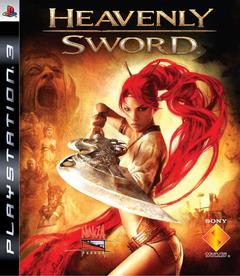
Heavenly Sword is the latest PS3 exclusive title from developers Ninja Theory. They are a relatively new and smaller development house based in Cambridge, England. Originally founded under the name Just Add Monsters, their only previous project was an unrelated original Xbox exclusive entitled Kung Fu Chaos. Released in 2007, Heavenly Sword was hyped as displaying an example of what the PS3 was truly capable of.
The game follows the story of Nariko as she comes face to face with the prophecy of her people, a prophecy that may lead to victory over an opposing army but will almost surely end in her death. According to the story, Nariko’s clan has possession of The Heavenly Sword, a gift left behind by a warrior deity who once wielded the sword to protect them. It is now their sworn duty to protect the sword and to make sure it doesn’t fall into the wrong hands. Legend has it that any mortal who wields the sword will be granted amazing powers in combat, enabling them to slay armies, but will succumb to it’s power by eventually being cursed and dying a horrible death. The prophecy further says a male warrior will be born on a special day with the power to wield the sword. But on that prophetic day, the very feminine Nariko is born instead.
