
hack and slash
Warhammer 40,000: Space Marine
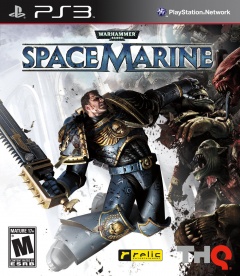 I find it kind of amazing that I grew up as a geek and never experienced any of the Warhammer 40,000 gaming culture. This is a tabletop game that has expanded far beyond the living room, including graphic novels, movies, books, and lots of video games.
Released last September from Relic Entertainment, Warhammer 40,000: Space Marine stars one of the more popular aspects of the lore: Ultramarines. Super soldiers in huge armor that are seemingly unmatched on the battlefield. To the Warhammer ignorant, they may look like rip offs of the COG soldiers from Gears of War, which is a rather unfortunate comparison considering Warhammer has been around since 1987 and has undoubtedly inspired dozens of video game universes itself, including Gears.
So it’s time for me to take my first steps into the Warhammer 40,000 universe with Space Marine on the PlayStation 3. In one hour, I’ll know whether or not I want to stay any longer.
Diablo III
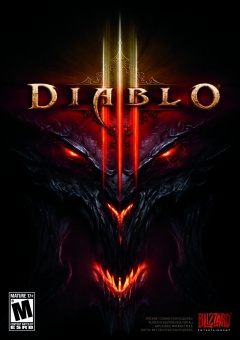 The Diablo series is the most important series in my life. While I missed Diablo, I caught its sequel by the throat on release day and was hooked for a good…well, I’m still off-and-on addicted. So sue me. Diablo II was everything I wanted. It was fast paced, exciting, the gathering of objects was awesome, leveling was fun, playing through the game more than once was fun.
I love the Diablo series so much, that when Diablo III was announced, I called every friend I knew that ever played it and told them to check the website so they could experience the surprise. I was SO happy.
I waited 12 years for Diablo III. I got it at the midnight prerelease and tried playing the game, and we all know of the infamous Error 37. I thought about writing a first hour review of just “error 37” every minute for an hour. But anyway…
But I expected servers to be destroyed…I mean, it IS battle.net. But you know what? Despite being more than happy to wait for the servers to be available to me: I wish I had never bought it.
The truth is, this game disappointed me in almost every way possible. Let’s talk about why and what.
Diablo III
The original Diablo was introduced to me by a friend probably no more than 3 years after its release, before my highschool years. Diablo would eventually see some of the most unforgettable and impactful gaming moments of our childhoods, and those of our closest friends—largely due to how much it scared the crap out of us. The first time I laid eyes on The Butcher and heard that deep, grating voice—"Ah... Fresh meat"—I slammed the door to his lair in his face and ran all the way out of the dungeon (a little excessive since enemies can't use doors). I can distictly recall at least two other moments that caused me to toss my mouse or phone (I was talking to said friend while playing once) in suprise and fear. Ah, the good old days.
Diablo II and its expansion would demand exponentially larger amounts of our attention due to its improved graphics, presentation, story, and gameplay (both online and off). It was a staple in our gaming repertoires, and inspired many discussions and stories of our own. I spent a good deal of my time every night reading through Brady Games' strategy guide.
When all was said and done, standing in the wake of the Worldstone's destruction, Diablo fans were sure we would someday see a sequel. It was just a question of when. The answer came at the Blizzard Worldwide Invitational in Paris on June 28, 2008, though it would be many years more before an official release date was announced. On March 15, 2012, Blizzard finally announced that the release date was only two short months away.
And now, 11 years in the making, Diablo III couldn't have come at a more awkward time for me... I'm currently in the middle of two jobs, one of which takes up the entirety of my weekends. Throw in a small spat of the flu and new member of the family (a stray cat my girlfriend decided to bring home one night), and I'm left which much less time to play, let alone write, as I would've liked...but I finally found the time, and you didn't come hear to read my whining, so let's jump into the first hour of Diablo III.
Diablo II - History and Gameplay
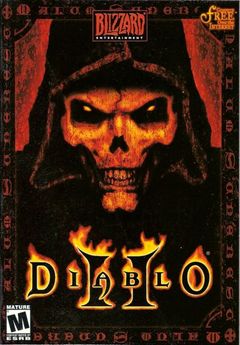 On November 30th, 1996 the world was rocked by the release of what is quite possibly the start of the isometric hack’n’slash genre: Diablo. It was renowned for its remarkably dark atmosphere, creative character customization, easy control scheme and extremely in-depth storytelling.
Not only did it have all of this, it also had online multiplayer via a free service called Battle.net that is also host to virtually all of Blizzard's games.
After a few years of garnering international success, it was announced that a sequel was in the works. Diablo II was released on June 29th, 2000. For me, educationally, it was all downhill from there.
This is part one of a multi-part review and historical remembrance of Diablo II. We also played the first hour of Diablo II a few years ago.
Fable III
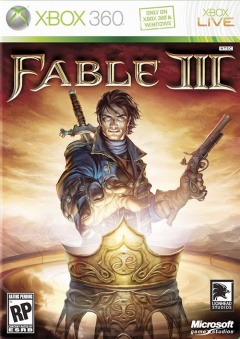 I wasn’t much of a fan of Fable II, so I’ll be honest to say that Fable III has a lot to prove to get me to play past the first hour. The gameplay needed a lot of improvement to start, and the overall presentation of Fable II just felt stuttering and lazy. I do have some hopes that developers can learn from their mistakes, however.
Released in October of last year, Fable III received good scores from major review outlets and had sold over two million copies by the end of the year. A respectable number, though creator Peter Molyneux says it needs to sell about five million for the series to continue. I’m not an industry analyst but this seems like a long way to go now that the holiday season is over.
While I may not like the finished product much, I will probably continue to play the first hour of Molyneux’s games though as he can just be so fiendishly over the top with his ambition and pride. Will Fable III be able to succeed where its predecessor faltered? Or will its first hour lock me in? Let’s find out.
Heavenly Sword
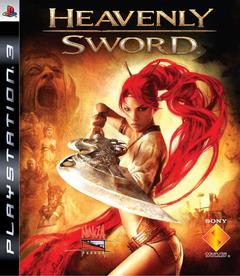
Heavenly Sword is the latest PS3 exclusive title from developers Ninja Theory. They are a relatively new and smaller development house based in Cambridge, England. Originally founded under the name Just Add Monsters, their only previous project was an unrelated original Xbox exclusive entitled Kung Fu Chaos. Released in 2007, Heavenly Sword was hyped as displaying an example of what the PS3 was truly capable of.
The game follows the story of Nariko as she comes face to face with the prophecy of her people, a prophecy that may lead to victory over an opposing army but will almost surely end in her death. According to the story, Nariko’s clan has possession of The Heavenly Sword, a gift left behind by a warrior deity who once wielded the sword to protect them. It is now their sworn duty to protect the sword and to make sure it doesn’t fall into the wrong hands. Legend has it that any mortal who wields the sword will be granted amazing powers in combat, enabling them to slay armies, but will succumb to it’s power by eventually being cursed and dying a horrible death. The prophecy further says a male warrior will be born on a special day with the power to wield the sword. But on that prophetic day, the very feminine Nariko is born instead.
Phantasy Star Zero
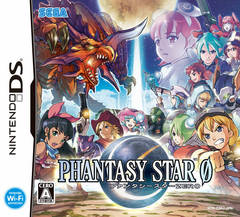
Phantasy Star is back with Phantasy Star 0, the sequel to the console based Phantasy Star Online series. However, this time Sega managed to pack in a complete online experience on the Nintendo DS, allowing four players to connect together and fight in its science fiction/fantasy setting. Phantasy Star 0 was released in November and features not only a full fledged online game, but also an offline story mode for when your friends aren't around.
Grant has chosen to keep his first hour review limited to the offline mode, it is probably a toss up whether a new player will play online or offline anyway.
Greg's note: In high school, I had a few friends who were obsessed with Phantasy Star Online on the GameCube. They would come over to my house and just sit on a television all night playing it, though never online. It was the oddest thing and I always wondered why they would play a game called Phantasy Star Online exclusively off. Either way, it was entertaining watching them get wiped out by a boss but mostly everyone was just bored to tears as they discussed drop rates and their latest swords. One of my friends who did play online actually bought the giant GameCube controller keyboard, where a typical controller was mutilated and had 108 keys stuck between the thumstick and buttons. Awkward
Here's Grant's first hour review of Phantasy Star 0 (or Phantasy Star Zero for you 0/O impaired readers like me).
The Lord of the Rings: The Return of the King
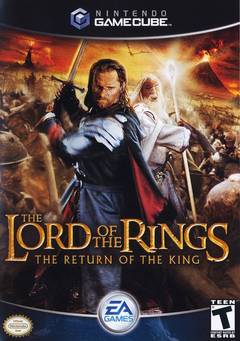
The second game in my marathon is The Lord of the Rings: The Return of the King. To simplify, I will assume you have already read my Two Towers review, so if you haven't you may want to do that first.
Return of the King (RotK) is the follow-up to The Two Towers. This game was released in conjunction with the movie, so it follows it much more closely. The levels are taken only from the final movie (which doesn't always correspond to the final book).
In order to one-up the previous game, RotK raises the number of playable characters from three to five right off the bat, with several unlockable characters as well. It also adds interaction within the environment, two-player co-op, and a bunch of tweaks such as graphical enhancements.
Will these changes be enough to help Return of the King surpass The Two Towers? Will its First Hour be as well paced as its predecessor? Or will neither of these things happen?
The Lord of the Rings: The Two Towers
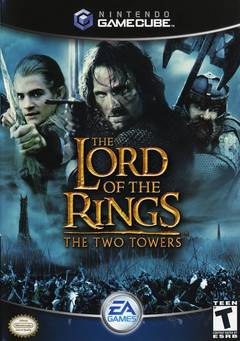
This is the start of a marathon of Lord of the Rings gaming, in which I play the first hour of three games based on the Lord of the Rings movies. Strangely enough the three games are not one for each movie; there was in fact no game made for the Fellowship of the Ring movie. Instead, I'll be playing Lord of the Rings: The Third Age as the third game.
The Lord of the Rings is one of the most beloved series of books ever written, and the movies based on them are some of the best-selling of all time. What I want to find out is if the IP was able to make the jump to video games with the same fidelity.
I read these books some years back, before the movies came out, and they are some of my favorite books. Because of this, I may throw around a few terms that are unfamiliar if you have not read the books or watched the movies. If this is the case I strongly urge you to read the books.
Electronic Arts had the video game rights to the Lord of the Rings films (Sierra had the rights to the books; I'm not really sure how that works), but since the first film came out around the time the console cycle entered the next generation, EA decided to skip Fellowship of the Ring and instead focus on releasing a game that coincided with the premier of The Two Towers. Because of this, the game starts with several scenes from The Fellowship of the Ring.
Which stigma will this game live up to: Lord of the Rings, or movie game? Find out. Here's the first hour of The Lord of the Ring: The Two Towers for the Nintendo GameCube.
Golden Axe: Beast Rider
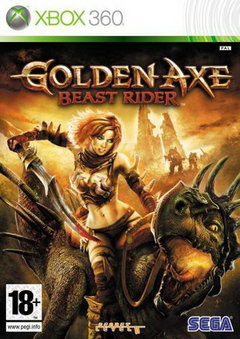
Golden Axe: Beast Rider is the long anticipated entry in the classic Sega-developed series; Golden Axe. The franchise began life in 1989 as an arcade game but was later successfully ported to both the Master System and Genesis with multiple sequels and spin-offs to follow over the years. This installment doesn't play so much as a sequel, but rather as a re-imagining of the first game in which the evil Death Adder must be vanquished. It was developed by a relatively unknown developer; Secret Level Games.
Editor's Note: Mike B. is a brand new guest writer here at the First Hour, you may also see him around here as Mike in Omaha. He's enthusiastic about game writing and has even been to E3! I haven't even been west of Wyoming. In all seriousness though, great to have him on board and keep an eye out for more from him in the future. And like always, if you'd like to write for the First Hour, just shoot me an email and we'll talk. Back to Mike's review.
