
ds
Contra 4
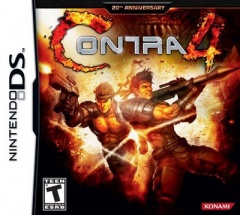 Casual observers must be baffled when they watch someone play through tough old-school games. They see the tense hands, the parched eyes, the tight scowl; they must wonder, why would anyone subject themselves to this? Is it a determination to succeed, or a desire to suffer?
Sometimes, even the player doesn’t know. When the deaths start piling up, frustration can obscure the distinction between a worthy challenge and a cheap wringer. For some, it doesn’t matter: if the game can be beaten, they will beat it.
I once had that unshakable tenacity, but I won’t put up with cheap traps anymore. I’m learning how to spot the dirty tricks that games use to torture players. And Contra 4 is a hell of a teacher.
LEGO Harry Potter: Years 5-7
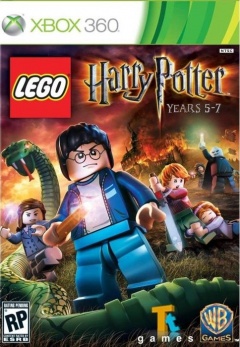 I love the LEGO videogames. I’ve said this before, and I’ll probably keep on saying it, especially if the folks over at Traveller’s Tales use their magical powers to read my mind and make LEGO Lord of the Rings or LEGO Men in Black next. My favorite of the bunch so far has been LEGO Harry Potter, Years 1-4, which managed to follow both the films and books while also giving fans a ton of love with their attention to details. It seemed perfect for LEGO-izing, with magic and a wide cast of characters, but I was disappointed that it only covered half of Harry’s legacy; the developers padded out the experience by giving players Hogwarts, a huge hub to explore that revealed more and more in a Metroidvania style after certain spells and classmates were acquired.
J.K. Rowling finished up all the books way back in 2007, and the money-making films now dead and done until some fool tries to remake them all in like ten years. I’ve never played any of the movie tie-in videogames—though I did have fun flying on brooms and catching Golden Snitches with Harry Potter: Quidditch World Cup for the PlayStation 2—but from what I can gather, many of them are not great. Especially the Kinect ones, which tries to turn Harry into a new recruit for Gears of War. LEGO Harry Potter, Years 5-7 could very well be the last greatest game for the franchise, simply because there’s probably not much else coming out for it afterwards.
My favorite thing about the LEGO videogames are that they are perfect for playing co-op. There’s a challenge, sure, but exploring the levels and piecing everything together is more fun with a partner. Like my wife, Tara Abbamondi. Comments from her are in red!
Okay, let’s see if the first hour of LEGO Harry Potter, Years 5-7 is just as magical as the previous game’s.
Ghostbusters: The Video Game
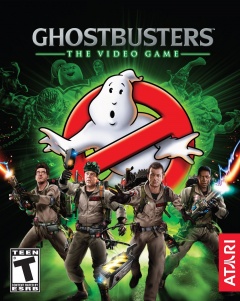 Happy Halloween, everyone! Time for a spooky first hour with Ghostbusters: The Video Game. As the game sequel to one of most popular, family-friendly Halloween movies out there, and as one of my favorite films growing up, I found it my duty to finally play this game I bought during a Steam sale cheap years ago.
Released in mid-2009 on every platform available, Ghostbusters: The Video Game played on early trailer hype and fan nostalgia to sell over a million copies that summer while receiving pretty decent scores. It doesn’t hurt that essentially the entire cast returned for what some call “Ghostbusters 3”, not to mention Harold Ramis and Dan Akroyd worked on the game script.
I’ll be playing Ghostbusters in Windows, a few years ago I gave the Xbox 360 demo a try and wasn’t impressed at all, so I’m curious what my reaction will be on this platform, years later. Well, bustin’ makes me feel good, so let’s get started.
Professor Layton and the Last Specter
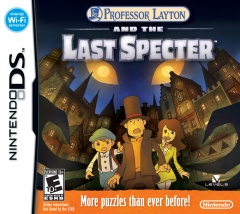 I’ve played and beaten the first three Professor Layton games, and while I continue to return to them every year like clockwork, they have been essentially the same game every time. Sure, the stories change, and the puzzles are a bit different, but the core gameplay has remained the same: move around town poking at stuff, solve puzzles, talk to people, eventually linearally solve the overarching mystery that ends in some bizarre manner. I don’t hate it, it’s just repetitive.
But I love the puzzles, and the characters and setting are so charming, I can’t help but play. The fourth game in the series, Professor Layton and the Last Specter, has finally been released in North America after being out in Japan for nearly two years. Though we’re slowly catching up, the fifth game was just released earlier this year on the 3Ds, so we’ll hopefully be playing that come next fall.
Last Specter also holds a special surprise: London Life. I don’t know much about the new game, let alone this super-minigame inside it, but there’s plenty of buzz around it on the internet. So for a special first hour, we’ll be playing the first half-hour of the main game, and then switching over to London Life, whatever that may be. Let’s get right to it.
Kirby Mass Attack
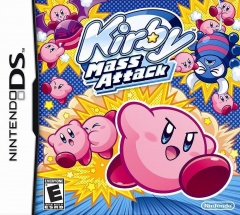 Like the titular pink puff, the Kirby series has worn many hats in its
nineteen years. Almost every 2D action-platformer has been partnered
with an experimental pinball sim or an arcade racer or some amazing
miniature golf mutation. As much as I enjoy each iteration of the main
Dream Land style, the spinoffs are what really intrigue me, even when
they fail. Sure, Kirby Tilt 'n Tumble may be unplayable with the Game
Boy Color's dark screen and restrictive viewing angle, but it broke
ground for motion controls six years before Wii Sports taught us to
waggle.
Like the titular pink puff, the Kirby series has worn many hats in its
nineteen years. Almost every 2D action-platformer has been partnered
with an experimental pinball sim or an arcade racer or some amazing
miniature golf mutation. As much as I enjoy each iteration of the main
Dream Land style, the spinoffs are what really intrigue me, even when
they fail. Sure, Kirby Tilt 'n Tumble may be unplayable with the Game
Boy Color's dark screen and restrictive viewing angle, but it broke
ground for motion controls six years before Wii Sports taught us to
waggle.
It's a good season for Kirby fans, as we get a bit of both sides in under two months. Kirby's Return to Dream Land in October looks like the long-awaited Super Star successor, and September sees Kirby get multiplied in Kirby Mass Attack. Revisiting the stylus-centrism of Canvas Curse, Mass Attack tasks players with flicking, dragging, and leading up to ten Kirbys at a time through a puzzle platforming adventure. It's not the most eye-opening Kirby spinoff -- the concept is essentially a pared-down Pikmin -- but it makes the most of a middling concept.
Kirby Canvas Curse was widely dubbed the Nintendo DS's first worthy purchase. Kirby Mass Attack may be its last.
Plants vs. Zombies
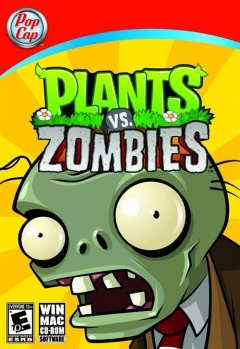 Plants vs. Zombies is a game I've been eyeing for a while. It regularly tempted me at $10 Steam with even cheaper sale prices. This summer's sale finally put me over the edge. Every so
often you need some good tower defense action, and PvZ seemed like a unique yet highly praised take on the genre. Its cartoonish,
Popcap/flash feel and simple five-lane setup makes things perfect for
beginners. And it has enjoyed massive success over a huge variety of
platforms. Originating on PC, PvZ has since expanded to every modern
platform imaginable, both traditional and mobile. Popcap is undeniably a casual gaming powerhouse. The Bejeweled and Feeding
Frenzy creators certainly know how to make products and pricing that
clicks with the average consumer. They've been so successful that EA recently purchased the
company for ~$750 million.
Plants vs. Zombies is a game I've been eyeing for a while. It regularly tempted me at $10 Steam with even cheaper sale prices. This summer's sale finally put me over the edge. Every so
often you need some good tower defense action, and PvZ seemed like a unique yet highly praised take on the genre. Its cartoonish,
Popcap/flash feel and simple five-lane setup makes things perfect for
beginners. And it has enjoyed massive success over a huge variety of
platforms. Originating on PC, PvZ has since expanded to every modern
platform imaginable, both traditional and mobile. Popcap is undeniably a casual gaming powerhouse. The Bejeweled and Feeding
Frenzy creators certainly know how to make products and pricing that
clicks with the average consumer. They've been so successful that EA recently purchased the
company for ~$750 million.
For the most part, PvZ exemplifies this success. It creates a casual-friendly atmosphere with calculated progressive learning combined with enough longevity and a tad of optional difficulty to round out the complete package. The game starts slowly, at first holding your hand with only a couple plant options (towers) available to defend your house from a weak zombie horde on a completely barren level. With only five lanes to defend, beginners will learn quickly what it takes to operate. In case they make mistakes, the game includes a get-out-of-jail-free card, in the form of zombie-clearing machines that activate and clear the lane should a zombie make it past the plants. For a while, the game introduces a new plant on almost every level, encouraging the player to try them out and discover what they're worth. Soon enough, juggling several plant types on more obnoxious levels will be a requirement.
Dragon Quest Monsters: Joker
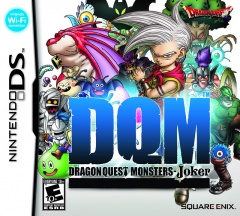 Two franchises I consider to be inherently Japanese are Dragon Quest—really, Dragon Warrior—and Pokemon, and both were born under the mighty and massive RPG tree, but have had their fair share of spin-offs. With Pokemon, its ranged from zaniness like taking pictures to brawling with other well-known gaming characters to rogue dungeon crawlers. As for Dragon Quest, they took a page out of their younger sibling's book, releasing Dragon Warrior Monsters in 1999 for the Game Boy Color; in it, a young boy is out to save his sister by collecting monsters, breeding them, and pitting them against other monsters. Pretty close to the Pokemon formula, but naturally featuring the classic monsters of the Dragon Quest franchise. Things like slimes, gremlins, and wyverns. There was more of a focus on taming monsters than simply capturing them, too. But it hooked players nonetheless.
The monster-raising series has continued on over the years, and I'm here today to give TOSE's 2007 Nintendo DS release Dragon Quest Monsters: Joker a try, a few weeks shy of the sequel's release. I have no expectations other than Pokemon mixed with my favorite classic RPG monsters, and maybe some light implementation of the DS touchscreen. And I hope the joker subtitle has nothing to do with that crazy jester from Dragon Quest VIII.
A half-hour review approaches!
Tower Defense Standoff - GRave Defense HD and Fieldrunners HD
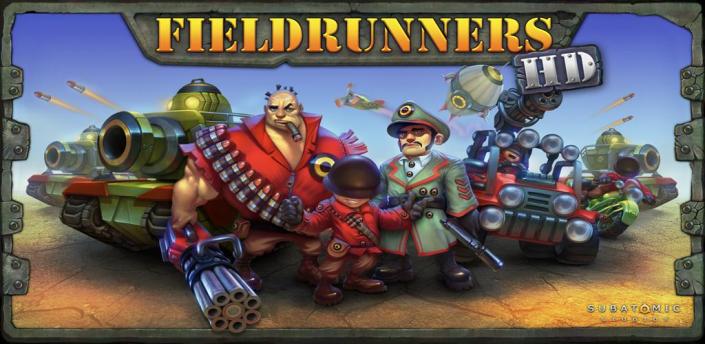 I’m pretty new to the tower defense genre, I missed out on the first few waves of games including the massively popular Desktop Tower Defense, and first experienced it with Plants vs. Zombies, which is probably a sub-genre of its own. But since buying my Android phone, I’ve been exposed to a lot of games I couldn’t imagine myself playing even a few months ago. Two of those are tower defense games.
Fieldrunners HD and GRave Defense HD are great examples of two distinct approaches at the tower defense genre. Both are easy to pick up and play for 10 minutes, but are amazingly effective at grabbing you in for over an hour. However, that is where the similarities end, and it is their differences that really define them.
Both titles are available right now for under $3 on the Android Market, and Fieldrunners is also available on a wide variety of devices including iOS and the Nintendo DS. Here’s my short reviews of Fieldrunners HD and GRave Defense HD.
Harry Potter and the Deathly Hallows - Part One
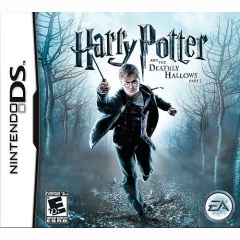 Some months back, while browsing the shelves at our local GameStop, my wife picked out Harry Potter and the Deathly Hallows, Part One for the Nintendo DS; I had earlier warned her of the bad reviews for the Kinect-heavy atrocity of the same name that dropped on the Xbox 360, and we both assumed that the DS version would almost have to be better than that. However, she did not play for very long, returning to her staples of Animal Crossing: Wild World and The New Super Mario Bros. She either lost interest or got stuck; at one point, I had to help her through an unclear potion-making minigame.
With the final installment of the final movie creeping closer, I thought this would be a perfect time to see how solid of a Harry Potter game it actually is. Plus, I had some time to kill while on vacation.
Aparecium!
I Didn't Beat This Game: Dragon Quest IX: Sentinels of the Starry Skies
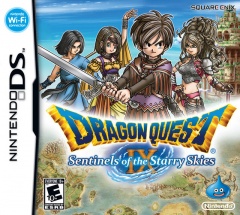 I knew full well going into Dragon Quest IX: Sentinels of the Starry Skies that it was going to be a long game. Its pedigree was more than enough, I had friends who had played the previous entries for hundreds of hours, and the series is known for essentially being the Japanese RPG.
But Dragon Quest IX had quickly gained the reputation of being the Nintendo DS RPG, so I wasn’t going to miss out on this event. I plugged away at the game for hours, over 30 in total, but then I stopped. I turned it off one day last August and that was it. I tried getting back into the game a few times, but each time I died quickly or was completely lost on where to go next.
It’s almost a little disappointing to me that I don’t really have a good immediate reason on why I quit, but maybe I can tease something out of myself with a little mind dumping.
