
Steve's reviews and writings
Divekick

Sometimes the simplest things in life can be the best. And while sometimes you need fifteen buttons to play a game, sometimes you only need two. Today we'll be reviewing the two-button fighting game, Divekick. Originally envisioned and created by a tiny team of gamers in the fighting game community, Divekick seeks to break down the complex fighting game into a single move, a jumping downwards kick (or divekick). First conceived very late at night after a tournament ("hey, wouldn't it be hilarious to make a game where you can only divekick?"), it ran through a successful kickstarter campaign, cancelled that campaign since they found a publisher, successfully got greenlit on Steam, and now released on Steam/PSN/Vita. Not bad at all for its origins.
Skyward Collapse
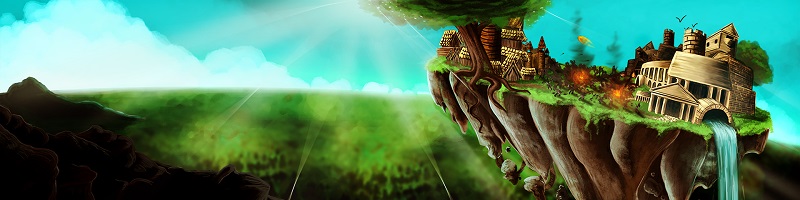
What does it mean to be a god if no one will listen to you? Arcen Games looks at this with a bit of humor in their latest release, Skyward Collapse. Here, we play an omniscient, omnipresent celestial being, tasked with cultivating and manipulating two factions that would like nothing more than to see the other eradicated. That's an interesting scenario on its own, but we are further entangled by a godly need for entertainment (conflict) and plagued by natural "woes." To further jumble our troubles, rogue elements including deities and mythological creatures try to spoil our day. In this turn based strategy/god sim, we inherit the intriguing situation of lacking direct control yet commanding plenty of manipulation.
The Cat Lady

Well, I was not entirely ready for this. The Cat Lady, released last year by Screen 7 and created almost entirely by Remigiusz Michalski, was absolutely no where on my radar until I recently saw a preview of it in action. I suppose this isn't overly surprising. Michalski's and his studio, Harvester Games, have only developed two titles. The first, released in 2009, is called Downfall and is apparently both highly acclaimed and fairly successful. The second is this game, The Cat Lady. Both are created in Adventure Game Studio and are horror adventures, further limiting the client base (unless you have the media strength of The Walking Dead).
Yet, this ended up being one of the most interesting and complete titles I've played in ages. And somehow, that's even more satisfying when it's a complete surprise. It feels like this game has been stirring and simmering over the course of many years, and that probably isn't very far from the truth. This is an unbelievably mature experience, most likely the most mature game I've ever played. Many of the themes are very dark and complex and real, and this is one of the few instances I can imagine where an age/user discretion is actually warranted. And that can also be a bit of a warning for the rest of this article.
Eufloria
 Originally known as Dyson during its prototype stage, Eufloria is self-described as a "space gardening RTS." What that means is not very clear without some description, but in essence, Eufloria is about growth and destruction. Building up your own spores of pollen to seed across the galaxy and wreack havoc on your enemies. Any tree not your color is marked for death and total domination is necessary for your own survival.
Well, that might sound cooler than it actually is, but Eufloria is our latest go-around at Indie Impressions. Developed by a trio of indie devs, Eufloria was released in 2009 for Windows and later released on Linux, OSX, iOS, Android, and PlayStation Network. Here is Steve and Greg's take on the game after playing a few hours.
Gratuitous Tank Battles and Expansion: The Western Front
 Gratuitous Tank Battles is a unique take on tower-strategy mechanics, created by a man who
clearly has a strong attention to detail. This article will be covering
both the base game, released this past May, and its expansion The Western Front,
which is being released this today on Steam. Both are developed by
Positech Games, which is more or less known as
Cliff "cliffski" Harris. At first glance, GTB appears to be a standard tower defense
game covered in a fine finish, but things quickly
become more complicated. For a bit of background reading, we do
also have a preview of the game which goes over the basics from a different point of view.
Gratuitous Tank Battles is a unique take on tower-strategy mechanics, created by a man who
clearly has a strong attention to detail. This article will be covering
both the base game, released this past May, and its expansion The Western Front,
which is being released this today on Steam. Both are developed by
Positech Games, which is more or less known as
Cliff "cliffski" Harris. At first glance, GTB appears to be a standard tower defense
game covered in a fine finish, but things quickly
become more complicated. For a bit of background reading, we do
also have a preview of the game which goes over the basics from a different point of view.Gemini Rue
 Gemini Rue. Duality + regret. A remarkably thoughtful and fitting name for this game (and certainly much more pleasing than the original Boryokudan Rue). Another entry in the monstrous Wadjet Eye Games adventure lineup and
primarily the child of Joshua Nuernberger, Gemini Rue has been very well
received since its release in early 2011. The game takes place in a futuristic sci-fi world with some touches of cyberpunk thrown in. As with other recent Wadjet games, it is a full experience complete with voice acting and attempts to push the underlying Adventure Game Studio engine as far as it can. As a whole, their efforts greatly pay off, riding on the strength of the characters and overarching story.
Gemini Rue. Duality + regret. A remarkably thoughtful and fitting name for this game (and certainly much more pleasing than the original Boryokudan Rue). Another entry in the monstrous Wadjet Eye Games adventure lineup and
primarily the child of Joshua Nuernberger, Gemini Rue has been very well
received since its release in early 2011. The game takes place in a futuristic sci-fi world with some touches of cyberpunk thrown in. As with other recent Wadjet games, it is a full experience complete with voice acting and attempts to push the underlying Adventure Game Studio engine as far as it can. As a whole, their efforts greatly pay off, riding on the strength of the characters and overarching story.Penumbra: Black Plague
 After playing Penumbra: Overture, everyone knew a sequel was on its way. The ending leaves scores of questions unanswered and perfectly prepares a follow-up. In 2008, Frictional Games released Penumbra: Black Plague, and in many ways, Black Plague does make the original feel like a mere overture. Frictional well heeded feedback following Overture's release and significantly tuned up their product in regards to pacing, controls, physics, and character interaction. All while continuing the fantastically creepy atmosphere and adding significant new elements to the story.
Dear Esther
 I first became aware of Dear Esther on the day it was released, as news passed that it recouped its Indie Fund investment in a mere six hours. Somehow, I entirely missed word of the game prior to that, but as I read more, I knew I had to play it. While it will take multiple playthroughs to obtain the game's full experience (due to semi-randomized dialogue), I came away a bit underwhelmed by the game. I normally eat up intentionally vague/confusing dialogue-based stories, but this story seems a bit more pedestrian than most (even if the vagueness fully makes sense within the story). But this in no way takes away from the game's other draw; its relentlessly gorgeous handcrafted visuals, with each frame packed in detail.
Blackwell Unbound
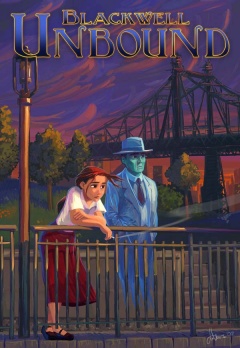 Fresh on the heels of the well-received The Blackwell Legacy arrives Blackwell Unbound. After playing and thoroughly enjoying the first for our Indie Impression feature, continuing was an inevitability. For reference, Legacy was released in 2006, and Unbound in 2007. There have since been two more releases in the semi-episodic series, so I'm still a bit behind. I am playing the re-released versions in the Blackwell Bundle, which offer improved voice acting as well as bug fixes and some extras. The Blackwell series (as well The Shivah) were primarily developed by Dave Gilbert and his studio, Wadjet Eye Games.
For ease of writing, I'm just going to assume that you don't mind to be aware of mild spoilers in the first act of the first game. After all, it's printed everywhere, including the covers of these very games. Essentially, the Blackwell series is about the generational history of this family who has been "blessed" to be mediums to the restless spirit world. In the case of the Blackwells, they have been assigned by the powers that be to a ghost detective named Joey Malone. He is forced to stay with his medium at all times and guide them towards restless ghosts in the world who have, for one reason or another, been unable to pass on into the afterlife.
During Legacy, we played as Rosangela, the newest medium in the Blackwell family. She has to fight through a bit of family history as well as her own personal weaknesses, before encountering her family's legacy. In Unbound, we travel back to her aunt, Lauren, who has already met and come to terms with Joey.
Anomaly: Warzone Earth
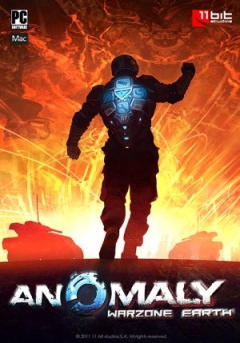 If someone tells you they're going to do a "reverse" something, odds are the result will be terrible. The concept sounds similarly cheesy for games, evoking memories of bad minigames and multiplayer modes. However, for some genres it actually could be a fresh take on the concept, and 11-Bit Studios tries to prove this with their "reverse tower defense" game, Anomaly: Warzone Earth. 11-Bit is a brand new developer out of Poland, powered by a small team of industry veterans. It appears that they've taken an independent mindset towards publishing and distributing, releasing Anomaly directly to Steam and the Mac Store. Thus far, they seem to be having a good deal of success and are proving capable in quickly porting their game to new platforms, including iOS, Kindle Fire (!) and an upcoming XBLA release.
