
strategy
Valkyria Chronicles
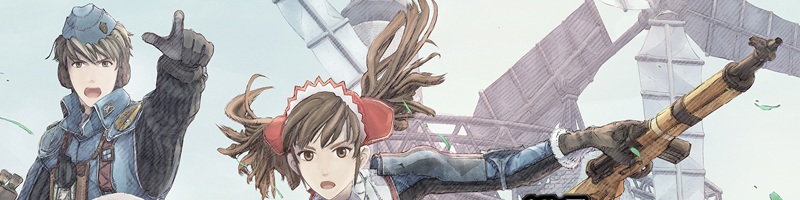
I’ve had my PlayStation 3 over a year now, and during that time I’ve enjoyed Heavy Rain, Infamous, and Uncharted, but the game that I’ve had the best time with is Valkyria Chronicles. I hadn’t even heard of the game until a friend shoved it in my hands, and it ended up being my First Hour of the Year and now my favorite game on the platform.
Valkyria Chronicles is nearly a perfect execution of all aspects of a video game. The gameplay is a fun and addicting mix of strategy and action, the graphics have a lovely anime-style to them, the presentation is flawless, the story is an interesting riff on World War I, the voice acting is actually great most of the time, and the soundtrack has a grand bluster to it that makes everything else better. And to top it all off, Valkyria Chronicles was developed by Sega. Sega!
I will admit, the game took me quite a long time to beat, over six months with about 40 hours of actual gaming (I’ve put more time than that into Xenoblade Chronicles in the last month). It wasn’t because I didn’t enjoy the game, but because Valkyria Chronicles seemed to require a certain amount of minimum playtime to really get into it. Even one hour free didn’t feel like enough for one sitting. Weird how that is for some types of games.
Devil's Attorney
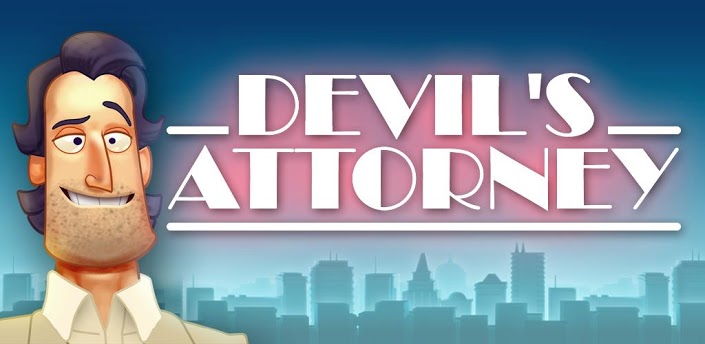 I used to love the Ace Attorney series, but fans in the United States have to face it: it’s been almost three years since the last American release and over five years since we actually got to play as Phoenix Wright, so we have to move on, and if you’re looking for your defense attorney fix, Devil’s Attorney may be it.
Released in October for Android and iOS, Devil’s Attorney stars an egotistical attorney who makes his buck defending the dregs of society in their exceedingly hilarious and bizarre crimes. The cases come rapid-fire and are played out like a turn-based battle - pretty much the opposite of what fans of Phoenix Wright have come to learn, love, and in turn, lose. The humor is what sustains the game through nearly 60 cases, and there are some really clever bits of writing.
As the year draws to a close, this may be one of our last reviews of 2012, be sure to return on December 31st for our 2012 Game of the Year Awards. I may personally have a surprise pick for my favorite of the year if one of the final games I’m playing stays awesome. Thanks for reading.
Eufloria
 Originally known as Dyson during its prototype stage, Eufloria is self-described as a "space gardening RTS." What that means is not very clear without some description, but in essence, Eufloria is about growth and destruction. Building up your own spores of pollen to seed across the galaxy and wreack havoc on your enemies. Any tree not your color is marked for death and total domination is necessary for your own survival.
Well, that might sound cooler than it actually is, but Eufloria is our latest go-around at Indie Impressions. Developed by a trio of indie devs, Eufloria was released in 2009 for Windows and later released on Linux, OSX, iOS, Android, and PlayStation Network. Here is Steve and Greg's take on the game after playing a few hours.
Fate of the World
 If you were born in the 1980s, you may have grown up like us playing The Oregon Trail, Number Munchers, and Where in the World is Carmen Sandiego? in school. Educational games disguised as entertainment were probably some of the most effective forms of lazy teaching. Personally, The Oregon Trail and Carmen Sandiego improved my geography knowledge and sparked an interest in history, and Number Munchers obviously helped my mathematical skills. Whether I wanted to or not, I was still learning, even in the computer lab.
But I have no idea what kids do or play now in computer labs. Probably check their Facebook or Twitter, maybe play some flash games, but I doubt most of it has an ounce of educational value. But maybe a game like Fate of the World has found its way into some programs, I know for a fact that Positech Games has landed deals with some institutions to deliver their Democracy series to students, so it's not unlikely a climate change/general-bad-things-are-happening-everywhere simulator could be being played in high schools right now.
It's been a while since our last Indie Impression, but it's a column I'd really like to continue. Independently developed games are becoming more and more important with every year, Steam update, and console release. Highlighting one or two a month shouldn't be difficult, and I believe important to the industry. Let's take a look at Fate of the World, today.
Valkyria Chronicles
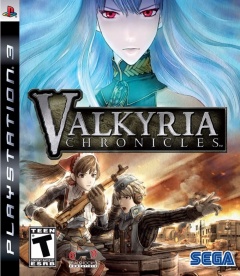 We’re celebrating our five year anniversary tomorrow with something special, but before that happens, we need to play one more first hour, and that game is Valkyria Chronicles for the PlayStation 3. Released around the world in 2008, Valkyria bridges Japanese anime graphics with an early 20th century European setting, a pairing that seems so wrong, but may actually turn out alright.
Developed and published by Sega, Valkyria Chronicles is a tactical strategy game with third-person shooter elements, also not a pairing seen often in gaming. But with in-house influences from Skies of Arcadia, Shinobi, and the Sakura Wars series, Valkyria Chronicles was never going to be a normal type of game.
This 239th first hour review was actually meant to be God of War III, but wouldn’t you know it, half an hour in I realized that Nate already covered it two years ago. One of the disadvantages of having so much content, I suppose. He was doing a better job on it anyway. So as fate would have it, here is the first hour of Valkyria Chronicles.
Crusader Kings II
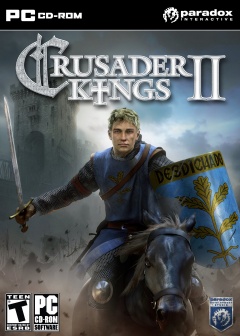 Today I learned that some video game genres are simply not for me. Well, I've known that for some time, I can't stand realistic racing games at all, but now I can add the so-called "real-time grand strategy" genre to that list. This is basically a fancy way of saying "real-time Civilization... grandified." The Wikipedia article reads like an economics-during-war piece with phrases like "horizontal integration", "consolidated roving army", and "pursue ultimate hegemony". Hey guys, I graduated from college six years ago.
Crusader Kings II was recently released by Paradox Interactive, a Swedish developer that specializes in the grand strategy genre. You may recognize their previous titles such as Europa Universalis or Hearts of Iron, but if you're like me, have never had the opportunity to play them. Crusader Kings II is set in medieval Europe at the turn of the last millenium. The game is decidedly for history buffs and fans of the time period.
I can't really decide if what you're about to read represents everything this site stands for, or if it reveals a total failure of the first hour review system. I'm kind of wavering between the two options, but I'll let you decide for yourself. Welcome to the age of history.
Airport Mania 2: Wild Trips
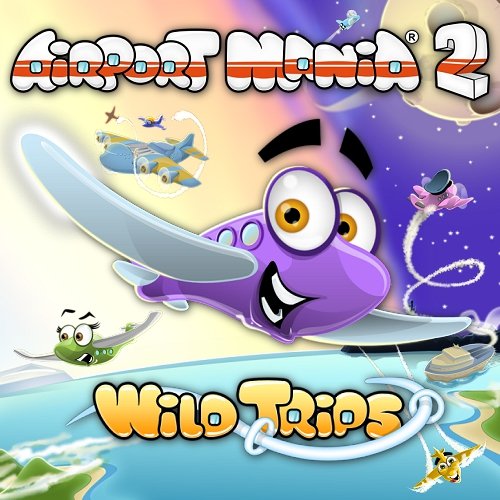 Wikipedia says Airport Mania 2: Wild Trips' genre is "Click Management", which sounds like the category Microsoft Excel would also be filed under. But trust me, Airport Mania 2 is infinitely more fun. In the same vein as Diner Dash, Sally Spa, and all the hundreds of other click management, strategy, time management clones out there, the goal is to efficiently do something with limited resources. But Airport Mania 2 stands above the rest with high polish and attractive graphics.
Developed by Reflex Entertainment and South Wind Games, the original Airport Mania: First Flight, was a mild success for Windows and OSX in 2008. Re-released on nearly every portable platform since then (including DSiWare), they've slowly been building their airport simulator empire. Airport Mania 2, released earlier this year, is an upgrade of the original but still carries all the charm.
Airport Mania 2 is less of an airport simulator and more of an air-traffic control strategy game. Let's take a quick look at the Android version released a few weeks ago.
Kirby Mass Attack
 Like the titular pink puff, the Kirby series has worn many hats in its
nineteen years. Almost every 2D action-platformer has been partnered
with an experimental pinball sim or an arcade racer or some amazing
miniature golf mutation. As much as I enjoy each iteration of the main
Dream Land style, the spinoffs are what really intrigue me, even when
they fail. Sure, Kirby Tilt 'n Tumble may be unplayable with the Game
Boy Color's dark screen and restrictive viewing angle, but it broke
ground for motion controls six years before Wii Sports taught us to
waggle.
Like the titular pink puff, the Kirby series has worn many hats in its
nineteen years. Almost every 2D action-platformer has been partnered
with an experimental pinball sim or an arcade racer or some amazing
miniature golf mutation. As much as I enjoy each iteration of the main
Dream Land style, the spinoffs are what really intrigue me, even when
they fail. Sure, Kirby Tilt 'n Tumble may be unplayable with the Game
Boy Color's dark screen and restrictive viewing angle, but it broke
ground for motion controls six years before Wii Sports taught us to
waggle.
It's a good season for Kirby fans, as we get a bit of both sides in under two months. Kirby's Return to Dream Land in October looks like the long-awaited Super Star successor, and September sees Kirby get multiplied in Kirby Mass Attack. Revisiting the stylus-centrism of Canvas Curse, Mass Attack tasks players with flicking, dragging, and leading up to ten Kirbys at a time through a puzzle platforming adventure. It's not the most eye-opening Kirby spinoff -- the concept is essentially a pared-down Pikmin -- but it makes the most of a middling concept.
Kirby Canvas Curse was widely dubbed the Nintendo DS's first worthy purchase. Kirby Mass Attack may be its last.
Tom Clancy's Ghost Recon: Shadow Wars
 Very few titles available at a system's launch are ever worth the price
of admission. Thing is, they don't have to be: early adopters don't have
any other choices, and they certainly aren't taking home that shiny new
box with nothing to play. If a launch window game isn't a glitchy,
feature-stripped port of a last-gen game, then it may just be the best
of the bunch.
Very few titles available at a system's launch are ever worth the price
of admission. Thing is, they don't have to be: early adopters don't have
any other choices, and they certainly aren't taking home that shiny new
box with nothing to play. If a launch window game isn't a glitchy,
feature-stripped port of a last-gen game, then it may just be the best
of the bunch.
Ubisoft in particular doesn't have a great track record when it comes to launch games. They were the first third party to reveal their Wii hand with the ambitious and roundly disappointing Red Steel, threw straight up shovelware at the DS, and didn't exactly set any precedents at the dawn of the HD era, either. For the 3DS, Ubi's launch day contributions took the forms of Rayman 3D, Asphalt 3D, Combat of Giants: Dinosaurs 3D, and Ghost Recon: Shadow Wars.
It doesn't surprise me, then, that Ghost Recon: Shadow Wars is a technical mess. The visuals wouldn't turn heads on PSP, slowdown is common, and everything just feels rough around the edges. Oh, and then the game freezes every now and then. Sometimes you'll get the black screen of death, other times the audio will stop and the display will just fade out. In the time I was playing, Shadow Wars crashed on me a grand total of ten times.
What surprises me is that, despite these glaring technical issues, I will still recommend the game to 3DS early adopters.
Tom Clancy's Ghost Recon: Shadow Wars
As much as Nintendo frustrates me with their recent localization
decisions, they have their triumphs as well. Releasing Sin &
Punishment on the Virtual Console outside of Japan was a victory,
effortless as it might have been. Rhythm Tengoku was a niche hit on the
Game Boy Advance, but its DS follow-up had even Beyonce singing its
praises. And when Nintendo finally brought its Famicom Wars and Fire
Emblem strategy games to the west on the GBA, gamers outside of Japan
suddenly had two new franchises to thank the Big N for.
And they're not the only ones: Julian Gollop, creator of the X-COM: UFO Defense series, is a big fan of Advance Wars and Fire Emblem. He said as much in a refreshingly candid interview about his newest game, Ghost Recon: Shadow Wars, a 3DS launch title that Gollop was inspired to create after experiencing Nintendo's strategy duo.
I've had only brief experiences with the strategy genre as it exists on PC, where Gollop's games mostly reside. And I've played maybe ten minutes of a Ghost Recon game. But I am a big fan of games like Advance Wars: Dual Strike and Fire Emblem: Path of Radiance. And though I'm eager to see what Nintendo has in store for those franchises in the future, I know what I'll be getting: more of the same. On the other hand, Gollop's take on turn-based tactics might introduce some fresh elements to the formula. Let's see if any of those show up within the game's first thirty minutes.
