
puzzle
Mole Mania
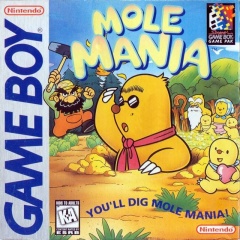 Last month, I realized that I haven’t taken my 3DS outside all year. Nearly every weekday of 2011, the little black system was in my pocket and transmitting StreetPass data any time I left the house.
Not this year. Kid Icarus Uprising is just about impossible to play on the go. I finished New Super Mario Bros. 2 in a weekend, enjoyable as it was. And the StreetPass novelty died after I went months without an exchange. It just wasn’t a worthwhile use of pocket space.
But then something unexpected happened: a little-known Game Boy game put the 3DS back in my pocket.
Stacking
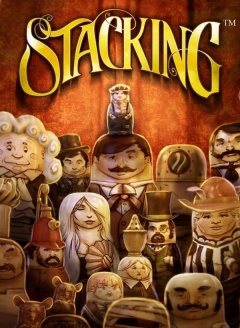 Well, this has been a long time coming.
Stacking came out for Xbox Live and PlayStation Network in early 2011, and it immediately captured my interest. With characters based on the Russian stacking matryoshka dolls and the narrative devices of silent films of yesteryears, it was definitely a unique offering, though looking over Double Fine Productions’s history it’s clear that that’s their thing. Quirky mish-mashes: RTS and musical influences for Brütal Legend, Halloween outfits and RPG elements for Costume Quest, and summer camp and psychic abilities for Psychonauts. However, I just never got around to getting it due to my severe distaste for buying Microsoft Points, since the conversion rate of USD dollars to Space Bucks never seems to be in the buyer’s favor.
Flash-forward to July 2012, and the Steam Summer Sale has now concluded. I was able to snag this bite-sized adventure for a cool couple of bucks, as well as a slew of other titles. But for now, let’s play with dolls for an hour and see how things turn out.
Catherine
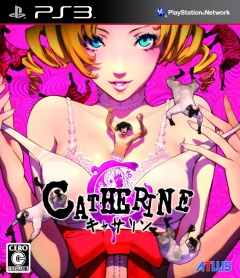 We’ve played our share of unique games here at First Hour, but Catherine is in a league of its own. With adult-oriented anime scenes about love, marriage, and infidelity splitting time between fast-paced, psychological horror block puzzles, Catherine is... different. The game opens with a television show framing device, dives into our hero’s nightmares, and is apparently pursued by two women named Katherine and Catherine.
Developed by Atlus and released a year ago for the PlayStation 3 and Xbox 360, Catherine was well received by the press but noted for its oddities. These types of games often are not seen outside of Japan, but Atlus made a gamble which reportedly has paid off, with Catherine being their best North American launch ever.
As we move beyond our fifth birthday, I’ll be making some changes to my first hour review format. I’m going to cut most of the big “minute by minute” section which (sometimes tediously) detailed the happenings of the game. Instead I’ll call out the game’s strengths and weaknesses section by section much like Nate does. So without further ado, here’s the first hour of Catherine for the PlayStation 3.
Amazing Alex
 I was never any good at The Incredible Machine. It was one of a handful of games available in my elementary school's computer lab, and it was the only one that stumped me every time. I knew the Oregon Trail like the back of my hand, and my SimCity could withstand any disaster, but the motors and pulleys and cheese-seeking mice never quite registered for me.
So it was with some hesitation that I downloaded Amazing Alex, the next game by the Angry Birds folks. It has all the friendly colors and streamlining of Rovio's money-printing slingshot game, but Incredible Machine's spirit clearly lives within. And I didn't think I had the Rube Goldberg skills to finish it.
But I did. I finished all 112 stages and collected the three stars in each. And it was the most fun I've had with my smartphone yet.
A Boy and His Blob
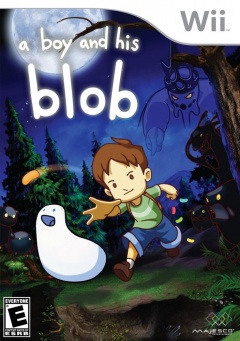 I’ve been on a bit of a Wii fix lately. Perhaps all the Wii U buzz inspired me to check out B-List Wii games that initially flew under my radar. Whatever the cause, my little white waggle box had a busy month, thanks to Lost in Shadow, Link’s Crossbow Training, and FlingSmash.
Up next, A Boy and His Blob. This 2D puzzle platformer is a modern take on the original Trouble on Blobolonia, one of many quirky NES games I remember seeing at the rental store as a kid. But I took home Super Mario Bros. 3 every single time.
In a way, picking up the new Boy and His Blob feels like atonement for Young Nate’s disinterest in anything without “Mario” in the title. But I also wanted it because it looks adorable. Seriously, you feed the blob a jellybean and it happily forms into a ladder. I probably had an imaginary friend just like that when I was six and couldn’t reach a tree branch.
Lost in Shadow
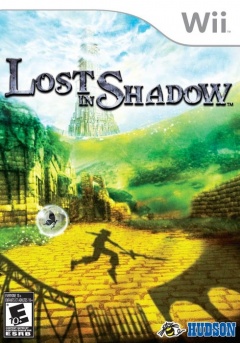 Hudson Soft. Now there’s a name that you don’t see on game boxes much anymore. The company that used to pump out Bomberman and Mario Party titles wasn’t much of a player this generation, were they?
And it seems we’ll never see the old honey bee logo on another boxart ever again: as of March 1 this year, Hudson Soft is officially dead. The last of its assets have been absorbed into Konami, which will probably put the Bomberman brand to good use and seal Hudson’s other, less milkable properties in the vault.
That makes Lost in Shadow Hudson’s swan song. The company developed and published the shadow-based puzzle platformer and released it in January 2011 in North America. Like most Hudson games, it found modest critical praise at launch and was quickly forgotten. With Hudson’s recent demise, I guess that makes this as good a time as any to try out the company’s last contribution to gaming.
Portal 2 - Co-op
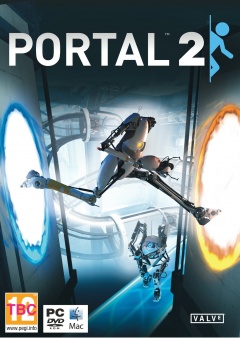 A year ago I published my full review of Portal 2. I guess you could say it wasn't exactly complete since I never touched the co-op portion of it, but finding time to sit down and play a video game with another human being for a few hours is pretty difficult for me, so sacrfices had to be made. But last weekend, I had the opportunity to sit down with Steve and our gaming PCs for about 10 hours, and time for Portal 2 co-op was finally realized.
Portal 2's co-op is pretty fantastic in that it is a completely different experience than the single player, in every aspect. The story is different, the characters are new, and the puzzles are two-player required. While many games that feature co-op, if they even bother, just toss both players together in the single player campaign, that would have been disastrous with a puzzler like Portal 2. So major props to Valve for developing this campaign, just for us.
This really isn't a proper review, but I wanted to present both Steve and mine opinions about just the cooperative portion of Portal 2. Enjoy, and give it a try if you find a few hours with a friend.
Art Style: PiCTOBiTS
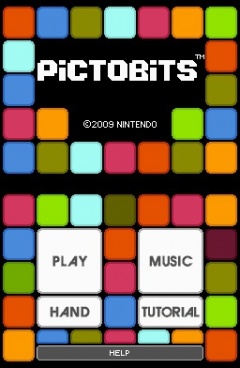 My Club Nintendo coins are finally going to good use, now that I can exchange them for games instead of cheap memorabilia. Fluidity was well worth zero dollars. And last month, I checked out Art Style: Cubello and found an interesting puzzle/lightgun hybrid.
Another month, another Art Style game to grab from the Club. Pictobits (called Picopict in other territories) is my fourth from the series, all of them quite different from one another. Of the four, Pictobits is the closest to a traditional puzzle game, falling blocks and all. As someone who tends to burn out quickly on those competitive block-movers, I kept my expectations low.
But Pictobits surprised me. It gets frantic, no doubt, but the bite-size challenges and uncommon variety pulled me over the speedbumps in the difficulty curve. The retro Nintendo style didn't hurt, either.
Angry Birds Space and Cut the Rope Experiments
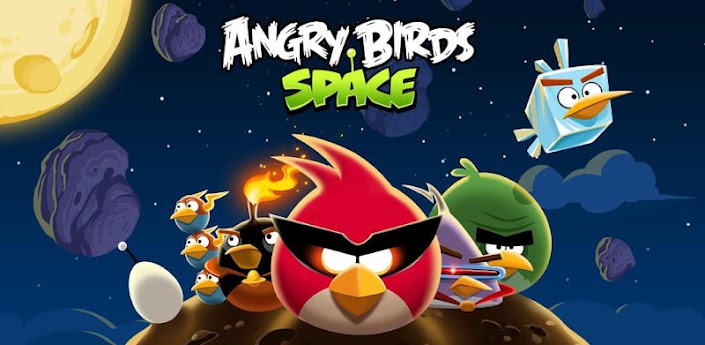 Three of my favorite mobile series recently received updates, so it’s time to revisit them. Angry Birds Space is the new Super Mario Galaxy inspired spinoff of the original bird-flinging game, and Cut the Rope: Experiments expands upon the original Cut the Rope concept with new ideas and 125 levels. Finally, the genius Where’s My Water? has received some new levels since my original review, so I’ll touch on that too.
Laugh if you want, but I really love these games for their quintessential mobile experiences. Levels are short and sweet, difficulty ramps up slowly, and gameplay variety is injected constantly. Each of them have fun with physics and benefit greatly from the touchscreen. Plus, they’re dirt cheap.
My thoughts will hopefully be short and efficient, just like the games I’m reviewing. I played each game on my Android EVO 4G phone.
Art Style: CUBELLO
 It's understandable that a hardware manufacturer like Nintendo would condemn app gaming.
The company makes its fortune on dedicated video game machines and the
traditional $30+ software pricing; the $1 mobile alternative is a
serious threat to the viability of that strategy, especially in the
handheld market. You won't see the House of Mario endorsing Angry Birds and its ilk any time soon (until it comes to 3DS, anyway).
It's understandable that a hardware manufacturer like Nintendo would condemn app gaming.
The company makes its fortune on dedicated video game machines and the
traditional $30+ software pricing; the $1 mobile alternative is a
serious threat to the viability of that strategy, especially in the
handheld market. You won't see the House of Mario endorsing Angry Birds and its ilk any time soon (until it comes to 3DS, anyway).
It's a shame that a Nintendo-branded smartphone is so unlikely, because gaming's biggest name already has a series perfectly suited for the bite-size mobile market. The little known Art Style franchise on WiiWare and DSiWare emphasizes "elegant design, polished graphics, and pick-up-and-play controls." Having played the gravity-manipulating Orbient on WiiWare and cardboard-factory simulator Boxlife on DSiWare, I can definitely see the Art Style brand as a viable and profitable iPhone series.
Last month I picked up Cubello, one of the earlier Art Style games on WiiWare, from the Club Nintendo rewards program. It looks like the offspring of Tetrisphere and a Rubik's Cube got caught in a light gun game. I like it better than either of those things, though.
