
Ian's reviews and writings
Counter-Strike: Global Offensive
It's been a long while since I've written a review, which is pretty commonplace due to my busy schedule. But as my days have cleared up due to seriously inclement weather, I figured I'd write a review. Not just a review, but a review on a game in a series that I am in love with. This is something I had been saving and looking forward to for the right time.
Unfortunately though, this didn't pan out like I had hoped. This is hard for me to write. Not just because of the fact it's a multiplayer experience I'm reviewing, but also because it's a dream of mine being crushed.
As I've mentioned before, I was a pretty avid player of Counter Strike, and much more so, Counter Strike: Source. My father and I played CS: Source from around 2005 until 2007. We were in a clan, competitively. (The name of it was Exemplar Sect, best player was Pug.) Anyway, we loved that game, and I remember upgrading computer parts all of the time to increase framerates, and every weekend was a Mountain Dew fueled weekend of meeting people all over the world and killing them. But then other games became popular (I played Battlefield: Bad Company 2 quite a bit.) and I went over to them, but I always visited CS: Source, and always had a blast.
Call of Duty: Modern Warfare 3
 I’ve played a fair amount of video games in my life, and I’ve been playing shooters since I was five or six. This isn’t a challenge of “Yeah, well, I started when I was four!” Don’t start, that’s just annoying. My point is, I’ve been around the block a few times. Here’s a list of the shooters I played online regularly in chronological order: Quake, Team Fortress Classic, Unreal Tournament, Counter-Strike: Source, America’s Army, Battlefield: Bad Company 2.
That’s really not that much, but it became impossible to keep up with the audiences. You want to play the most popular games (or at least popular games) so you actually have other people to play against, but once there was a new shooter coming out every freakin’ year, I just gave up.
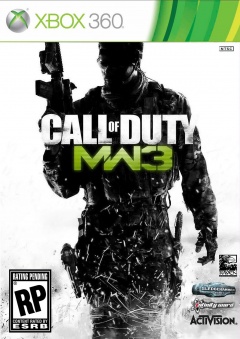
Until one night, when my friend came into town for a visit and explained to me he had another copy of Call of Duty: Modern Warfare 3, and said it was mine if I wanted it. I thanked him and declined at first, but finally caved and accepted the offer. What the hell, it’s a free game, right?
Diablo III
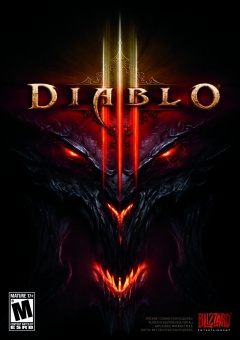 The Diablo series is the most important series in my life. While I missed Diablo, I caught its sequel by the throat on release day and was hooked for a good…well, I’m still off-and-on addicted. So sue me. Diablo II was everything I wanted. It was fast paced, exciting, the gathering of objects was awesome, leveling was fun, playing through the game more than once was fun.
I love the Diablo series so much, that when Diablo III was announced, I called every friend I knew that ever played it and told them to check the website so they could experience the surprise. I was SO happy.
I waited 12 years for Diablo III. I got it at the midnight prerelease and tried playing the game, and we all know of the infamous Error 37. I thought about writing a first hour review of just “error 37” every minute for an hour. But anyway…
But I expected servers to be destroyed…I mean, it IS battle.net. But you know what? Despite being more than happy to wait for the servers to be available to me: I wish I had never bought it.
The truth is, this game disappointed me in almost every way possible. Let’s talk about why and what.
The Elder Scrolls IV: Oblivion
 It's been awhile since I've written anything for First Hour; between marriage, work, college and some gaming, there isn't much time for writing. But this is a special month, a month that I've been looking forward to for a long time.
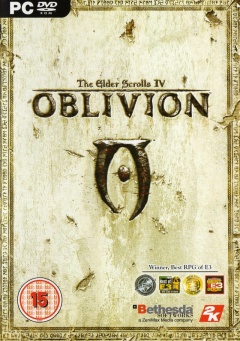
Last Friday, November 11th, 2011, was the release of Skyrim, possibly the most anticipated game of this year, right next to Call of Duty: Modern Warfare 3. So today, I am reviewing The Elder Scrolls IV: Oblivion.
I had played Morrowind religiously for roughly six months. In fact, it was the second game I bought for the original Xbox. It was an incredible experience, to face a giant world with so many dangers, and so much customizing, I became massively invested. I played at least six hours a day during the school week and twelve during Saturday and Sunday.
So after years of playing The Elder Scrolls III: Morrowind, my sophomore self was surprised to see Oblivion on the cover of a Game Informer in the high school library. I was in awe at the graphics, the hope for a better combat system. But the most amazing thing, that reportedly happened at Bethesda as well, was seeing what was once thought impossible: they had forests. Real, bustling forests with bushes and shrubbery and groups of trees.
I couldn't stop thinking about it, and then it was finally released. I was amazed at the game. Now, let's take and nice overview about some of the feelings and thoughts of the game before and after Oblivion's release.
Diablo II - History and Gameplay
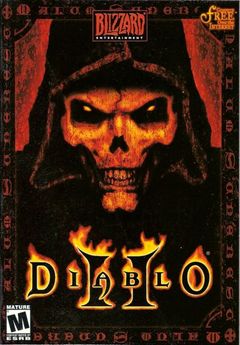 On November 30th, 1996 the world was rocked by the release of what is quite possibly the start of the isometric hack’n’slash genre: Diablo. It was renowned for its remarkably dark atmosphere, creative character customization, easy control scheme and extremely in-depth storytelling.
Not only did it have all of this, it also had online multiplayer via a free service called Battle.net that is also host to virtually all of Blizzard's games.
After a few years of garnering international success, it was announced that a sequel was in the works. Diablo II was released on June 29th, 2000. For me, educationally, it was all downhill from there.
This is part one of a multi-part review and historical remembrance of Diablo II. We also played the first hour of Diablo II a few years ago.
Magicka
 Indie games. I love indie games. Many are free, and those that aren't are usually still cheap enough to buy virtually regardless of your budget. Another reason I am a fan of the Indie market is that they're very good at listening to their fans. A great example is Mount and Blade: Warband. After the first game was introduced, fans wailed and screamed for multiplayer, and you know what? They got it. Mount and Blade: Warband features multiplayer that many people find sufficient, and if not, you can modify the game to hit your sweet spot.
But that isn't what I love most about indie games. No, no, no...I much prefer the fact that indie developers have much less to lose, so much more to gain and that means they push the envelope. Hell, they don't push it, they light the sucker on fire and piss on the ashes, developers Arrowhead Game Studios and publishers Paradox Interactive that is.
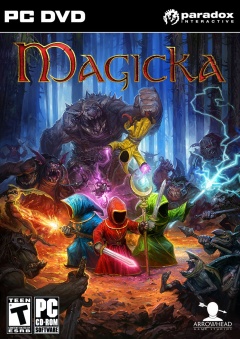
The game I'm talking about today is a fantastic example of a developer unleashed, and how fantastic it can truly be to see true geniuses able to work they way they want to. That result is Magicka, an action game based on Magic and its elements.
Mount & Blade: Warband
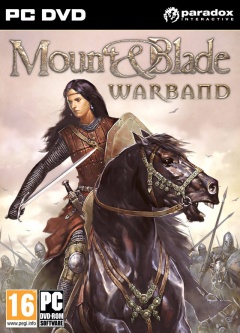 I enjoy medieval RPGs. I mean, the majority of games I play - fantasy or not - are based in that setting. There's just something about slicing my enemies up with swords that's just completely satisfying. So when I got to play a few minutes of Mount and Blade: Warband, I knew I'd desperately want more.
What? You haven't heard of this masterpiece from Taleworlds? That's okay, there wasn't a whole lot of advertising, and the original Mount and Blade was made by a married couple virtually by themselves. It's not exactly common that things like this happen.
I played the original briefly, and it was fun, but the overhauled Warband made vast improvements over its predecessor.
So, what is it? Well, it's massive and somewhat complicated, but I shall attempt to explain. Mount and Blade: Warband is a medieval role-playing game that puts you into the world of Calradia, a land filled with several kingdoms, all wanting to unify the land under their rule.
Dragon Age: Origins
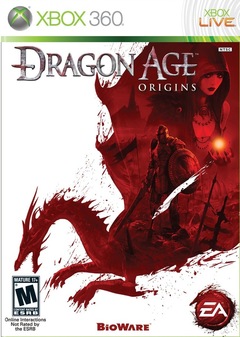 Since I built my new PC in October, I've been playing games that I had not had a chance to in quite some time. My brother in law had come into ownership of a few games I had really wanted to play, and while in the mess of mediocrity, one game stood out as a gem that ended up sucking my time away. That game was Dragon Age: Origins.
Let me begin this review by saying I am a big fan of Bioware fantasy RPGs. I loved Baldurs Gate, Icewind Dale, and Neverwinter Nights. I love the DND based RPGs. These types of games, these fantasy RPGs with choices are fantastic and end up taking hours away.
However, despite me loving these past titles, I never finished a single one. I always ended up failing to complete the main story line, so when I installed Dragon Age, I was worried I wouldn't finish it.
Dragon Age: Origins was released by Bioware, the makers of Mass Effect, on November 3rd, 2009. It was well received, and it was announced months ago that Dragon Age 2 would be released in March, 2011. It's the first time Bioware has made a fantasy RPG that does not include DND rules. Many people were upset at this, but honestly, the DND elements are still there. You can still intimidate or persuade folks, or randomly kill them in conversation, making for some hilarious conversations.
Left 4 Dead
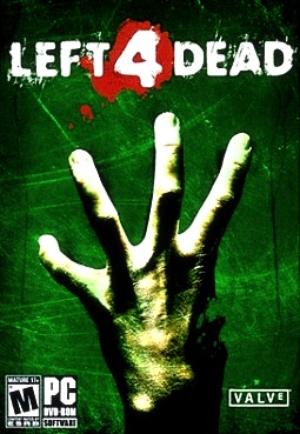 When
I heard the announcement for Left 4 Dead, I was enormously elated. Finally,
a game dedicated to fast-paced zombie action. A game I could rely on
to really satisfy my urges to kill a swarm of infected. Then, when I
saw the videos of people at E3 playing it for thirty minutes and then
heading to the back of the huge line to play it again, there was no
question.
When
I heard the announcement for Left 4 Dead, I was enormously elated. Finally,
a game dedicated to fast-paced zombie action. A game I could rely on
to really satisfy my urges to kill a swarm of infected. Then, when I
saw the videos of people at E3 playing it for thirty minutes and then
heading to the back of the huge line to play it again, there was no
question.
My hunger for a real zombie game had been stirring for years. I hated Resident Evil, and still do. The idea of searching around everywhere and solving more puzzles than killing zombies -- I was disgusted. The only thing that helped curve my thirst was Counter Strike: Source, where my friend and I would play “zombies” by pitting ourselves against 30 or so bots and allowing them to only use knives. I was even happier to hear that was the way Valve decided to make Left 4 Dead. They did the exact same thing.
I was counting the days in November, 2008, for the game's release. Every day at college just seemed to drag on and on, forever, until finally the day came. My classes felt longer than those of my final days before Christmas Break. When I got done with school the day of Left 4 Dead's release, I went straight to the store to pick up the game.
I purchased the PC version, and played through the entire game in a very brief period of time, but that was okay. With all of the achievements to be had, as well as the scoring and varying difficulty levels, this game had more replay-ability than any game I had played before or since. It never gets old. I love this game, and now I own it on Xbox to play the game cooperatively with my wife. We also spend quite a bit of time online playing against other players.
The Board Game that Changed the World
 What comes to your mind when I say "Dungeons and Dragons?" Twenty-sided dice? 2d6? Attack of opportunity? Fortitude save? Gary Gygax? Figurines? Yes, these all come to mind to those who have never even played the board game that changed the world.
You might be wondering why, on a video game review site, I am writing about Dungeons and Dragons. Well, to many gamers, it is a bit more obvious. "I've played Star Wars: Knights of the Old Republic, I know about dungeons and dragons!" and that is true, you do.
What I am afraid people don't understand is that while Bioware has certainly helped establish Dungeons and Dragons rules into video games, it goes much farther than that.
