
8
Suikoden Tierkreis
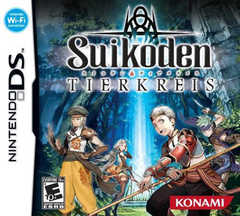 Suikoden Tierkreis for the Nintendo DS is the newest edition to the classic RPG series released last month. It's the first portable original RPG in the series and features all the mainstays, including 108 Stars of Destiny (heroes), turn-based combat, an epic story, and random battles. Tierkreis is German for "zodiac." What that has to do with the game, I do not know, something to do with the Stars of Destiny maybe?
This is of course a guest review by my friend Grant. He recently reviewed the first hour of Grand Theft Auto: Chinatown Wars and offered to review his newest purchase. We're both big fans of the Suikoden series, though we've played completely different games. I've played 1, 2, and 4, while Grant has played 3, 5, and now Tierkreis. I keep trying to get him to play Suikoden 2 as it's one of the best games ever... but as long as he writes for the site, I don't care. Enjoy Grant's review of Suikoden Tierkreis.
Fire Emblem: Shadow Dragon
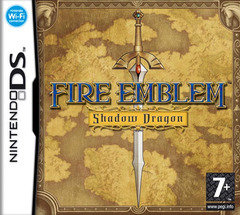 Fire Emblem: Shadow Dragon is a turn-based role-playing strategy game for the Nintendo DS. It is the eleventh game in the popular Fire Emblem series, but is actually a remake of the original Fire Emblem: Shadow Dragons and the Blade of Light which was released in 1990 only in Japan. Turns out this is really the second remake of the first game, but still the first time gamers outside of Japan have experienced it.
So that's a lot of history just on one story, but you might be wondering what Fire Emblem is in the first place. The series has always pretty much played the same way all these years as a turn-based strategy game. A set of heroes takes on a band of bad guys on a grid-based map. You move all your guys at once and then the bad guys go. There's a twist in Fire Emble though, every character on your team has a name and profile, and if they're killed during battle, they're gone for good. That means you either don't get too attached to your characters, or you reload a level a lot.
All right, let's get into the first hour of Fire Emblem: Shadow Dragon.
Pikmin
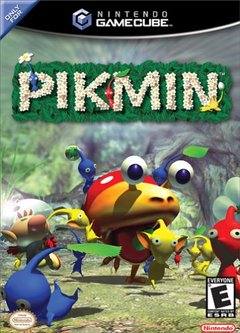 Pikmin is a GameCube real-time strategy game set in what could be someone's backyard and featuring a large cast of inch tall plant creatures (and you thought it couldn't get weirder after last week's Katamari Damacy). Basically, our hero is Captain Olimar, a space traveler who gets stranded on the Pikmin planet. His ship is in thirty pieces and scattered across a few different levels, but Olimar only has enough life support to last thirty days. The only way he's going to get off in time is to recruit the Pikmin's help in gathering his ship parts back together. And thus, our story begins.
Pikmin did pretty well and received a sequel a few years later. Nintendo also recently announced Pikmin 3 for the Wii, so the series will keep on growing. Pikmin originally caught my eye because it was Nintendo's first original series for the Gamecube (well, if you don't count Luigi's Mansion) and was straight from the mind of Shigeru Miyamoto. Well, let's play the first hour of Pikmin.
Katamari Damacy
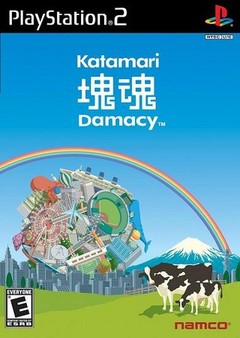 Katamari Damacy is the quirky... ball rolling game released for the PlayStation 2 in 2004. In this highly original Namco game, the Prince is on a mission to restore the missing stars in the sky. To do this, he rolls up everyday household items into giant piles of junk (called Katamaris), and then his dad, the King of All Cosmos, creates stars out of them. You're probably thinking, "WTF?" and that would be entirely valid. This game doesn't hold back the weirdness at all. But sometimes I think gamers need games like this, too often we're thrust into much too serious worlds doing much too serious business.
I'm fascinated by games that are named with generally entirely original words. Though Katamari is a real word and Damacy is kind of a one-off, I applaud Namco for not changing it for the American release (and also for not changing the game's cover). Knowing the gaming industry, it probably would have been called something like Clumpy Souls. Anyways, let's get on with the review of just the first hour of Katamari Damacy.
Diablo II
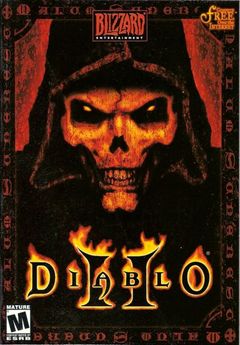 Diablo II is the super popular hack and slash released on the PC in 2000. It has probably broken more computer mouses than any other game because of the excessive clicking involved in its hacking and slashing. I'm personally a Diablo II virgin and have barely played the original, so this was admittedly, quite the experience! At least I can say I've played it with Diablo III announced and looking amazing.
A few notes, I also have Lord of Destruction installed so I can capture higher resolution screenshots (800x600 vs. 640x480), but I'll try to treat it as I'm just playing the regular game. And if you're interested, as I guess it really matters, I'll be playing version 1.07. Oh yeah, if you're a big fan of Blizzard, check out my Lost Vikings review after you read about Diablo II's first hour.
Ico
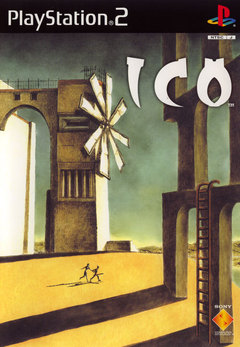 Ico is a PlayStation 2 video game released in 2001. It's honestly hard for me to believe that this game is seven years old already, but it is, and I still think it plays great. I discovered Ico in 2005 after I had finished the great game, Shadow of the Colossus, which serves as sort of a distant prequel to Ico. Anyways, Ico is an action-adventure game similar to Zelda but without an interface, text-driven story, or large cast of characters. Ico is minimalist in many senses of the word.
I feel like I'm drawn to these cult hit games recently as I enjoy exposing them and also trying out a game I would never play if it weren't for this site. I've owned Ico for three years and I've barely ever played it. Well, that's enough introduction, let's get to the review!
For my review on the entire game, please see my Ico review at Beyond the First Hour.
Lego Indiana Jones: The Original Adventures
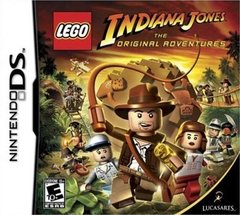 Lego Indiana Jones: The Original Adventures is a new adventure game in the same vein as Lego Star Wars. I've had great fun with the recent series of Lego games and since I've always been a fan of Indiana Jones, this is one game I'm excited to play. I've only played one other Indiana Jones game before and that was Desktop Adventures, a fun, randomly generated top-down computer game. Lego Indiana Jones supposedly does not include any content from the newest movie, which doesn't bother me, I thought it was pretty bad honestly. I will be playing the Nintendo DS version of Lego Indiana Jones.
This is my last review for Day 2 of The First Hour. Another 24 hours of video gaming has passed and another 24 will begin soon. All reviews here on old domain will be moving to firsthour.net and all new reviews will be posted there. That site will consolidate my full review site into it also. I'm really excited for it and I plan to launch it this summer. It will probably be a few weeks though as I have just closed on a house and also have a baby on the way, so it's going to be a busy summer! I'm excited for the future though and still plan to review just the first hour of video games. Heck, that's all I have time for anyway.
Ninja Gaiden and Ninja Gaiden
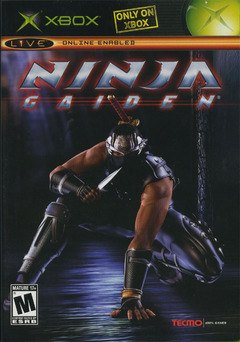
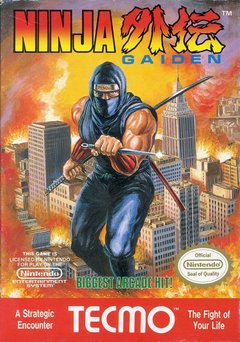 Ninja Gaiden and Ninja Gaiden are NES and Xbox games with the exact same name. Ninja Gaiden for the NES came out in 1989 and Ninja Gaiden for the Xbox came out in 2004. I'm not sure why Tecmo and lead designer Itagaki didn't give the Xbox Ninja Gaiden game a subtitle, but it's too late to wonder, because there are officially two games under the name of Ninja Gaiden, just released 15 years apart. In first hour tradition, I will be only playing Ninja Gaiden for one hour, but because they are named exactly the same, I will first play half an hour of Ninja Gaiden for the NES, and then half an hour on the Xbox. This will complicate the review a bit, but I'll try to always make is clear what game I'm talking about.
This is an exciting time for the Ninja Gaiden series, as Ninja Gaiden: Dragon Sword was released last month for the DS and Ninja Gaiden II will be out in a few weeks for the Xbox 360. Remember, this is a new Ninja Gaiden II, not Ninja Gaiden II: The Dark Sword of Chaos which was released on the NES in 1990. Yeah, Tecmo does it again. I plan on playing Dragon Sword (not Dark Sword) someday as it sounds pretty cool, but this review is all about the first hour of the two Ninja Gaidens. So let's get right down to it. To start, the first thirty minutes of Ninja Gaiden for the NES.
Homeworld
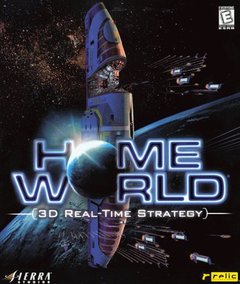 Homeworld is a 3D real-time strategy game released in 1999 on the PC, Mac, and Linux. It managed to garner a few Game of the Year awards in a pretty tough year of gaming which included Unreal Tournament, Alpha Centauri, Final Fantasy VIII, and the release of the Dreamcast, which of course means Soul Calibur. It wasn't an extremely strong year for the console world, so PC games did very well and Homeworld arrived at just the right time. The game is renowned for its engrossing storyline and cinematic graphical style. Not to mention a great implementation of real-time strategy in 3D space.
I usually take screenshots with Fraps for PC games but for whatever reason it didn't work for Homeworld. ZScreen to the rescue! This is my first time using the open source program and honestly it did a great job grabbing screens of this beautiful space game. Took me a while to find a working solution but ZScreen did the job just fine and worked for me immediately. Now let's get to the first hour review of Homeworld.
The Haunting: Starring Polterguy
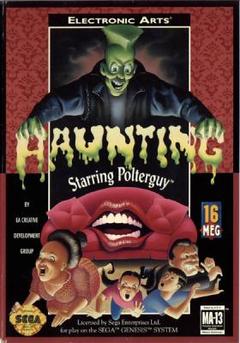 The Haunting Starring Polterguy is a 1993 Sega Genesis game all about scaring a rich family out of their snazzy home any way possible. This is a pretty obscure game and the only way I know anything about it is from my deep past where I used to read any video game magazine I could get my hands on. One of them was Game Players, and in one of those issues lies a review for The Haunting. I have no idea what score it got but it stuck in my mind as "this game sounds cool and someday I would like to play it." Well, that someday has finally arrived 15 years later, and it's pretty much as cool as I vaguely remembered wanting it to be.
I really don't know anything else about this game, except that it is probably the goriest 16-bit game I have ever played. There are severed heads, tons of blood, and lots of other crazy stuff that kept surprising me. Just check out the screenshots below and you'll see what I'm talking about. On that note, let's get right into the review.
