
Full Reviews
Full game reviews as we beat them, there will be a balance of both new and old games reviewed. We review the basics of the game and deliver scores in a few categories and an overall score out of 10.
Divekick

Sometimes the simplest things in life can be the best. And while sometimes you need fifteen buttons to play a game, sometimes you only need two. Today we'll be reviewing the two-button fighting game, Divekick. Originally envisioned and created by a tiny team of gamers in the fighting game community, Divekick seeks to break down the complex fighting game into a single move, a jumping downwards kick (or divekick). First conceived very late at night after a tournament ("hey, wouldn't it be hilarious to make a game where you can only divekick?"), it ran through a successful kickstarter campaign, cancelled that campaign since they found a publisher, successfully got greenlit on Steam, and now released on Steam/PSN/Vita. Not bad at all for its origins.
Skyward Collapse
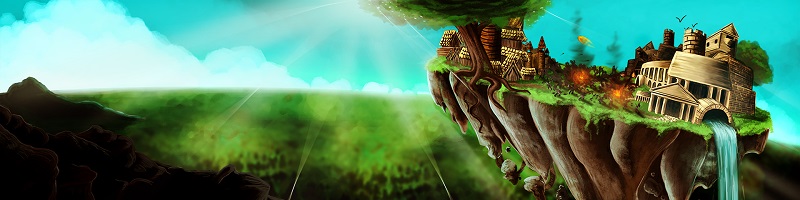
What does it mean to be a god if no one will listen to you? Arcen Games looks at this with a bit of humor in their latest release, Skyward Collapse. Here, we play an omniscient, omnipresent celestial being, tasked with cultivating and manipulating two factions that would like nothing more than to see the other eradicated. That's an interesting scenario on its own, but we are further entangled by a godly need for entertainment (conflict) and plagued by natural "woes." To further jumble our troubles, rogue elements including deities and mythological creatures try to spoil our day. In this turn based strategy/god sim, we inherit the intriguing situation of lacking direct control yet commanding plenty of manipulation.
Mobile Minute: Pudding Monsters, TNNS, Extreme Road Trip 2
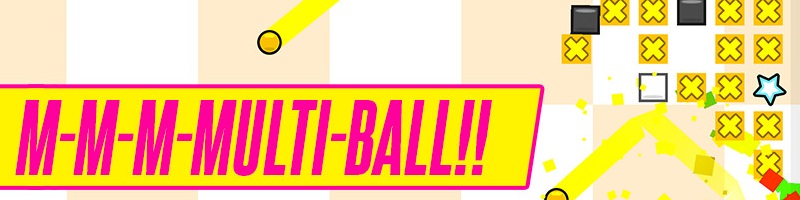
Yes, yes, this site still functions. I apologize for not writing anything in... a long time, but I'm actually playing games! Loving Rune Factory: Tides of Destiny on the PS3 and just picked up a 3DS with Super Mario 3D Land, Harvest Moon: A New Beginning, and Fire Emblem: Awakening! With all the great games coming down the pipe from Nintendo and third party developers, I figured I had better get on the 3DS train sooner than later.
In the meantime, here are some more thoughts on Android and iOS games I've been playing lately.
The Cat Lady

Well, I was not entirely ready for this. The Cat Lady, released last year by Screen 7 and created almost entirely by Remigiusz Michalski, was absolutely no where on my radar until I recently saw a preview of it in action. I suppose this isn't overly surprising. Michalski's and his studio, Harvester Games, have only developed two titles. The first, released in 2009, is called Downfall and is apparently both highly acclaimed and fairly successful. The second is this game, The Cat Lady. Both are created in Adventure Game Studio and are horror adventures, further limiting the client base (unless you have the media strength of The Walking Dead).
Yet, this ended up being one of the most interesting and complete titles I've played in ages. And somehow, that's even more satisfying when it's a complete surprise. It feels like this game has been stirring and simmering over the course of many years, and that probably isn't very far from the truth. This is an unbelievably mature experience, most likely the most mature game I've ever played. Many of the themes are very dark and complex and real, and this is one of the few instances I can imagine where an age/user discretion is actually warranted. And that can also be a bit of a warning for the rest of this article.
Mobile Minute: Knights of Pen & Paper, Androminion, and Triple Town
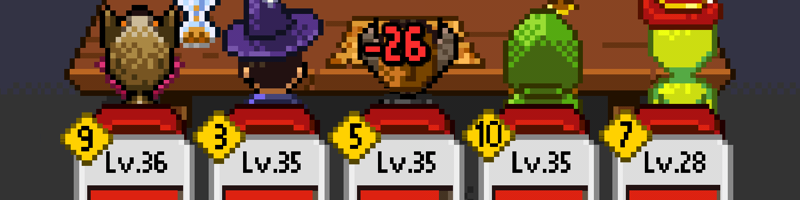
I've been distracted by life's other bits the last couple of weeks, but there's pretty much always time to play games on my phone. I’ll spend a minute writing about each game, hopefully summarizing my thoughts as quickly as if I were telling you about a mobile game in person.
I covered Super Hexagon last go around, and have since played it on the PC, and I have to say the experience is a lot better on the big screen. It's definitely fun on the go, but I managed to reach 60 seconds on Hard on my second attempt using my keyboard.
Mobile Minute: Temple Run 2, Subway Surfers, and Super Hexagon

I used to write reviews on nearly every Android or IOS game I spent more than an hour on, but I’ve fallen behind lately, so here's my first round at some reviews. I’ll spend a minute writing about each game, hopefully summarizing my thoughts as quickly as if I were telling you about a mobile game in person.
Counter-Strike: Global Offensive

It's been a long while since I've written a review, which is pretty commonplace due to my busy schedule. But as my days have cleared up due to seriously inclement weather, I figured I'd write a review. Not just a review, but a review on a game in a series that I am in love with. This is something I had been saving and looking forward to for the right time.
Unfortunately though, this didn't pan out like I had hoped. This is hard for me to write. Not just because of the fact it's a multiplayer experience I'm reviewing, but also because it's a dream of mine being crushed.
As I've mentioned before, I was a pretty avid player of Counter Strike, and much more so, Counter Strike: Source. My father and I played CS: Source from around 2005 until 2007. We were in a clan, competitively. (The name of it was Exemplar Sect, best player was Pug.) Anyway, we loved that game, and I remember upgrading computer parts all of the time to increase framerates, and every weekend was a Mountain Dew fueled weekend of meeting people all over the world and killing them. But then other games became popular (I played Battlefield: Bad Company 2 quite a bit.) and I went over to them, but I always visited CS: Source, and always had a blast.
Valkyria Chronicles
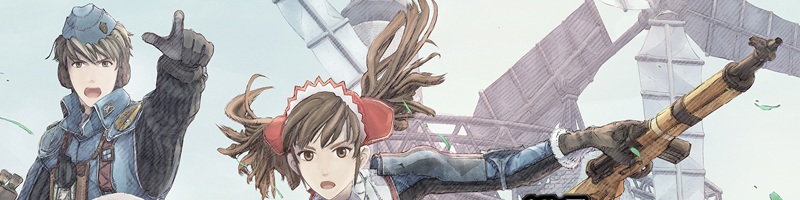
I’ve had my PlayStation 3 over a year now, and during that time I’ve enjoyed Heavy Rain, Infamous, and Uncharted, but the game that I’ve had the best time with is Valkyria Chronicles. I hadn’t even heard of the game until a friend shoved it in my hands, and it ended up being my First Hour of the Year and now my favorite game on the platform.
Valkyria Chronicles is nearly a perfect execution of all aspects of a video game. The gameplay is a fun and addicting mix of strategy and action, the graphics have a lovely anime-style to them, the presentation is flawless, the story is an interesting riff on World War I, the voice acting is actually great most of the time, and the soundtrack has a grand bluster to it that makes everything else better. And to top it all off, Valkyria Chronicles was developed by Sega. Sega!
I will admit, the game took me quite a long time to beat, over six months with about 40 hours of actual gaming (I’ve put more time than that into Xenoblade Chronicles in the last month). It wasn’t because I didn’t enjoy the game, but because Valkyria Chronicles seemed to require a certain amount of minimum playtime to really get into it. Even one hour free didn’t feel like enough for one sitting. Weird how that is for some types of games.
Deus Ex: Human Revolution
My writing pace has slowed to a halt the last month. I might have burned myself out a bit at the end of 2012, and the new year has allowed me to erase any kind of guidelines or deadlines I was imposing on myself. With Nate and the other writers’ help, I always tried to publish three times a week, but I’ll be honest and say it’s just not in me like it used to be. Maybe it’s temporary, it probably is, but for now, I don’t mind taking it a bit easier. This is my hobby after all.
And most of that time not spent writing has gone into video games! Yeah, those! (Also reading, a lot of reading.) Maybe I’ll declare 2013 the year of the catch up, even though 80% of the games I beat last year weren’t released last year as it is. But my backlog is huge and the only game I’m really interested in on the near horizon is Bioshock Infinite, so now’s as good as time as any.
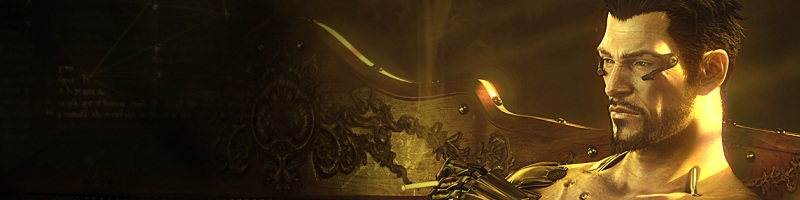
As for Deus Ex: Human Revolution? It was a good game, problematic at times, but an experience worth putting at least a few hours into, and at about 24 hours long, probably worth finishing. I’m not sure how much I have to say about it that hasn’t already been said by our own Paul Abbamondi, let alone everyone else, so I’ll keep this short and to the point... starting now.
Primordia
 It feels appropriate to end 2012 with a Wadjet Eye game, as this was the year I discovered, bought, and played nearly all of their games. Dave Gilbert has taken his Adventure Game Studio-developed titles from humble roots to full-on publisher in just six years, culminating with this year’s Blackwell Deception, Resonance, and Primordia; a tour de force in indie point and click adventure games. Wadjet Eye Games is the only publisher from whom I regularly preorder games from anymore, in an industry where they will often fall to half their price a few weeks later. But hey, what’s $10 between me and a few great games?
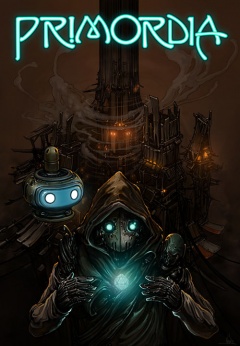
Primordia is their final offering of the year, and it is ambitious. As a robotic steampunk homage to games like Sam and Max, Primordia puts you in the distant future where humans are dead and a variety of robots are all that remains. Wadjet Eye Games tend to be uniquely evocative: the Blackwell series explores death, The Shivah examines religion, Resonance questions the power of technology, and Primordia scrutinizes progress and freedom. These can all be heavy topics, especially for a computer game, but Wadjet Eye always manages to make it about the characters.
For my final review of 2012, let us talk about Primordia, developed by Wormwood Studios and published by Wadjet Eye Games. Monday will feature our sixth annual Game of the Year Awards, so please have a safe and happy new year.
