
Full Reviews
Full game reviews as we beat them, there will be a balance of both new and old games reviewed. We review the basics of the game and deliver scores in a few categories and an overall score out of 10.
Recettear: An Item Shop's Tale
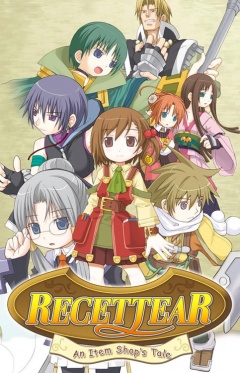 We have time to slip one more review into 2011, right? Let's talk about Recettear: An Item's Shop Tale, a quirky Japanese RPG released last year. Blending traditional dungeon crawling with running an RPG item shop, Recettear is unlike any game I have ever played, and probably ever play again.
I played the first hour of Recettear in October, determining that the opening was interesting enough to go on. This was probably a fair decision, as it is a rich game full of dungeons, companions, and items, but it is not without issues. If the review intrigues you, look for it on Steam sale in the next day or so, it was about $5 a few days back and may be available again.
Recettear is made up of two distinct game types: the classic dungeon crawler with randomized floor layouts, spawning bad guys, and big bosses; and an item shop where you lay out equipment, haggle with customers, and even buy items from them. Let's talk about what each type did right and wrong.
The Legend of Zelda: Skyward Sword
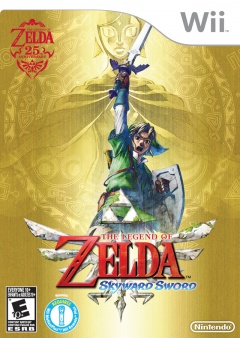 The Legend of Zelda: Twilight Princess was my primary reason for buying a Wii at launch. It left me feeling disappointed and greatly annoyed. Five years later, beating The Legend of Zelda: Skyward Sword on my second Wii (after selling my first just days after beating Twilight Princess) leaves me with nearly the opposite effect: I loved it and am slightly giddy to write a review about it before the end of the year.
I was definitely not feeling the game a few hours in. Twilight Princess’ first hour is awful and Skyward Sword’s is arguably worse, and the ramp up feels tedious. My list of annoyances was longer than any kind of enjoyment I was getting out of the game, but once the game does ramp up, it does it incredibly successfully.
So as the Wii’s last hurrah, Skyward Sword leaves a great impression, here’s my review of the latest Legend of Zelda game, released in November. This is our second full review of the game, following Nate’s from last week. I re-read his review in preparation for my own, and have to say I agree on basically every point. So hopefully this review won’t be longer than it needs to be, but if you have some time, do read his write-up.
The Legend of Zelda: Skyward Sword
The lasting impression from my recent introduction to the original
Legend of Zelda was its unstructured progression. With only a ghost of a
narrative driving the action and few barriers to limit wanderlust, the
course of my trip through Hyrule was almost entirely up to me. Having played Ocarina of
Time before any other Zelda game, I was surprised to see just how
hands-off the original was.In contrast, last month's Skyward Sword may be the most linear Zelda experience yet. The newest quest sees Link flying from one compact landmass to the next with hardly any room for side trips. The vast sky of islands is sparser than Wind Waker's nearly endless ocean, and even the surface world below is but three masses of land separated by impenetrable mountain ranges and deserts and forests. This is a Zelda where the path to the next waypoint is often the only path.
Every game in the series since the eighties original has trended towards structure and direction as story progression and ability acquisition gained a greater share of the Zelda spirit. Aesthetic similarities and recurring tropes aside, The Legend of Zelda and Skyward Sword could be mistaken for two wholly separate franchises. For better or worse, Skyward Sword feels like the end state of a slow evolution that Nintendo has been cooking for twenty-five years.
The Binding of Isaac
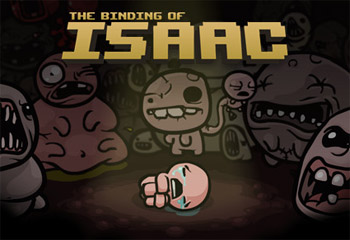 Following in the wake of the widely popular Super Meat Boy, Edmund McMillen’s latest entry, The Binding of Isaac, takes its name and narrative from a story in the Book of Genesis. In that tale, Abraham is called to sacrifice his son, Isaac, as a proof of his devotion to God. Isaac is bound by his father and placed upon an altar on top of Mount Moriah, where an angel appears to stop Abraham just before the slaughter.
The Binding of Isaac has players taking control of the titular character, whose mother is called to kill her son as a sacrifice to God. In this story, however, there is no angel to stop the fanatic parent; it’s up to Isaac to survive, fleeing the clutches of his murderous mother in the basement of their house.
The artwork and style are synonymous with that of McMillen’s other works, such as Super Meat Boy and Gish (both of whom make cameo appearances), but, taking a break from platforming, level design and gameplay share similarities with The Legend of Zelda. The interface also shares a resemblance. However, unlike the series from which it seemingly draws inspiration, The Binding of Isaac features fully randomized levels, items, enemies, and even bosses. Another key feature is the aspect of permanent death. You have one and only one life to clear the dungeon-like levels and defeat the final boss, which serves to make The Binding of Isaac a very challenging and nerve-racking experience.
The Elder Scrolls IV: Oblivion
 It's been awhile since I've written anything for First Hour; between marriage, work, college and some gaming, there isn't much time for writing. But this is a special month, a month that I've been looking forward to for a long time.
Last Friday, November 11th, 2011, was the release of Skyrim, possibly the most anticipated game of this year, right next to Call of Duty: Modern Warfare 3. So today, I am reviewing The Elder Scrolls IV: Oblivion.
I had played Morrowind religiously for roughly six months. In fact, it was the second game I bought for the original Xbox. It was an incredible experience, to face a giant world with so many dangers, and so much customizing, I became massively invested. I played at least six hours a day during the school week and twelve during Saturday and Sunday.
So after years of playing The Elder Scrolls III: Morrowind, my sophomore self was surprised to see Oblivion on the cover of a Game Informer in the high school library. I was in awe at the graphics, the hope for a better combat system. But the most amazing thing, that reportedly happened at Bethesda as well, was seeing what was once thought impossible: they had forests. Real, bustling forests with bushes and shrubbery and groups of trees.
I couldn't stop thinking about it, and then it was finally released. I was amazed at the game. Now, let's take and nice overview about some of the feelings and thoughts of the game before and after Oblivion's release.
Deus Ex: Human Revolution
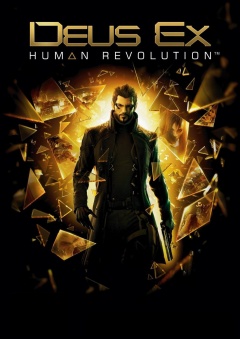 Evidently, I’ve been coddled by stealth-based videogames for far too long. Metal Gear Solid gives players a large radar on their HUD showcasing soldiers’ cones of vision, allowing me to know just how far they saw and when to make my move; it only jammed now and then, leaving Solid Snake feeling clothed yet naked, but otherwise the radar remained a constant and vital companion during the fall of FOXHOUND. The Tenchu franchised handed out safe rooftops like candy. The Sly Cooper games, no matter what locale, always offered a number of places to hide or grapple on or tip-toe across; it also taught me how to pickpocket with a cane. Assassin’s Creed: Brotherhood had so many ways to hide and blend in with the public that it almost seemed like the point of the game was to be a commoner and not a kick-ass, hidden blade-wielding Casanova—actually, that’s how their online multiplayer does it. Sneaking through the massive cities was never terribly tricky, and if you messed up, there always seemed to be a way to quickly erase your footprints and try again. While certainly some skill is needed, most videogames involving stealth are pretty forgiving.
But then came Deus Ex: Human Revolution, a game I tried to play stealthily, but failed miserably, eventually throwing in the towel and just shooting enemies until they breathed no more. The first hour should’ve been a clear indication of what was to come, but I’m stubborn and continued to drop Praxis point after Praxis point into perks like “see through walls” and “hack computers up to level 5.” No points were ever devoted to fixing Jensen’s shooting ability or giving him more backpack space. All I needed—or so I thought—was my tranquilizer rifle, some darts, and the smarts to crack every keypad and computer this side of future Detroit. Turns out, I needed a lot more than that.
Kirby's Return to Dream Land
 For the longest time, all I wanted from Nintendo was a new Kirby game with awesome copy abilities like in Kirby Super Star. No
franchise has a track record like Kirby when it comes to spinoffs and
experiments, but the SNES classic that boasted "8 games in one" is the
series' greatest feat. For over a decade, my wish went unfulfilled.
For the longest time, all I wanted from Nintendo was a new Kirby game with awesome copy abilities like in Kirby Super Star. No
franchise has a track record like Kirby when it comes to spinoffs and
experiments, but the SNES classic that boasted "8 games in one" is the
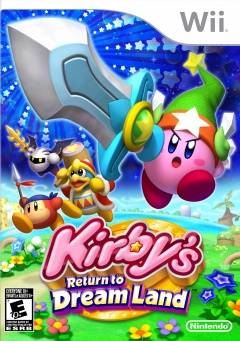
series' greatest feat. For over a decade, my wish went unfulfilled.But hey, we finally got one, appropriately dubbed Kirby's Return to Dream Land! It's exactly what I wanted: the twenty standard copy abilities are the series' best, with strong debuts and enhanced returns counted among Kirby's repertoire. It's amazing how many tricks you have up your sleeve with just a D-pad and a single button.
You have to be careful what you wish for, though. When dealing with a genie or blowing out your birthday candles, always make sure to choose your words deliberately and plan for stipulations and potential fallouts. Otherwise, you might end up with Kirby's Return to Dream Land, a game with tons of cool attacks and not much worth attacking.
Airport Mania 2: Wild Trips
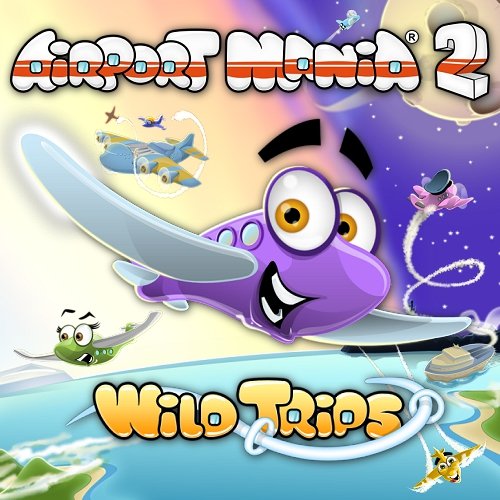 Wikipedia says Airport Mania 2: Wild Trips' genre is "Click Management", which sounds like the category Microsoft Excel would also be filed under. But trust me, Airport Mania 2 is infinitely more fun. In the same vein as Diner Dash, Sally Spa, and all the hundreds of other click management, strategy, time management clones out there, the goal is to efficiently do something with limited resources. But Airport Mania 2 stands above the rest with high polish and attractive graphics.
Developed by Reflex Entertainment and South Wind Games, the original Airport Mania: First Flight, was a mild success for Windows and OSX in 2008. Re-released on nearly every portable platform since then (including DSiWare), they've slowly been building their airport simulator empire. Airport Mania 2, released earlier this year, is an upgrade of the original but still carries all the charm.
Airport Mania 2 is less of an airport simulator and more of an air-traffic control strategy game. Let's take a quick look at the Android version released a few weeks ago.
Kirby Mass Attack
 Like the titular pink puff, the Kirby series has worn many hats in its
nineteen years. Almost every 2D action-platformer has been partnered
with an experimental pinball sim or an arcade racer or some amazing
miniature golf mutation. As much as I enjoy each iteration of the main
Dream Land style, the spinoffs are what really intrigue me, even when
they fail. Sure, Kirby Tilt 'n Tumble may be unplayable with the Game
Boy Color's dark screen and restrictive viewing angle, but it broke
ground for motion controls six years before Wii Sports taught us to
waggle.
Like the titular pink puff, the Kirby series has worn many hats in its
nineteen years. Almost every 2D action-platformer has been partnered
with an experimental pinball sim or an arcade racer or some amazing
miniature golf mutation. As much as I enjoy each iteration of the main
Dream Land style, the spinoffs are what really intrigue me, even when
they fail. Sure, Kirby Tilt 'n Tumble may be unplayable with the Game
Boy Color's dark screen and restrictive viewing angle, but it broke
ground for motion controls six years before Wii Sports taught us to
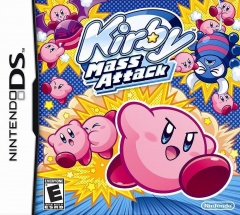
waggle.It's a good season for Kirby fans, as we get a bit of both sides in under two months. Kirby's Return to Dream Land in October looks like the long-awaited Super Star successor, and September sees Kirby get multiplied in Kirby Mass Attack. Revisiting the stylus-centrism of Canvas Curse, Mass Attack tasks players with flicking, dragging, and leading up to ten Kirbys at a time through a puzzle platforming adventure. It's not the most eye-opening Kirby spinoff -- the concept is essentially a pared-down Pikmin -- but it makes the most of a middling concept.
Kirby Canvas Curse was widely dubbed the Nintendo DS's first worthy purchase. Kirby Mass Attack may be its last.
Dragon Age II
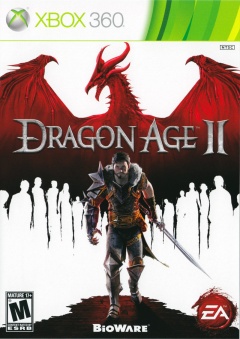 I was a bit worried going into my playthrough of Dragon Age 2. The first screenshots revealed a depressingly gray world with curiously pointy polygons, and reader reviews of the game blasted it for a variety of reasons. But my first hour review of the title cemented me firmly in the “I’m going to enjoy this game” category, and 40 hours later I emerged with some sore fingers and a smile on my face.
It’s understandable why some gamers didn’t enjoy Dragon Age 2, in some ways it’s quite a departure from the stable, Western RPG tropes that Dragon Age: Origins employed, but deep down, it really is the first game’s sequel. Some aspects have been streamlined, for better and worse, but I always felt like I was in the Dragon Age universe I spent 50 hours in last time around.
Dragon Age 2 was released for Xbox 360, PlayStation 3, Windows, and OSX. I played a used copy on the Xbox 360, meaning I didn’t have access to any downloadable content that was provided for first-time buyers.
