
Editorials
2013 Predictions
Predictions are back! After this exhausting 2012 Game of the Year week, let's settle into something a little more fun. 2013 could be a huge year for the gaming industry: a new PlayStation and Xbox are likely, the Wii U is just getting off the ground, and the fabled Steam Box could become a reality. Bask in our probably terrible predictions on release dates, exclusive games, and even price of new systems!
There's no science to any of this, and if you have your own predictions feel free to post them in the comments. Depending on how right or wrong we are we may revisit our foresights at the end of 2013, it could be entertaining.
This Generation is Over
 As we stand on the precipice of a new console generation, the old argument begins to show its ugly head: “We don’t need a new console generation yet,” or “the console is holding back the PC.” In this generation, more than any other I remember, the argument is loud and salient. Traditionally you had hard-core PC gamers on one side stating that consoles were lagging behind, and the hard-core console lovers on the other asserting that the current generation was still producing quality games. The reality, of course, is that developers always want more to work with, but they also need to be profitable. This, of course, doesn’t mean that all of them are going to push it to the maximum, but more horse-power gives the developer the freedom to choose how they use it as opposed to spending their time and money eking out every last drop of performance available (see: XBLA/PSN releases).
Dear Microsoft and Sony: Go Nuclear! Don't allow used games next generation
 Both Microsoft and Sony have tested the waters on not allowing used games on their next generation consoles. Whether it’s right or not, Gamestop has been blamed by developers and publishers for ruining the industry with their aggressive used game sales tactics, and as a potential preventive measure, used games may soon be a thing of the past.
And I say, let them do it! Pick the nuclear option! Block used games from running on your console. I don’t say this as a former THQ executive trying to protect my bonus, or even as a lowly developer simply trying to protect my job. I say it as a consumer of the gaming industry who thinks there might actually be a huge benefit to gamers if this is pulled off correctly. I just don’t think it will be pulled off correctly.
The Famitsu 40/40 List: 2011 Perfect Score Update
 We last checked in with Famitsu, the premier video game magazine in Japan, in April 2010, right after they had awarded Metal Gear Solid: Peace Walker a perfect score. It was Famitsu's 14th perfect score in their 20+ year history, but what really caught my eye was that half of them (7 at the time) had been given out in just three short years! Something had changed at Famitsu as it seems to difficult to imagine that there are that many more perfect games per year (even if the individual reviewer doesn't consider a 10 perfect, they're still handing out the score relative to everything else released).
And while I was hoping this wouldn't become an annual event, in the 20 mere months since my article we add four more games to Famitsu's perfect score list: Pokemon Black and White, The Legend of Zelda: Skyward Sword, The Elder Scrolls V: Skyrim, and Final Fantasy XIII-2. I'll be honest and admit the inclusion of this particular Final Fantasy game spurred me to write this update.
For the unaware, Famitsu assigns four reviewers to major titles, with each reviewer giving a score out of 10. A perfect score would be 40 out of 40 points totaled across four reviews. The first 40/40 review was The Legend of Zelda: Ocarina of Time in 1998, presented 12 years after the magazine's first issue. Let's have a quick word about the four new titles and update our graph.
Tiny text is the plan, the plan is death
 If there’s one new videogame fad I absolutely hate more than 3D anything, it has to be tiny text. I'm not sure what specifics need to be required to obtain tiny text status, but they most likely sit somewhere between squinting and extreme squinting. Over the years, text in videogames has gotten smaller and smaller, and I'm not exactly sure why. If you look back at screenshots of, say, SNES games, you'll see the font used is generally huge and spaced far apart, almost taking up one-third of the game's screen.
No mistaking what that fly is saying in Breath of Fire, that's for sure. This font size guarantees readability. Some might say this is a little too big. However, compare this font size with that of any modern game, and it's clear which gaming generation pandered to the literate more. Either way, this is a problem, and while not every videogame suffers from it, many big name titles shockingly do.
2010 Prediction Results
 On the first of the year, the writers here presented their predictions for 2010 in the video game industry. It was our first attempt at anything like this, and since we're primarily gamers first, writers second, and industry experts in a distant last, this was definitely more of an exercise in fun forecasting than put-your-money-down-now predictions.
Well, we can't let bad predictions go forgotten and made fun of, so here we are again. We'll quickly cover what went randomly right and what went horribly wrong, but then we'll be back again on Friday for our fourth annual Game of the Year Awards.
Overrated Game I Played this Generation - Spore
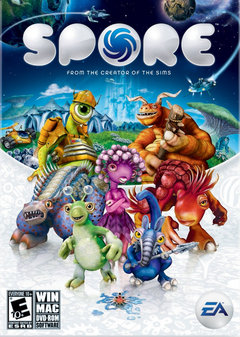 This is a new series of articles I originally planned to cram all in one, but it's much easier to complain one at a time, unleashing my disgust for one popular game all at once. I will admit this is intended to be a bit flamebaitish, but I hope it brings in some comments!
Spore is back in the news after the completely uninspired named Darkspore was announced as some sort of multiplayer action title. I really don't know anything about the new game, but it did remind me how much I loathed my original Spore experience.
I could go on again about how Spore was one of my most anticipated games ever and how much it let me down, but I'd rather talk about what appears to be my disconnect from the rest of the video game review industry. The game has a Metacritic score of 8.4 aggregated from 75 reviews while I gave Spore a 5 out of 10. Two reviewers gave it a perfect score (including my personal much-hated G4TV) and there were only five sites that gave it a score under 70 (including Destructoid which I seem to line up with more often than not). Spore was an uber-hyped, blockbuster game published by Electronic Arts and devised by the mastermind of Will Wright; were reviewers afraid to trash the game or did they honestly like it? And if they liked it... what happened to me?
Building a Better Game Review
Few things in the gaming world are as controvertial as game reviews themselves. Fanboys and fangirls wait with bated breath to peek at the scores for their most anticipated games. If these scores aren't as high as their expectations, some of them are apt to explode, whether at writers, publishers, comment boxes, or at developers themselves. Unfortunately, what would seem to be a simple subjective scoring has now turned into an important industry, as the likelyhood of developers and publishers could be impacted by such things. Thus we have our current situation, where games are often reviewed as exacting and objectively as possible. However, does this even remotely mirror the experience of the end user and help the customer in deciding how to spend their money? I argue that this is fundamentally flawed and that we can find a better way, both for the developers and the consumers.
Remaking Japanese RPGs into Western RPGs
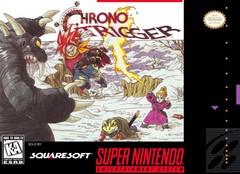 Obsidian Entertainment recently mentioned that they would like to remake Chrono Trigger into a Western-style console role-playing game and the gaming world went, "huh?" I personally like the idea, while the usual haters are going to hate, but this actually has a small chance in happening since Square Enix recently recruited Obsidian to work on the Dungeon Siege IP Square picked up recently. So the companies have a relationship, anything could happen now.
As a gigantic fan of Chrono Trigger, the idea of a remake honestly doesn't bother me. Any Chrono game at this point is better than no more Chrono games. Square Enix has shown over and over again that they will never come back to the series in any serious form, so why not contract it out to a studio that is actually interested (and experienced in picking up old IPs, if somewhat lousy at it sometimes)? Chrono Trigger on the Super Nintendo and its ports to the PS1 and DS sold over 3 million copies, but sales outside of Japan have always lagged, why not take one of the best games ever and adapt it to a new audience? There's definitely potential.
Fanboy Fantasies - Capcom vs. The World
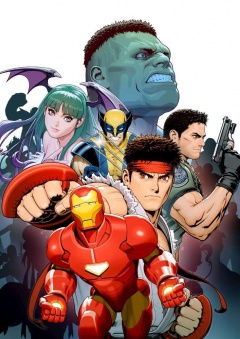 Fanboy is a column about gaming what-ifs, hopes, dreams, and the inevitable realization that we will probably never get what we want. But it’s always fun to speculate!
 In April, Capcom shocked the world by announcing the sequel we all wanted but never thought we’d see: Marvel vs. Capcom 3. The Vs. Capcom series is always filled with surprises: another recent one is releasing Tatsunoko vs. Capcom in the America, which many thought would be a licensing nightmare. Capcom has crossed paths and punches with four companies: comic book titan Marvel, legendary Japanese animation studio Tatsunoko, fighting game rival SNK, and even Namco in a Japanese-only RPG. But what other companies should Capcom square off against? Here are five that I’d like to see. Keep in mind, I hope for all of these to be fighting games (sorry Namco x Capcom).
