
medical simulation
Trauma Team
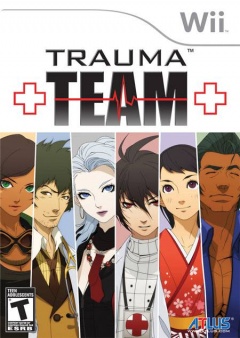 Classifying video games into genres can be a tricky ordeal. For
example, let's look at Fable.
It's a role-playing game because it uses
dynamic statistics as modifiers to its core mechanics, right? But one of
the
traditional indicators of an RPG video game is that it plays out with
little regard to nuanced player input: its action is menu driven and
often
turn based. Fable's real-time combat, on the other hand, relies on
player dexterity (as in an Action game) as much as it does the
quantifications of the battle engine. So, in our propensity to create
subgenres when things don't fit so neatly, we just call it an Action
RPG. However, it's hard to be satisfied with this conclusion when one
could replace every instance of "Fable" in this paragraph with "BioShock," "Mass Effect," or even "Star Ocean" and it would be no less true, even if all of these
games feel completely different in once you get your hands on the
controller.
Classifying video games into genres can be a tricky ordeal. For
example, let's look at Fable.
It's a role-playing game because it uses
dynamic statistics as modifiers to its core mechanics, right? But one of
the
traditional indicators of an RPG video game is that it plays out with
little regard to nuanced player input: its action is menu driven and
often
turn based. Fable's real-time combat, on the other hand, relies on
player dexterity (as in an Action game) as much as it does the
quantifications of the battle engine. So, in our propensity to create
subgenres when things don't fit so neatly, we just call it an Action
RPG. However, it's hard to be satisfied with this conclusion when one
could replace every instance of "Fable" in this paragraph with "BioShock," "Mass Effect," or even "Star Ocean" and it would be no less true, even if all of these
games feel completely different in once you get your hands on the
controller.
Okay, so there's obviously a problem when so many games in the same
genre are so dissimilar. But what about when a game comes along and has
no precedent to compare to? Case in point, where the hell does the Trauma Center series belong?
Trauma Center: Under the Knife arrived on the scene in the Nintendo DS launch window, requiring players to perform lightspeed surgeries using a variety of medical instruments through the handheld's touch screen. Ignoring the dearth of surgery games (or even touch screen games) to use as precedent, Trauma Center was still very tough to define. Can we really use the catchall Simulation genre for a game where heart surgery lasts all of a minute and Space Invaders can be found in the patient's lungs? Is it part visual novel merely because operations are bookended and pervaded by character portraits and dialogue? Not content to let us try and figure it out after four games, Atlus' fifth title in the franchise, Trauma Team, complicates things further by providing six different scenarios to play through, each with its own exploration within (and sometimes a bit outside) the traditional Trauma Center structure.
Okay, so I don't really know what to call it. A more important concern, though, is whether or not it's fun. So how did my first hour go with this...whatever it is?
Trauma Center: Under the Knife arrived on the scene in the Nintendo DS launch window, requiring players to perform lightspeed surgeries using a variety of medical instruments through the handheld's touch screen. Ignoring the dearth of surgery games (or even touch screen games) to use as precedent, Trauma Center was still very tough to define. Can we really use the catchall Simulation genre for a game where heart surgery lasts all of a minute and Space Invaders can be found in the patient's lungs? Is it part visual novel merely because operations are bookended and pervaded by character portraits and dialogue? Not content to let us try and figure it out after four games, Atlus' fifth title in the franchise, Trauma Team, complicates things further by providing six different scenarios to play through, each with its own exploration within (and sometimes a bit outside) the traditional Trauma Center structure.
Okay, so I don't really know what to call it. A more important concern, though, is whether or not it's fun. So how did my first hour go with this...whatever it is?
Trauma Center: Under the Knife 2
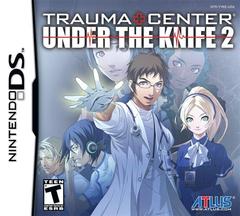 Trauma Center: Under the Knife 2 is the direct sequel to one of my favorite Nintendo DS games Before I played the original Trauma Center, I had never understood the real appeal of the DS. That game, along with Kirby Canvas Curse, demonstrated what the system was really capable of and how much fun it could be. So when the sequel was released, I put it at the top of my list to play. I actually beat this game about two months ago, but things have been pretty busy so I haven't been able to write the review until now.
The Trauma Center series pits you as a highly skilled surgeon working for Caduceus, a well funded research facility. The games are highly linear, with tons of text, so if you're looking for a straight surgery simulator, you'll have to wade through a lot of cruft to get to it. If you can put up with much too serious characters in contrived situations, then you will be rewarded with excellent and difficult gameplay. Let's get to my review of Trauma Center 2.
